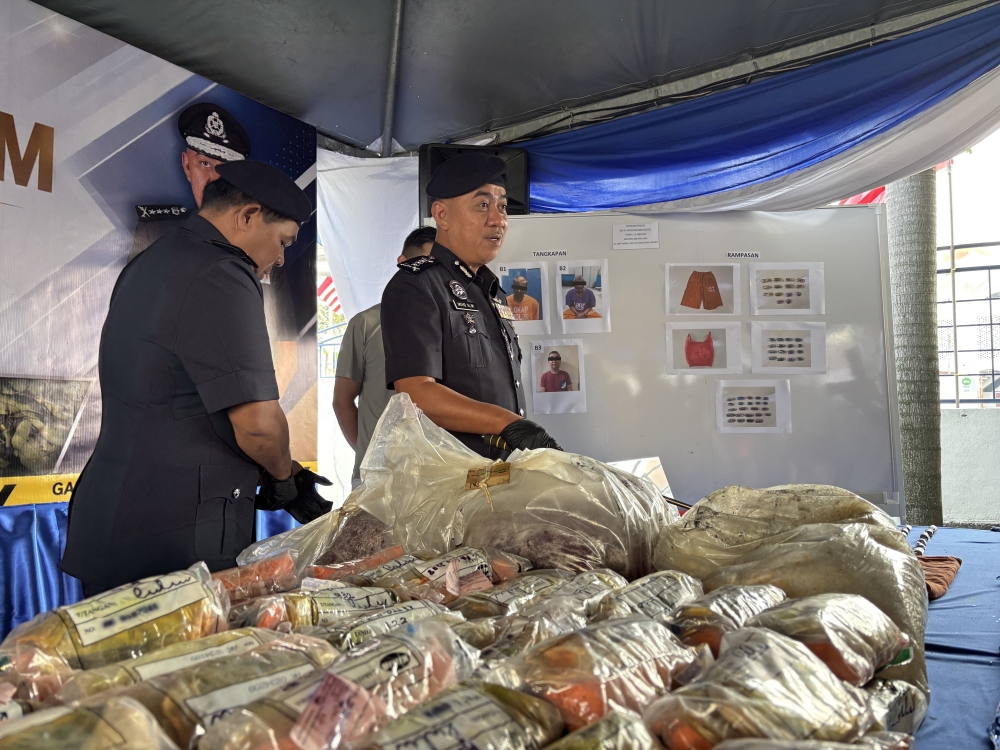
A police constable in Perak has found himself on the wrong side of the law following a drug seizure at the Lumut police station, raising fresh concerns about internal security at law enforcement facilities. Three men, including the officer, were detained after authorities uncovered narcotics valued at RM18,534 concealed within a police cell, according to investigators in Ipoh. The discovery underscores growing vulnerabilities in custodial management and suggests that criminal networks may be exploiting connections within the force to facilitate contraband movement.
The cache of illegal substances seized during the operation comprised methamphetamine, heroin, and cannabis in various quantities. Such a mixed inventory points toward a distribution operation rather than personal consumption, indicating a more sophisticated smuggling arrangement. The presence of these particular drugs—covering both stimulants and depressants—reflects market demand patterns common across Peninsular Malaysia, where heroin remains entrenched in certain demographics while methamphetamine has gained traction among younger users seeking cheaper alternatives to traditional opioids.
The involvement of a serving police constable in this incident carries serious implications for institutional integrity. Officers occupy positions of trust that enable them to move freely through secure areas and circumvent standard security protocols. When individual constables breach that trust, they create operational weaknesses that criminal syndicates actively exploit. The Lumut station discovery suggests that vetting procedures and internal surveillance mechanisms may require significant strengthening to prevent future incidents of this nature.
For residents in Perak's coastal districts where Lumut is situated, the revelation is particularly troubling. Police cells function as critical checkpoints in the criminal justice system, serving as temporary detention facilities pending court appearances or transfer to federal prisons. Contamination of these spaces with illicit drugs compromises the orderly processing of suspects and creates safety hazards for detained persons. Staff working in such facilities face increased occupational risks when narcotics are present, including potential exposure to fentanyl-laced products that pose acute health dangers even in microscopic quantities.
The monetary value assigned to the seized drugs—RM18,534—provides insight into street-level pricing and distribution margins in Malaysia's illicit pharmaceutical economy. This figure represents wholesale or mid-level wholesale value rather than retail street prices, which would be considerably higher. For context, similar seizures across Southeast Asia typically involve syndicates operating across multiple jurisdictions, suggesting that the Lumut discovery may be part of a larger trafficking network spanning the region. Malaysian authorities increasingly cooperate with counterparts in Thailand, Myanmar, and Cambodia where raw materials originate before processing and distribution into domestic markets.
The geographical location of Lumut carries significance for narcotics trafficking patterns. Situated in Perak's maritime zone, Lumut has historically served as a transit point for smuggled goods moving through Malaysia's western coast. The proximity to both Kuala Lumpur and northern states makes it strategically valuable for distributors seeking to service multiple markets. That contraband surfaced within a police facility suggests either that local trafficking operations have deeply penetrated law enforcement networks, or that the constable in question was independently approached by criminal contacts exploiting his institutional access.
Malaysia's broader drug problem continues to strain enforcement resources despite aggressive campaigns and penalty frameworks that include capital punishment for trafficking large quantities. The emergence of new synthetic drugs alongside persistent heroin markets indicates evolving consumer preferences within user populations. Police narcotics divisions combat supply-side trafficking while public health agencies struggle with demand-side interventions, creating a structural mismatch in addressing root causes of addiction and distribution networks.
The arrests will likely trigger internal disciplinary proceedings within the Royal Malaysia Police alongside criminal prosecution. The constable faces potential charges under the Dangerous Drugs Act 1952, which provides sentences ranging from imprisonment to death depending on quantity and drug classification. Such cases typically proceed through the criminal courts while the police force conducts separate administrative investigations into how procedural safeguards failed. The institutional response to this incident will signal whether the force prioritizes internal accountability or attempts to minimize reputational damage.
Investigators in Ipoh overseeing the case will examine whether the constable acted alone or as part of a coordinated operation involving multiple officers. Communication records, financial transactions, and witness statements from detained persons will provide crucial intelligence. The three-man arrest total suggests that at least two additional individuals—possibly fellow officers or external criminal associates—were involved in placing or retrieving the drugs from the cell. Understanding this operational structure remains vital for identifying vulnerabilities that require remediation across the state's police infrastructure.

