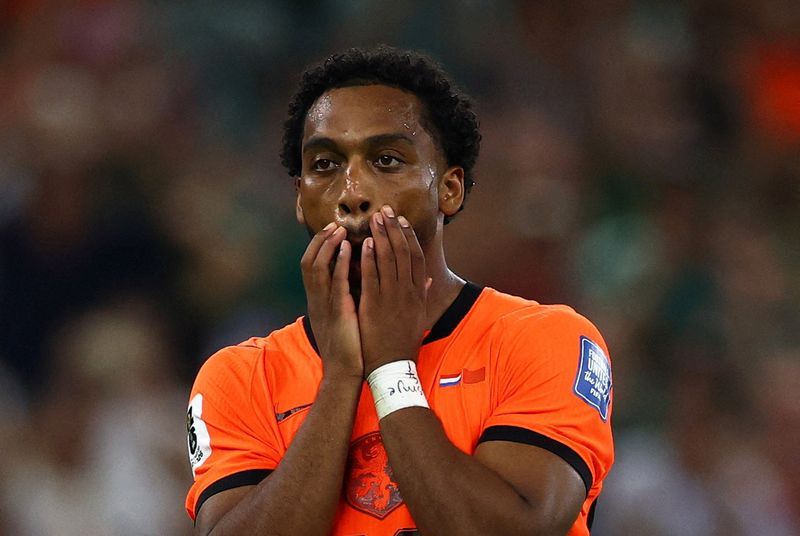
The Dutch football association has initiated formal proceedings to address a wave of racist harassment targeting three national team players following their penalty shootout elimination from the World Cup. Justin Kluivert, Quinten Timber and Crysencio Summerville became the focus of discriminatory online attacks after failing to convert their spot kicks during Monday's last-32 encounter against Morocco in Monterrey, which ended 1-1 after extra time before Morocco prevailed 3-2 on penalties.
The KNVB has confirmed that the affected players endured hateful and discriminatory comments across social media platforms in the aftermath of the match. Rather than dismissing the incidents as inevitable byproducts of competitive sport, the association has adopted a forceful stance by filing a formal report with Meld Online Discriminatie, the Dutch organization dedicated to tracking and combating online discrimination. This institutional response signals an escalating intolerance for racial abuse within Dutch football circles and reflects broader European efforts to weaponize legal systems against digital hate speech.
The reporting mechanism employed by the KNVB represents a multi-layered enforcement strategy. Once Meld Online Discriminatie receives a complaint, their legal team conducts substantive assessments to determine whether the statements meet thresholds for criminal culpability. If the threshold is met, the organization can escalate matters to the Public Prosecution Service, potentially triggering formal criminal investigations. This procedural pathway transforms social media comments from merely offensive remarks into potential criminal conduct, demonstrating how institutional bodies are increasingly willing to prosecute online racism through traditional legal channels.
The Netherlands is not navigating uncharted territory in addressing this phenomenon. The precedent established following England's Euro 2020 final defeat to Italy provides an instructive comparison. Marcus Rashford, Bukayo Saka and Jadon Sancho faced comparable online racial harassment after their penalty misses in that match. The subsequent British police response resulted in multiple arrests and convictions, including prison sentences for two individuals and a suspended sentence for another. That episode established that social media racism targeting athletes could yield real legal consequences, potentially influencing the KNVB's decision to pursue aggressive prosecution.
The timing of these recurring incidents reveals a troubling pattern within international football. Major tournaments involving penalty shootouts appear to create catalysts for racist expression, suggesting that the emotional intensity of defeat combined with the anonymity afforded by social platforms creates conditions where discriminatory rhetoric flourishes. The fact that three different players—each presumably with distinct backgrounds and demographics—were simultaneously targeted indicates that these attacks were not isolated incidents by individual bad actors, but rather reflected organized or widespread sentiment among certain online communities.
From a Southeast Asian perspective, this European phenomenon carries implications for regional football development. As Asian nations increasingly compete at higher levels of international football and Malaysian, Indonesian and Thai players gain greater visibility on global stages, the infrastructure for protecting athletes from online abuse becomes increasingly relevant to the region. The Dutch and English examples suggest that robust legal mechanisms and institutional willingness to pursue perpetrators serve as necessary deterrents to would-be abusers operating across borders.
The KNVB's statement articulating football's fundamental mission—to unite diverse populations—underscores the philosophical stakes of this enforcement action. The association explicitly framed racial discrimination as antithetical to sport's core values, positioning legal prosecution not merely as punitive but as a defense of football's identity as an inclusive institution. This rhetorical move transforms the legal response from simple condemnation into an affirmative statement about what professional football should represent.
The practical effectiveness of these legal mechanisms remains an open question, however. While the English cases resulted in convictions, the scale of online racist abuse vastly exceeds the number of prosecutions. Each conviction may deter some potential abusers, but the anonymity and scale of social media platforms creates an environment where perpetrators calculate relatively low personal risk. Nevertheless, the combination of institutional attention, legal prosecution and media coverage generated by these cases appears to be the most viable deterrent currently available.
The incident also raises questions about social media companies' responsibilities in creating the conditions where such harassment flourishes. While the KNVB's approach focuses on individual perpetrators, some observers argue that platforms themselves bear responsibility for failing to proactively identify and remove racist content before it accumulates sufficient visibility to cause documented harm. The Dutch association's decision to escalate beyond community reporting to formal legal channels may signal frustration with social media moderation capacity.
Looking forward, the outcome of the Dutch legal proceeding will likely influence how other football associations respond to similar incidents. If the KNVB's prosecution yields convictions comparable to the English precedent, it may establish an expectation that federations pursue aggressive legal remedies. Conversely, if prosecutions prove difficult due to jurisdictional issues or evidentiary challenges, it may demonstrate the limitations of criminal law in addressing globally distributed online behavior.
The case ultimately reflects the uncomfortable reality that international football's global expansion and increased diversity among elite players have coincided with intensified racist harassment conducted through digital channels. Institutions like the KNVB are responding by refusing to treat such abuse as an acceptable cost of athletic competition, instead deploying legal mechanisms previously reserved for more traditional forms of discrimination. Whether these efforts will meaningfully reduce online racist abuse remains to be seen, but the institutional commitment to pursue accountability represents a significant shift in how football addresses discrimination beyond the pitch.

