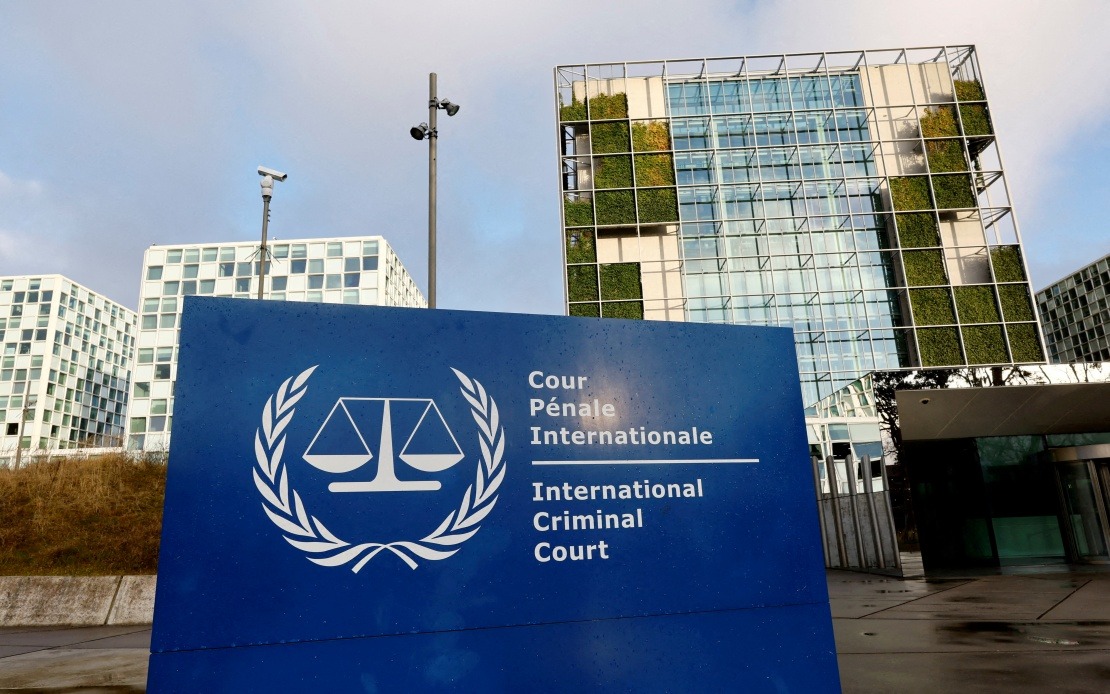
The Netherlands' leading legal scholars have emerged as vocal critics of the United States' aggressive stance toward the International Criminal Court, raising concerns that Washington's approach could fundamentally weaken the international legal architecture that has underpinned global stability since the Cold War's end. Speaking to international media in The Hague, these academics have articulated a warning that extends far beyond abstract principle, with implications that could reshape how nations cooperate on matters of global justice and accountability.
On July 13, the US Department of State announced a comprehensive campaign designed to counter what American officials characterised as an existential threat posed by the Hague-based court. According to the State Department's position, the ICC represents "an intolerable threat" because it has asserted the authority to investigate, prosecute, and potentially imprison American service members and government officials who act in defence of what Washington deems to be national interests. This framing reflects a longstanding American tension with international tribunals that might subject US personnel to external judicial authority.
Alette Smeulers, who holds the chair in international crimes at the University of Groningen, articulated the core concern animating Dutch opposition to the American campaign. If the United States succeeds in dismantling such institutions, she warned, the world would inevitably drift toward a framework governed by raw power rather than by consistent legal principles. Such a transformation, in her assessment, would constitute a profoundly troubling backward step for human civilisation. The professor's argument rests on the premise that international law institutions, however imperfect, represent humanity's collective commitment to replacing might with right as the governing principle of interstate relations.
The current tensions between Washington and the ICC did not emerge in isolation. In December of the previous year, the United States had already escalated its confrontation with the court by imposing sanctions against two ICC judges. American officials justified these measures by alleging that the judges had engaged in what they termed "politicised actions" directed against Israel. This earlier move signalled that the latest campaign represented not a sudden shift but rather a deliberate intensification of long-simmering hostility toward an institution that has increasingly invoked concerns in Washington about judicial overreach.
Smeulers emphasised that the American characterisation of ICC authority fundamentally misrepresents the court's actual scope and constraints. She noted that the ICC possesses jurisdiction only over the gravest criminal offences, and even then only when such crimes occur either within the territory of a state that has ratified the Rome Statute or have been perpetrated by nationals of such states. This jurisdictional architecture means that the United States, having never ratified the Rome Statute, would not ordinarily face ICC investigation unless American nationals commit crimes within member territories or American personnel are present in signatory nations when violations occur. The professor's clarification suggests that the American campaign rests partly on inflated perceptions of institutional threat.
Kyra Wigard, an assistant professor of law at Utrecht University, took particular aim at the US decision to impose sanctions against ICC judges. Addressing Dutch online media through NU.nl, Wigard characterised such sanctions as fundamentally "absurd." In her view, sanctions represent a tool designed for combating alleged terrorists or punishing nations engaged in active warfare. Employing them against judicial officers for decisions the American government dislikes represents, in her estimation, a categorical misuse of diplomatic instruments and signals a troubling abandonment of norms surrounding judicial independence.
The broader implications of the American campaign extend well beyond bilateral tensions between Washington and the court. Smeulers cautioned that the US offensive could exert "a very significant impact" both on the ICC's operational capacity and on the wider architecture of international legal accountability. She specifically highlighted that Washington has indicated its intention to pressure other nations to withdraw from the Rome Statute and relinquish their membership in the court. Such pressure tactics, if successful, could trigger a cascade of departures that would progressively hollow out the institution.
For Southeast Asian nations, this confrontation carries particular resonance. Several regional governments maintain Rome Statute membership, including the Philippines, which ratified in 2011 before later withdrawing amid ICC investigations into the drug war. Indonesia, Malaysia, and Thailand remain non-signatories, reflecting traditional preferences for regional dispute resolution mechanisms over international tribunals. However, the American campaign raises questions about whether external pressure might intensify, potentially threatening the fragile consensus that supports multilateral legal institutions even among sceptical governments.
The Dutch scholars' intervention reflects a broader European concern that American unilateralism threatens the post-World War II international order that Europe helped construct and from which it has derived substantial benefit. For Malaysia and other middle-power nations, the dispute underscores a fundamental challenge: how to navigate between great-power preferences while preserving institutions designed to constrain arbitrary state behaviour. The question ultimately concerns whether international law will continue to offer a pathway for accountability transcending national borders, or whether it will yield to realpolitik calculations by powerful governments unwilling to submit to external judgment.
The confrontation between Washington and The Hague also reflects deeper ideological divides about sovereignty, with the United States prioritising national self-determination and freedom from external legal constraint, while many other nations see international legal institutions as essential safeguards against impunity for the gravest human rights violations. As Smeulers observed, the trajectory matters enormously: a world organised around rule of law looks fundamentally different from one ordered by power.

