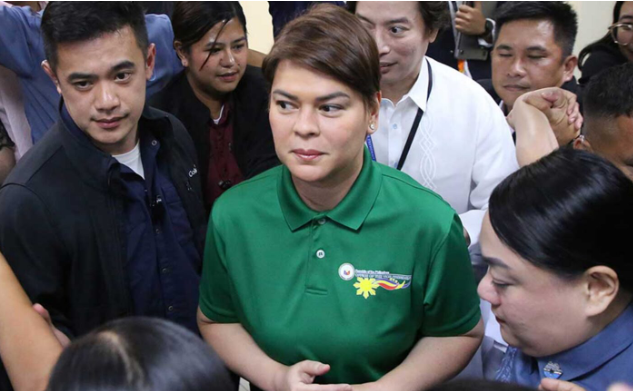
Vice President Sara Duterte intensified her rejection of the impeachment complaint against her on Tuesday, July 14, asserting that prosecutors have failed to present credible evidence supporting allegations that she orchestrated an assassination plot targeting President Ferdinand R. Marcos Jr., First Lady Liza Marcos, and former Speaker Martin Romualdez. Speaking before the fourth day of Senate trial proceedings, Duterte characterised the prosecution's case as built on fabrication and unfounded claims rather than verifiable facts, underscoring what she views as a fundamental breakdown in the integrity of the judicial process.
The timing of Duterte's statement proved strategically significant, coming just as her chief of staff, Zuleika Lopez, was anticipated to be summoned as the House prosecution panel's third witness. This scheduling raised questions about the trial's sequencing and whether testimony from Duterte's inner circle might have influenced the Vice President's decision to address the media immediately beforehand. The statement appeared designed to preempt any damaging disclosures, setting the narrative frame before critical testimony could unfold within the Senate chamber.
Duterte's defence team identified what they characterised as substantial procedural irregularities during cross-examination of the second prosecution witness, NBI-BARMM Regional Director Jeremy Lotoc. Duterte's lawyer Mark Vinluan highlighted inconsistencies between dates recorded in affidavits and corresponding docket numbers within National Bureau of Investigation files, suggesting either careless documentation or deliberate misrepresentation. These technical challenges to the evidentiary foundation signalled that Duterte's legal strategy would emphasise procedural defects alongside substantive denials, potentially complicating the prosecution's ability to establish a coherent narrative.
The Vice President deployed language designed to transform the trial into a commentary on institutional degradation rather than a narrowly focused examination of the accusations. In her statement, Duterte argued that repeatedly asserting threats without foundation, inventing assassins where none existed, and manufacturing evidence to prop up false narratives represented not merely forensic failures but systemic corruption of public institutions. This rhetorical approach attempted to shift the lens from whether she committed the alleged acts to whether the impeachment process itself had become hopelessly compromised—a framing potentially resonant with her political base but likely to frustrate those viewing impeachment as an essential constitutional check.
Duterte emphasised that impeachment proceedings carry profound constitutional weight and must therefore be tethered exclusively to credible, verifiable evidence rather than speculation or manufactured narratives. She contended that allowing impeachment to proceed on grounds of supposition rather than fact threatens the rule of law itself, suggesting that acquitting her would constitute not merely a personal victory but a necessary reassertion of constitutional principle. This argument positioned her defence not as self-interested legal maneuvering but as defence of democratic institutions themselves, appealing to broader concerns about due process and institutional integrity beyond the immediate case.
The impeachment complaint against Duterte focuses on Article IV, which encompasses allegations regarding the kill plot that the Vice President herself publicly disclosed in early 2024. This unusual circumstance—whereby the defendant is simultaneously the initial revealer of the alleged conspiracy—has created unusual dynamics in which Duterte's earlier voluntary disclosure could be reframed either as evidence of conspiracy or as evidence of transparency, depending on interpretive lens. The ambiguity surrounding her motives in making the initial revelation has thus become a central analytical challenge for both prosecution and defence.
The House prosecution panel has proceeded with deliberate slowness, presenting only two witnesses while the trial reaches its fourth day, having consumed only a fraction of the eleven days allocated for Article IV proceedings. This glacial pace suggests either strategic deliberation or logistical complications in assembling and preparing witnesses. The prosecution still confronts the formidable challenge of presenting nine additional days of testimony to substantiate accusations of conspiracy, whilst simultaneously navigating the defence's pointed questioning regarding procedural accuracy and evidentiary foundation.
The broader temporal scope of these proceedings casts the political stakes in stark relief. The complete impeachment trial is projected to consume ninety-two days, potentially extending into early 2027, meaning that Duterte's constitutional fate will remain unresolved through the remainder of the current administration's term and into a subsequent election cycle. This extended timeline transforms the trial from a discrete legal proceeding into an ongoing political controversy capable of shaping perceptions and dynamics throughout multiple election cycles. The prolonged uncertainty benefits neither Duterte, who operates under constitutional shadow, nor the administration, which must function whilst a sitting Vice President faces potential removal.
Notably, Duterte has consistently declined to attend the trial proceedings personally, instead communicating through written statements and her legal team's courtroom interventions. This conspicuous absence could be interpreted multiple ways: as a calculated political statement refusing to dignify proceedings she considers illegitimate, as a strategic legal decision to avoid cross-examination under oath, or as a reflection of the deteriorated personal relationship between Duterte and Marcos that has defined recent political discourse. Her non-appearance stands in contrast to historical impeachment proceedings in which accused officials have maintained visible presence in the Senate, potentially influencing juror perception through demeanor and apparent confidence.
For Malaysian and broader Southeast Asian observers, the Duterte impeachment proceedings illuminate ongoing tensions between executive power, legislative oversight, and institutional legitimacy across the region. The trial demonstrates how constitutional mechanisms designed to restrain executive authority can become weaponised within polarised political environments, with competing claims about institutional integrity and due process reflecting deeper fissures about governance philosophy. The case also illustrates how assassination allegations and security narratives—increasingly common in regional political discourse—operate simultaneously as genuine security concerns and as political tools capable of reshaping constitutional landscapes.
The prosecution's evidentiary challenges documented by Duterte's defence team raise substantive questions about investigative rigour and institutional reliability within the Philippine justice system, issues with resonance throughout Southeast Asia where investigative capacity and prosecutorial competence remain recurrent concerns. Whether technical inconsistencies in NBI documentation reflect systemic institutional weaknesses or merely reflect the complexities of handling sensitive security matters remains contested, with implications extending beyond this singular case toward broader assessments of institutional trustworthiness.
As the trial continues through its projected ninety-two-day span, the precedent being established regarding acceptable evidentiary standards, procedural requirements, and the role of technical documentation in substantiating constitutional accusations will likely influence how future impeachments proceed across the region. The apparent rigour with which Duterte's defence challenges procedural irregularities could establish standards either protecting accused officials against sloppy prosecution or enabling guilty parties to exploit technical defects. The ultimate resolution will thus carry significance extending well beyond the immediate question of Duterte's political fate toward shaping how Philippine and regional democracies balance executive accountability with due process protections.

