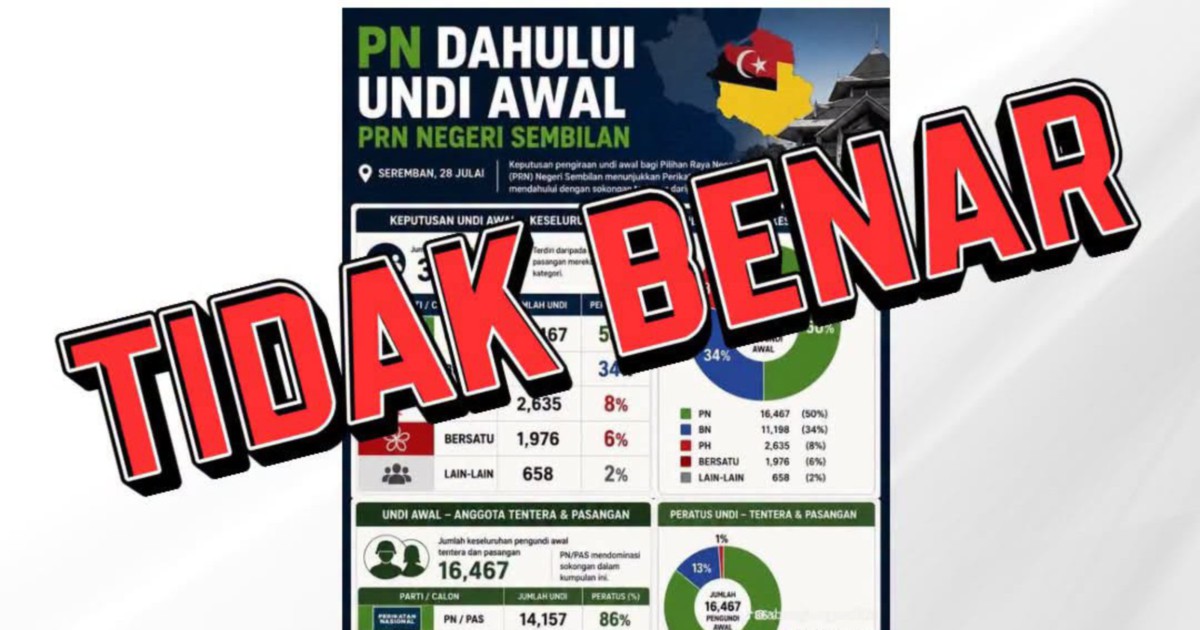
The Election Commission announced on Wednesday that the tabulation of early votes for the 16th Negeri Sembilan state election will commence at 5pm on Saturday, establishing a clear timeline for the initial phase of the closely watched poll. The statement from EC headquarters in Seremban provides crucial clarity on polling procedures as the state gears up for what analysts expect to be a competitive electoral contest.
The EC's announcement also addressed circulation of unverified claims on social media platforms suggesting that the PN coalition had already achieved a commanding advantage in advance voting. The commission firmly dismissed these allegations as inaccurate, emphasising that no substantive voting data would be available until the formal counting process begins on Saturday evening. Such premature claims underscore the intense interest and speculation surrounding the Negeri Sembilan election, where control of the state assembly remains genuinely uncertain.
Early voting procedures have become increasingly significant in Malaysian electoral contests, allowing civil servants, security personnel, and citizens working outside their home constituencies to cast ballots in advance. These votes provide the first concrete indicator of voter sentiment before the main election day count, making early vote performance a closely monitored bellwether. The Saturday timing means that the initial results will be in the public domain well before the full count concludes, potentially shaping media narratives and market reaction.
The viral false claims about PN's supposed early performance highlight the challenge facing Malaysian election observers and media outlets in verifying information during campaign periods. Unsubstantiated assertions spread rapidly through WhatsApp groups, TikTok, and Facebook, where fact-checking mechanisms remain limited and user verification is minimal. The EC's proactive denial suggests the commission recognises the corrosive effect such misinformation can have on public confidence in electoral integrity, particularly in closely contested races where sentiment may already be volatile.
Negeri Sembilan has historically served as a significant barometer for national political trends, and this election assumes particular importance given shifts in the state's political landscape over recent years. The 16th state election follows redistricting and represents the first major electoral test since the last assembly poll. Analysts suggest the contest will be more competitive than some previous Negeri Sembilan elections, with multiple coalitions competing vigorously for control of marginal constituencies.
The timing of early vote tabulation carries procedural importance beyond mere administrative scheduling. Releasing early results at 5pm Saturday means news outlets will have the full evening to analyse figures and prepare comprehensive coverage, potentially influencing sentiment ahead of main polling day. Political operatives typically scrutinise early vote breakdowns by constituency and demographic trends to assess whether their ground-level operations have proven effective. A larger-than-expected showing in early voting for any coalition could generate momentum or conversely expose organisational weaknesses.
Malaysia's Electoral Commission has faced previous scrutiny over transparency and procedural matters, making clear communication about voting timelines and safeguards against premature claims increasingly important for institutional credibility. By addressing false claims about early PN performance directly and explicitly, the EC demonstrates commitment to maintaining orderly information flow around the election process. This approach contrasts with past instances where the commission faced criticism for tardiness in addressing electoral disputes or clarifying procedural uncertainties.
For Malaysian voters in Negeri Sembilan and observers nationally, the Saturday early count offers the first definitive data point after weeks of campaign positioning and polling speculation. The results will illuminate which parties and personalities have successfully mobilised their ground machinery and resonated with voters on the issues dominating campaign discourse. Whether the early voting patterns reflect broader trends evident in main voting day results often becomes a subject of intense post-election analysis.
The circulation of false claims about early PN performance also underscores the information warfare aspect of contemporary Malaysian politics. During election periods, particularly those judged as closely competitive, strategic actors have incentive to circulate positive narratives about their coalition's prospects while undermining confidence in opponents' viability. The EC's swift correction of the PN claims reflects recognition that allowing such narratives to metastasise unchallenged could undermine electoral credibility, even if the claims ultimately prove baseless.
Moving forward, the Negeri Sembilan election campaign will likely intensify through Saturday morning, with all major coalitions pulling out campaign stops to energise supporters. The early vote count and subsequent main voting day results will provide evidence of whether campaign intensity translated into voter persuasion and turnout. For political analysts and journalists covering Malaysian elections, the early results will anchor their assessment of Negeri Sembilan's political trajectory and potentially offer indicators of momentum entering any future electoral contests.

