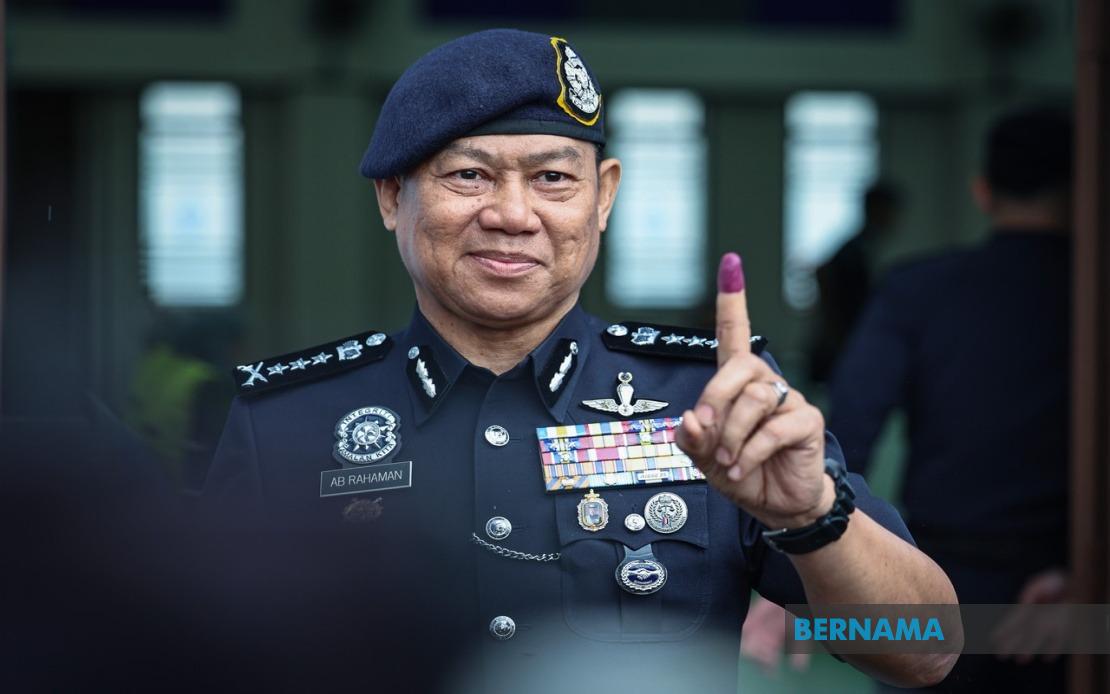
The 16th Johor state election's early voting phase maintained a steady pace on July 7, with police personnel in the state demonstrating solid participation rates. By 10:30 am, approximately 4,257 uniformed officers—representing 36.3 per cent of eligible police voters—had already submitted their ballots across the state's early voting centres. This preliminary turnout figure provided an encouraging signal of engagement among security personnel, though officials cautioned that final participation figures would only emerge once all polling stations concluded operations later that afternoon.
Johor Police Chief Datuk Ab Rahaman Arsad conveyed assurances regarding the orderly nature of proceedings, noting that the voting exercise involving both police and members of the Malaysian Armed Forces was unfolding without complications. Across all 53 designated early voting centres distributed throughout Johor, no disturbances or irregularities had surfaced that might jeopardise the electoral process's credibility or operational efficiency. Speaking after casting his own ballot at the Johor Police Contingent Headquarters in Johor Bahru, Ab Rahaman emphasised the absence of any reported concerns that could compromise voting integrity or administrative conduct.
The early voting framework accommodated a total of 20,607 registered voters at 64 polling centres that opened simultaneously at 8 am. These establishments would close sequentially between noon and 6 pm, with the timing adjusted according to geographical location and the volume of enrolled participants in each constituency. This staggered closure arrangement reflected standard practice designed to manage voter flow and ensure administrative efficiency across diverse polling environments throughout the state.
Incident management during the campaign preceding the election had primarily centred on property damage affecting political materials. According to police records, the majority of reports filed involved vandalism directed toward campaign paraphernalia, encompassing party flags, political advertisements, and promotional billboards. Such incidents, whilst notable, represented routine election-period concerns rather than serious threats to democratic processes or public order.
However, one matter occupied police investigative attention following controversial statements made by a former state assembly official. Datuk Dr Mohd Puad Zarkashi, the previous Speaker of the Johor State Assembly, faced an ongoing police investigation stemming from accusations he had lodged. Across Malaysia, authorities had registered 153 complaints connected to his assertions regarding alleged interference by the Johor Palace in the dissolution proceedings of the state legislative assembly. This politically sensitive allegation had triggered substantial nationwide reporting and official inquiry, though Ab Rahaman declined to elaborate on investigative progress or anticipated timelines for case resolution.
The electoral contest itself commanded considerable scale and complexity. A combined field of 172 candidates sought representation across 56 state constituencies, establishing a competitive environment with multiple contenders in numerous races. This candidate density suggested intense competition for seats and indicated the breadth of political engagement across Johor's electoral landscape. The electoral register encompassed more than 2.7 million citizens eligible to participate in the general polling scheduled for Saturday, representing a substantial electoral exercise requiring comprehensive logistical coordination and administrative resources.
For Malaysian observers and regional political analysts, the Johor election carries significance extending beyond the state's boundaries. As one of Malaysia's most economically vibrant and demographically substantial states, Johor's electoral outcomes influence national political calculations and coalition dynamics. The state election provides an intermediate polling opportunity between federal contests, offering parties feedback on grassroots sentiment and campaign effectiveness. Early voting participation rates among security personnel, whilst an incomplete indicator, traditionally correlate with broader engagement patterns and may suggest the anticipated general turnout trajectory.
The administration's emphasis on smooth operations and incident-free procedures reflects established electoral management standards within Malaysia's democratic framework. The absence of reported disturbances across 53 early voting centres suggested effective coordination between electoral authorities and security agencies responsible for maintaining polling-place security and procedural adherence. This operational stability constitutes a prerequisite for electoral legitimacy and public confidence in results, particularly important in contested political environments where confidence in institutional impartiality may face scrutiny.
The forthcoming Saturday polling represents the culmination of weeks of campaigning, candidate positioning, and voter mobilisation efforts. The election will determine Johor's state administration composition and policy direction across multiple portfolios affecting transportation, commerce, education, and development priorities. Early voting mechanisms, accommodating security personnel and others requiring advance participation, aim to enhance democratic accessibility while maintaining procedural integrity. The voting phase's smooth commencement suggested administrative systems were functioning effectively, though Saturday's general polling would present substantially greater operational challenges requiring coordination across hundreds of centres statewide.

