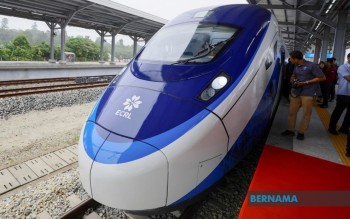
The East Coast Rail Link represents a transformative infrastructure investment that extends far beyond conventional transportation benefits, offering substantial commercial opportunities for businesses across four Malaysian states. Deputy Minister of Economy Datuk Mohd Shahar Abdullah recently outlined how the project will fundamentally reshape entrepreneurial prospects in Pahang, Terengganu, Kelantan and Selangor by fostering an interconnected economic environment where supply chains, logistics networks, and industrial hubs converge along the rail corridor.
At its core, the ECRL initiative encompasses more than just railway infrastructure. The project creates a comprehensive economic ecosystem encompassing construction services, operational management, and maintenance work that generates employment and contracts across multiple industries. This layered approach to infrastructure development means that opportunities extend to businesses beyond those directly involved in rail transportation, creating ripple effects throughout regional economies.
The anticipated emergence of logistics clusters, warehouse facilities, and industrial parks along the ECRL route will fundamentally alter competitive dynamics for East Coast businesses. Companies that have historically faced geographical disadvantages due to distance from major markets can now leverage significantly reduced transportation costs. This shift is particularly significant for manufacturers and traders seeking to expand beyond their traditional regional boundaries into Selangor and beyond, where logistics expenses have previously constrained profitability and market reach.
Mohd Shahar, also Member of Parliament for Paya Besar, emphasised that transit-oriented development strategies integrated into the ECRL project will maximise commercial potential. By deliberately positioning cargo facilities, industrial zones, and commercial developments alongside rail corridors, planners can create self-reinforcing economic clusters that attract further investment and business activity. This approach transforms linear infrastructure into nodal economic generators capable of stimulating sustained regional development.
Production scalability emerges as a critical advantage for businesses benefiting from improved logistics infrastructure. When delivery times shorten and transportation costs decline, manufacturers can confidently increase production volumes without fearing prohibitive distribution expenses. This operational flexibility enables competitive pricing strategies that previously seemed impossible, ultimately strengthening the market competitiveness of East Coast products. A business producing ten thousand units faces vastly different cost structures than one producing twenty thousand, meaning ECRL-enabled scale improvements directly translate to enhanced pricing power.
The tourism sector stands to capture substantial benefits from improved accessibility that the ECRL provides. Enhanced transportation connectivity will likely increase visitor numbers to East Coast attractions, generating multiplier effects throughout local economies. Small traders, artisanal food producers, handicraft manufacturers, and batik entrepreneurs will find expanded customer bases among both domestic and international tourists utilizing the modernised rail network. This tourism-driven growth creates employment opportunities extending beyond manufacturing into service sectors.
However, realising these opportunities requires deliberate business adaptation. Mohd Shahar cautioned that entrepreneurs must embrace technological innovation and evolve their operational models beyond traditional practices. Companies that attempt to capture ECRL-enabled growth opportunities while maintaining outdated business processes risk competitive disadvantage against rivals who have modernised their operations. Digital supply chain management, e-commerce integration, and data-driven logistics represent essential capabilities for businesses positioning themselves to maximise infrastructure benefits.
The ECRL project's advanced completion status demonstrates imminent realisation of these economic benefits. As of April, the comprehensive mega-project had achieved 93.66 per cent progress toward its December completion deadline, with the Pahang section advancing even faster at 97.33 per cent completion. This trajectory indicates that businesses have limited time to prepare strategic adaptations necessary for capitalising on the transportation revolution the completed infrastructure will deliver.
Regional stakeholders are increasingly recognising that modern infrastructure development represents more than engineering achievement. The ECRL exemplifies how strategically designed transport networks can address geographic limitations that have constrained East Coast economic growth. By deliberately integrating industrial development, logistics facilities, and commercial zones into infrastructure planning, Malaysian authorities have created conditions for sustained competitive advantage that extends beyond the immediate benefits of improved transportation connectivity.
The project's implications extend throughout Southeast Asia, where similar geographic fragmentation challenges multiple countries' economic development efforts. Malaysia's approach to integrating infrastructure investment with comprehensive economic ecosystem development offers a replicable model for regional peers seeking to unlock growth potential in peripheral areas. As the ECRL nears operational status, its performance will likely influence infrastructure development strategies across the region.
For Malaysian entrepreneurs, the approaching ECRL completion represents a critical inflection point requiring proactive strategic positioning. Businesses that anticipate market expansion opportunities and invest in technological capability and operational modernisation now will be best positioned to capture the productivity gains and market access improvements that December's opening will enable. Conversely, enterprises that delay adaptation risk losing competitive advantage to more innovative rivals.

