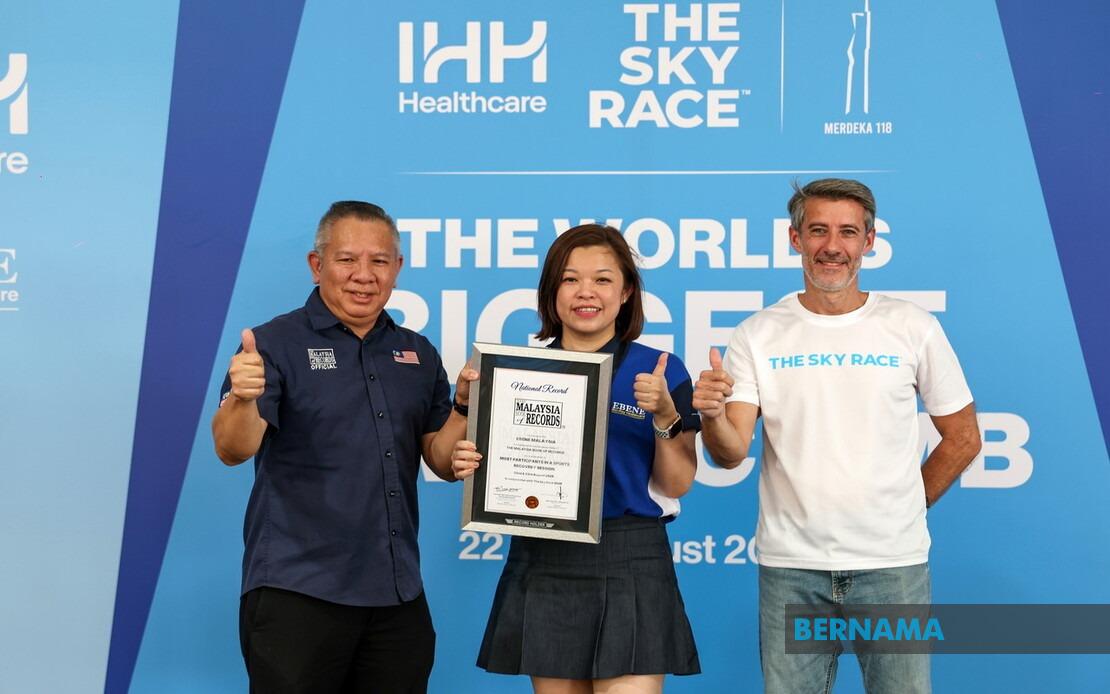
EBENE Bio-Ray Healthcare is leveraging a Malaysia Book of Records attempt to underscore the critical role that recovery plays in sustaining an active lifestyle, with the initiative centred on the Sky Race 2026 tower-running event held at Stadium Merdeka in August. The company's bid to set a record for the "Most Participants in a Sports Recovery Session" has already surpassed its initial target of 1,000 participants, reflecting both strong community engagement and growing awareness of recovery as an essential component of fitness rather than an afterthought.
Marketing and E-Commerce Director Goh Sa Ki explained that the initiative serves a dual purpose: breaking a national record while simultaneously raising public consciousness about the importance of structured recovery among Malaysia's running and tower-running communities. The partnership with the Malaysian Book of Records provides official validation and credibility to EBENE's broader mission of promoting proactive health management. This alignment demonstrates how corporate wellness initiatives can leverage record-breaking attempts as vehicles for public education, particularly in categories where awareness remains limited.
The Sky Race 2026 event itself drew approximately 8,000 runners and fitness enthusiasts to the historic Stadium Merdeka venue, providing EBENE with a substantial platform to engage directly with its target demographic. As the Official Main Partner and Official Knee Support Partner, EBENE positioned itself centrally within the event's ecosystem, transforming a competitive tower-running challenge into an educational experience about bodily care and injury prevention. Tower running, which requires participants to ascend multiple flights of stairs carrying their body weight, places extraordinary stress on the lower body—particularly the knees, lower back, and leg muscles—making recovery support especially relevant to this participant base.
Goh emphasised that tower running's intense physical demands necessitate comprehensive support throughout the entire activity cycle. Her comments reveal a strategic repositioning of EBENE's product portfolio not merely as remedial solutions for existing discomfort but as preventive tools that prepare the body before exertion, provide stability during performance, and facilitate restoration afterward. This three-stage framework—pre-activity support, performance stability, and post-activity recovery—represents a more sophisticated understanding of athletic care than many Malaysian consumers may currently possess, particularly among casual runners and fitness enthusiasts.
Central to EBENE's activation was the establishment of a dedicated Sports Recovery Zone at the event, where participants could access professional sports massage services and guided stretching sessions. This hands-on experience allowed athletes to immediately feel the benefits of structured recovery while still energised from competition, creating a memorable association between the brand and physical rejuvenation. The provision of expert-led sessions also elevates recovery from a passive, solitary activity to a social and educational experience, potentially shifting participant behaviour beyond the event itself.
EBENE's portfolio of knee support and compression solutions addresses a fundamental gap in Malaysian consumer understanding about injury prevention and mobility maintenance. Many active individuals in the region treat knee pain and discomfort as inevitable consequences of sport rather than preventable outcomes of inadequate support. By demonstrating how proper compression socks, knee guards, and other support mechanisms can mitigate stress on vulnerable joints, EBENE challenges this fatalistic mindset. The company's messaging—that caring for knees proactively is preferable to addressing injury reactively—directly counters decades of cultural conditioning that privileges toughness over prudent self-care.
The "Move with EBENE" activation framework, now in its fifth iteration, reflects a sustained commitment to lifestyle marketing rather than transactional product sales. This approach builds brand equity through repeated touchpoints with Malaysian consumers interested in active lifestyles, progressively embedding EBENE into their identity as runners and fitness practitioners. The strategy proves particularly effective in Southeast Asia, where community-based physical activities and group participation resonate strongly with cultural values around collective wellness and shared achievement.
With three decades of experience in the healthcare support category, EBENE brings institutional credibility to conversations about mobility and active ageing that younger competitors cannot easily replicate. The company's longevity suggests sustained investment in product development, quality assurance, and regulatory compliance—factors that matter to health-conscious Malaysian consumers increasingly exposed to international standards. This historical foundation also positions EBENE to participate authoritatively in regional health policy discussions as governments emphasise preventive healthcare and population wellness.
The Malaysia Book of Records achievement carries symbolic weight beyond simple numerical validation. National records confer prestige and public recognition that amplify marketing reach far beyond the event itself, generating media coverage and social conversation that extends the campaign's impact across Malaysia's urban centres where health consciousness is rising. For EBENE, the record serves as tangible proof of brand resonance and community trust—assets that compete effectively against both established international players and emerging local wellness brands in an increasingly crowded marketplace.
The broader implications of this initiative extend to how Malaysian businesses can harness competitive events and record-breaking attempts as platforms for public health messaging. Rather than treating corporate partnerships at sporting events as purely transactional sponsorships, EBENE demonstrates that meaningful brand-building can emerge when commercial objectives align with genuine consumer education. As Malaysia's active population continues expanding—driven by rising health awareness, urban jogging communities, and corporate wellness programmes—businesses that position recovery and prevention as central rather than peripheral will likely capture disproportionate market share among health-engaged consumers.

