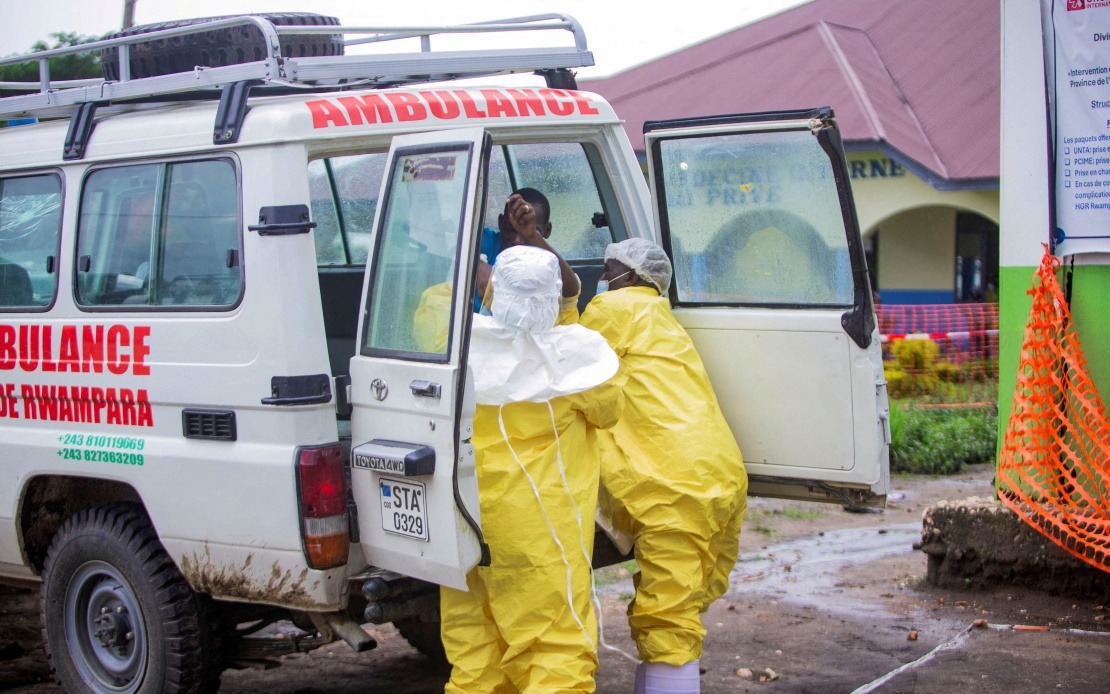
The Ebola epidemic gripping the Democratic Republic of the Congo has expanded beyond its initial epicentre, with health authorities now documenting confirmed cases across five provinces and a total caseload approaching 1,900 infections. As of Friday, the nation's health ministry registered 1,873 confirmed cases alongside 672 deaths, reflecting a mortality rate approaching 36 percent. The geographic spread signals a troubling evolution in the outbreak's trajectory, with the virus establishing footholds in previously unaffected regions even as containment efforts continue in the original zones of transmission.
The five affected provinces represent a significant geographical footprint across the eastern portion of the country. Ituri province remains the epicentre of transmission, but the outbreak has now reached North Kivu, South Kivu, Haut-Uele, and Tshopo. The inclusion of Haut-Uele and Tshopo in the official national situation report represents a concerning milestone, indicating that the virus has successfully penetrated new population centres and established sustained transmission chains beyond the originally affected areas. This expansion underscores the challenges facing disease control teams operating across a vast, densely forested region with limited infrastructure and ongoing security concerns that complicate outbreak response operations.
Epidemiological investigations have traced the emergence of cases in the two newly affected provinces directly to the original outbreak zone through identifiable chains of human contact and population movement. This finding suggests that rather than spontaneous zoonotic spillover events in these regions, the virus is being transported through human networks connecting the epidemic's origin in Ituri to surrounding territories. Understanding these transmission pathways remains critical for public health officials attempting to predict where the outbreak may spread next and for deploying preventive resources to populations at elevated risk of exposure through contact with infected individuals or outbreak-affected communities.
The healthcare system is straining under the weight of the ongoing epidemic. A total of 763 patients currently occupy isolation wards or hospital beds across treatment facilities, while the aggregate bed occupancy rate has reached 95.1 percent capacity. This near-saturation of medical infrastructure reflects both the ongoing caseload and the logistical challenges of operating treatment centres in a region where resource constraints are endemic. When combined with the 299 suspected cases still under investigation—which include 91 deaths—the situation highlights the lag between symptom onset and laboratory confirmation, and the difficulty of immediately isolating potentially infectious individuals in resource-limited settings.
Recovery figures provide some measure of hope amid the crisis. The health ministry has documented 306 patients who have recovered from the infection and survived to discharge. This recovery count underscores that clinical management of Ebola cases, when adequate supportive care and isolation measures are implemented, can result in patient survival. The proportion of recovered patients relative to confirmed cases remains modest, however, and reflects both the disease's inherent lethality and the challenges of delivering optimal medical care across dispersed treatment facilities operating under difficult circumstances.
The specific pathogen responsible for this outbreak, the Bundibugyo ebolavirus, belongs to the same genus as the better-known Zaire ebolavirus that caused the devastating 2014-2016 West African epidemic. The Bundibugyo species typically presents with a lower fatality rate than certain other Ebola variants, though the current mortality figures suggest virulent transmission patterns. The formal declaration of the outbreak on May 15 marked the beginning of the international health emergency response, though investigations would later reveal that transmission chains had likely begun circulating in the weeks preceding the official announcement.
For regional observers in Southeast Asia, the DR Congo Ebola situation carries important implications for pandemic preparedness and cross-border disease surveillance. While Ebola has not demonstrated sustained human-to-human transmission capacity across intercontinental distances through conventional travel, the outbreak illustrates how quickly a pathogen can establish itself across multiple jurisdictions once community transmission begins. Malaysia and neighbouring nations maintain robust border health screening procedures and disease surveillance networks, yet the DRC situation underscores the importance of sustained investment in outbreak detection capabilities and regional cooperation mechanisms for emerging infectious disease threats.
The ongoing outbreak also highlights the structural vulnerabilities that facilitate Ebola transmission in certain African contexts. Limited healthcare infrastructure, dispersed populations with restricted access to medical facilities, security constraints that impede outbreak responders, and high rates of community distrust of health authorities all contribute to transmission persistence. These contextual factors differ substantially from the epidemiological environment in most Southeast Asian nations, yet understanding them remains valuable for crafting culturally appropriate and contextually sensitive public health messaging in preparedness scenarios.
Containment of this outbreak will require sustained coordination among international health organizations, the DRC government, and regional partners to support contact tracing operations, health worker safety, and community engagement efforts. The expansion to five provinces indicates that the initial response phase, often characterized by rapid case identification and isolation, has given way to a more protracted phase requiring long-term resource commitment and sophisticated epidemiological intelligence to interrupt transmission chains across a broad geographic area. The trajectory of the coming weeks will largely depend on whether health authorities can maintain the investigative capacity to identify contacts of confirmed cases and successfully implement isolation measures before secondary transmission occurs.

