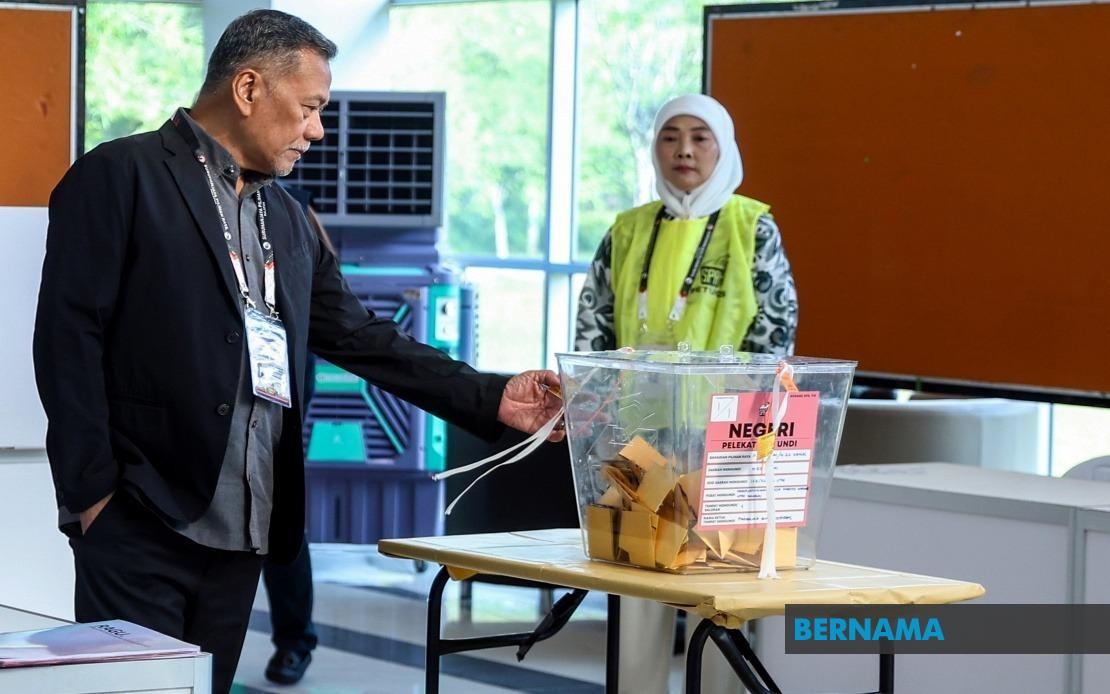
Datuk Seri Ramlan Harun, the Election Commission chairman, made a direct inspection of voting operations at four separate polling sites in Johor Bahru on July 11 to verify that the 16th Johor state election was unfolding without incident and maintaining proper electoral standards. The unannounced visits signalled the electoral body's commitment to hands-on oversight during a crucial state-level contest, with Ramlan personally assessing both the mechanics of the voting process and the infrastructure supporting both voters and poll workers.
Ramlan's inspection tour began in the morning at approximately 8.50 am at Dewan Raya Taman Ungku Tun Aminah, which served the Skudai constituency with seven separate polling streams. This opening stop was deliberate—Skudai is one of Johor Bahru's most populated urban areas, making it a logical starting point for verifying that higher-volume polling operations were proceeding without congestion or irregularities. The constituency's seven streams indicated significant voter turnout infrastructure had been deployed.
The EC chairman then travelled to Raja Zarith Sofiah Library, located within the Universiti Teknologi Malaysia campus, for the Senai constituency. This polling centre operated with two polling streams, a considerably smaller scale reflecting either lower voter registration or a campus-based constituency profile. Universities present distinctive electoral management challenges, requiring coordination between the institution's administration and election officials. The presence of UTM as a polling venue suggested effective integration of academic institutions into the state's electoral infrastructure.
Ramlan's third stop brought him to Sekolah Agama Taman Bukit Mewah in the Kempas constituency, which operated six polling streams. Religious schools have played traditional roles in Malaysian electoral administration, and this stop underscored how educational institutions across the public system serve as essential venues for democratic participation. The six-stream configuration at this centre suggested moderate voter density in the constituency.
The inspection concluded at Sekolah Menengah Kebangsaan Bandar Uda Utama in Perling, which maintained the highest polling stream count among the four visited centres at nine streams. This final stop appeared to target another high-capacity urban polling location, ensuring that the chairman's visits covered a cross-section of Johor Bahru's electoral machinery, from university settings to secondary schools and community halls.
During each inspection, Ramlan received detailed briefings from election officials responsible for managing polling procedures at each centre. These operational discussions would have covered critical elements including voter verification systems, ballot distribution and security, ballot box management, and the coordination protocols between polling stream supervisors. The chairman's physical presence at these stations conveyed the EC's expectation that officials maintain rigorous adherence to established procedures.
Beyond procedural verification, Ramlan specifically examined the facilities available to voters and election workers. This assessment encompassed physical accessibility for voters with mobility limitations, seating and rest areas for elderly voters, and adequate working conditions for poll workers who manage lengthy voting periods. Facility conditions directly impact voter participation rates and the operational efficiency of election administration, making this inspection component substantive rather than purely symbolic.
The four-centre tour covered four different constituencies—Skudai, Senai, Kempas, and Perling—providing geographic distribution across Johor Bahru and allowing the chairman to observe varied polling environments. This multi-site approach prevented observers from questioning whether the EC was selectively visiting well-managed centres, and instead suggested a systematic approach to verification.
For Malaysian and Southeast Asian observers, EC chairman inspections during active polling represent important transparency mechanisms. Direct senior leadership involvement in election monitoring—conducted visibly and during voting hours—reinforces institutional commitment to fair processes. In a region where electoral confidence remains contested in some jurisdictions, such visible oversight by high-ranking officials helps legitimise results by demonstrating that administrative controls functioned throughout the polling day.
The scheduled press conference following Ramlan's inspection tour provided an opportunity for public communication about his findings. Such briefings allow the EC to convey confidence in procedures, address any observed concerns, and set the narrative around election administration quality before final results became the focus of public attention.
Johor's state election represented a significant electoral contest with implications for the state government's composition and regional political dynamics within Peninsular Malaysia. The EC's deployment of senior leadership for direct polling site inspections reflected the contest's importance and the commission's determination to ensure procedural integrity throughout the voting process.

