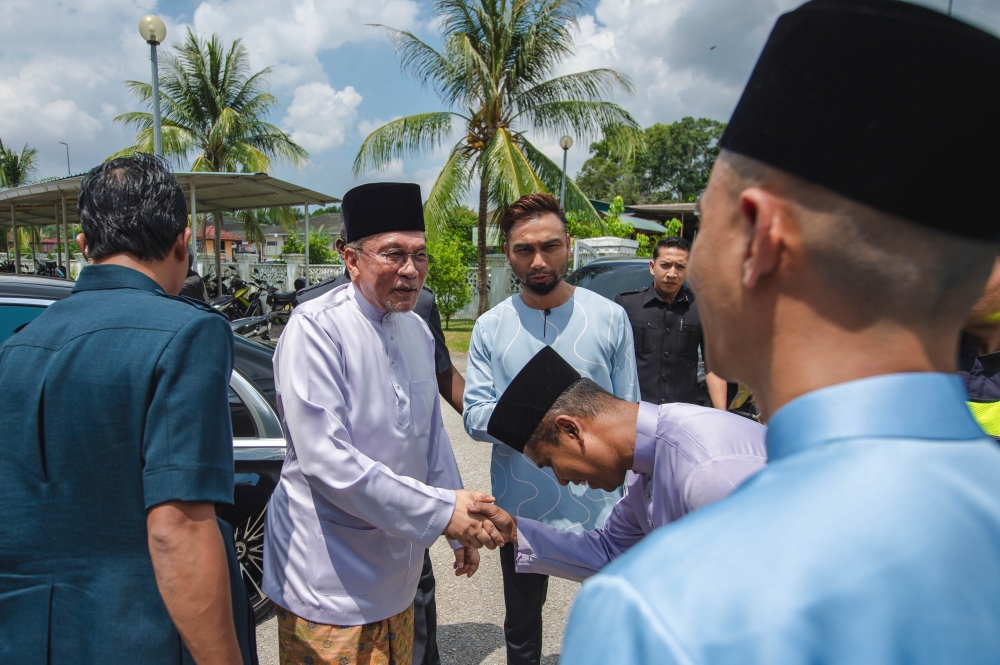
Prime Minister Datuk Seri Anwar Ibrahim has tempered optimism over Malaysia's outperformance in second-quarter gross domestic product growth by acknowledging that substantial portions of the population and the micro, small and medium enterprise sector remain under considerable economic strain. Speaking in Kuala Lumpur on July 17, Anwar underscored the government's recognition that headline economic figures do not necessarily reflect the lived experiences of those struggling to maintain their livelihoods across the country.
The apparent divergence between robust macroeconomic indicators and household-level financial distress has become an increasingly visible faultline in Malaysia's economic narrative. While the economy expanded at a pace that surprised forecasters in the April-to-June period, the distributional effects of this growth have been decidedly uneven. Anwar's acknowledgment reflects a political reality that policymakers cannot ignore: voters and business owners perceive economic strain regardless of what quarterly statistics suggest, and this perception shapes electoral sentiment and social stability.
Microenterprises and small businesses operating across Malaysia's service and retail sectors have faced persistent headwinds, from elevated operating costs and tight credit availability to weak consumer spending as households tighten budgets. The MSME segment, which employs millions of Malaysians and forms the backbone of local commerce in towns and villages nationwide, has been slower to benefit from broader growth trends than larger corporations with greater capital reserves and market reach. Many proprietors report margins compressed by input inflation that outpaces their ability to raise prices without losing customers.
Household incomes, particularly for wage earners in the bottom and middle income quintiles, have struggled to keep pace with cost-of-living increases across food, transport, utilities and housing. While inflation has moderated from its 2022 peaks, many essentials remain elevated relative to pre-pandemic baselines. Workers in export-dependent sectors have faced muted wage growth despite company profitability, as global demand conditions remain uncertain. The purchasing power of ordinary Malaysians, especially those dependent on fixed salaries, has effectively eroded.
The Prime Minister's framing signals a government attuned to this disconnect and conscious that economic management requires attending to both aggregate performance and distributional concerns. Anwar has previously emphasised themes of inclusive growth and social safety nets, positioning his administration as responsive to grassroots economic anxiety even as it pursues structural reforms and infrastructure investment intended to drive long-term prosperity. This rhetorical positioning becomes more critical as the government faces potential electoral cycles and ongoing pressure to demonstrate tangible improvements in citizen welfare.
Government support programmes targeting MSMEs have been rolled out to varying degrees of uptake and effectiveness. Access to financing remains a central bottleneck; while banks have been encouraged to expand lending to small businesses, collateral requirements and stringent credit assessments continue to exclude many operators who lack significant assets. Digital transformation initiatives aimed at helping MSMEs modernise their operations face adoption barriers among proprietors with limited technical literacy or capital investment capacity.
The contrast between aggregate growth and sectoral struggles also reflects Malaysia's ongoing economic structural challenges. Reliance on manufacturing exports, particularly semiconductors and electronics, creates vulnerability to global supply chain disruptions and cyclical demand fluctuations. Meanwhile, lower-productivity service sectors—retail, hospitality, local transportation—which employ large numbers of Malaysians, generate lower incomes and offer fewer growth trajectories for workers and proprietors. Regional competition from Thailand, Vietnam and Indonesia for tourist dollars and manufacturing investment has intensified.
Geographically, economic recovery has clustered in major urban centres and around existing industrial clusters in Selangor, Penang and Johor. Rural and semi-rural areas, including parts of East Malaysia, have experienced more muted growth momentum. This spatial unevenness in prosperity creates political risks, as constituencies distant from growth poles may perceive themselves abandoned by national economic policy. Infrastructure development and regional industrial investment will likely remain contested policy priorities.
Anwar's acknowledgment also reflects international economic uncertainties that could undermine sustained growth. Global trade tensions, potential interest rate volatility, and commodity price fluctuations all carry implications for Malaysian export competitiveness and inflation dynamics. Consumer spending, which has underpinned recent growth, could falter if employment conditions deteriorate or consumer confidence erodes further. Policymakers are therefore hedging optimism with caution.
Looking forward, the government faces pressure to demonstrate that aggregate growth translates into tangible income improvements for workers and viable business conditions for MSMEs. This may require targeted fiscal transfers, enhanced access to working capital for small enterprises, wage policy adjustments, or sectoral support programmes. Balancing these initiatives with fiscal sustainability and broader economic reform objectives will shape economic policy debates in coming months, with implications for Malaysia's trajectory as an upper-middle income economy navigating transition toward higher-value-added production and services.

