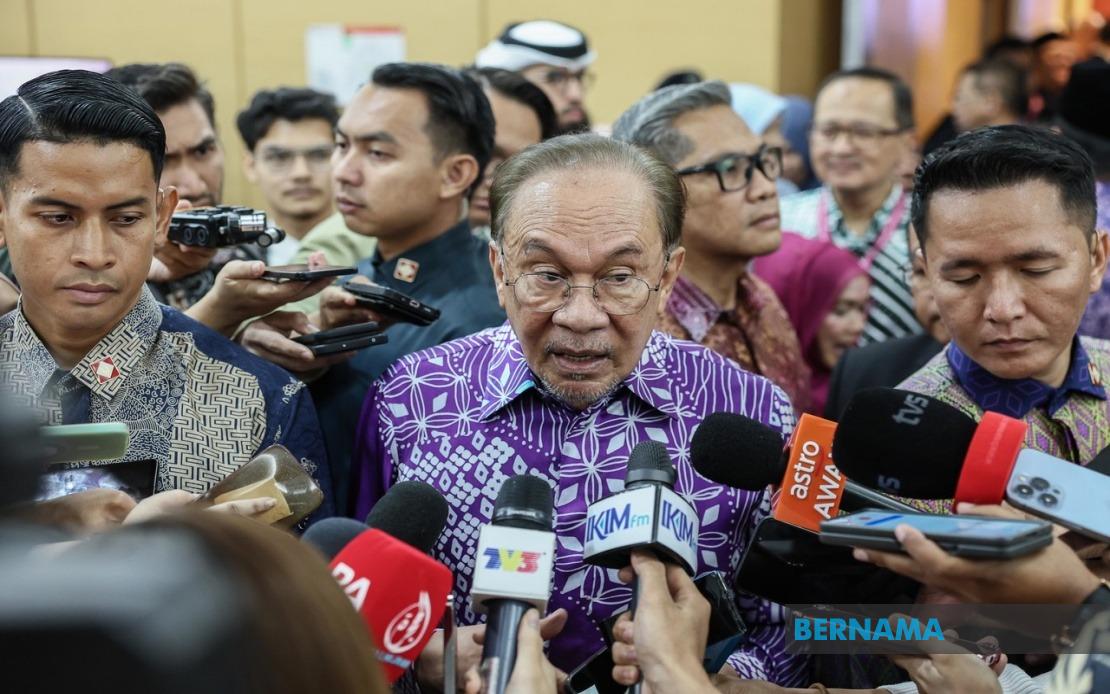
Prime Minister Datuk Seri Anwar Ibrahim has articulated a vision for Malaysian economic development that fundamentally reorients how the nation measures progress, arguing that prosperity divorced from ethical moorings and human welfare constitutes a hollow achievement. Speaking at the Humane Economy Global Discourse in Kuala Lumpur, Anwar stressed that while Malaysia must remain competitive and attractive to investment, this competitive edge cannot come at the expense of fundamental values that place human dignity at the centre of all economic activity.
The Prime Minister's remarks come as Malaysia navigates a rapidly shifting global economic landscape characterised by disruptive technological change. Artificial intelligence, renewable energy systems, advanced manufacturing capabilities, and biotechnology are reshaping industries and labour markets worldwide. Rather than viewing these transformations as purely technical challenges to be managed through efficiency metrics alone, Anwar's framing suggests that policymakers must grapple with deeper questions about how these technologies serve broader social purposes and whether their implementation strengthens or undermines human communities.
Anwar articulated a philosophical position that directly challenges the predominance of growth-centric development models that have long dominated policy discourse across Southeast Asia. By insisting that "the economy is a means, not an end in itself," he inverted the typical hierarchy that subordinates social considerations to economic imperatives. This reframing carries particular relevance for Malaysia, where rapid industrialisation and urbanisation have generated both prosperity and social dislocations, including wage stagnation for certain worker categories, widening regional inequalities, and concerns about environmental degradation accompanying resource extraction and manufacturing expansion.
The emphasis on reconnecting economic life to moral purpose signals an attempt to build consensus around values that transcend immediate partisan or sectarian divisions. By invoking universal concepts of human dignity and well-being, Anwar seeks to establish a common ground where diverse stakeholders—businesses, workers, civil society, religious communities, and government—can deliberate about development trajectories without reducing such conversations to zero-sum competitions for resources or ideological supremacy. This approach may resonate with Malaysian audiences concerned about the human costs of unfettered market competition and technological disruption.
The presence of Minister in the Prime Minister's Department (Religious Affairs) Dr Zulkifli Hasan at the discourse event suggests that Malaysia's government views moral and religious frameworks as essential to shaping economic policy. This integration of religious and ethical perspectives into economic governance reflects Malaysia's constitutional status as an Islamic state and broader cultural contexts across the region where spiritual and moral traditions inform civic values. By bringing religious affairs into dialogue with economic policy, the government implicitly argues that secular economic analysis requires supplementation with ethical wisdom rooted in religious traditions.
Chairman of Forum Ekonomi Manusiawi Prof Datuk Dr Saadiah Mohamad's participation in the discourse underscores the emergence of organised platforms dedicated to exploring humanistic approaches to economics. The existence of such forums suggests growing intellectual and policy interest in alternative frameworks that challenge conventional development paradigms. For Malaysia, this institutional infrastructure may facilitate deeper exploration of how Southeast Asian economies can pursue growth while strengthening social cohesion, environmental sustainability, and cultural preservation—concerns that resonate across the region as countries grapple with the human dimensions of rapid modernisation.
The timing of Anwar's statement carries significance given Malaysia's position as a upper-middle-income economy seeking to achieve high-income status while managing social tensions, climate change adaptation, and technological transition challenges. The nation's experience with rapid growth followed by periods of volatility demonstrates the limitations of growth models that neglect human and environmental dimensions. By articulating a vision that explicitly links economic success to improvements in people's dignity and well-being, Anwar provides intellectual framing that could guide resource allocation decisions, policy design, and institutional reforms toward more holistic measures of national progress.
The concept of a "humane economy" that Anwar championed through his discourse address suggests movement beyond utilitarian calculations that reduce human beings to factors of production or consumer units. Instead, this framing recognises individuals as ends in themselves whose inherent worth should constrain economic arrangements. Such a perspective has profound implications for labour policies, social safety nets, corporate governance standards, and the distribution of technological benefits across different socioeconomic groups. It suggests that economic decisions should be evaluated not merely through efficiency criteria but also through their effects on human flourishing.
For Malaysia's business community and investors, Anwar's emphasis on maintaining competitiveness and openness to investment signals that the government is not retreating from market-oriented policies or seeking to reverse integration into global value chains. Rather, the message appears to be that competitive advantage can be achieved while simultaneously ensuring that growth benefits reach workers, communities, and regions that might otherwise be marginalised by market forces. This framing potentially appeals to responsible investors and businesses seeking to operate within societies with strong social cohesion and stable institutional environments.
The broader regional context adds weight to Anwar's call for moral purposefulness in economic development. Across Southeast Asia, rapid technological change, trade competition, and climate pressures are generating widespread anxiety about employment security, income inequality, and environmental degradation. Countries throughout the region struggle with similar challenges of balancing growth imperatives with social stability and human welfare concerns. Malaysia's articulation of a humanistic economic vision may inspire regional dialogue about alternative development models and provide intellectual resources for policymakers seeking to navigate the difficult terrain between market discipline and social protection.
Implementing such a vision presents substantial challenges that extend beyond rhetorical commitment. Translating moral principles into concrete policies requires navigating tensions between different stakeholder interests, making difficult trade-offs between competing goods, and developing measurement frameworks that capture human well-being dimensions beyond conventional economic indicators. Malaysia's government will need to demonstrate through institutional reforms, budget allocations, and specific policy initiatives that commitment to moral purpose represents more than aspirational rhetoric. The success of this humanistic economic agenda will ultimately depend on whether it generates tangible improvements in the lives of ordinary Malaysians and whether it can be sustained through political cycles and economic fluctuations.

