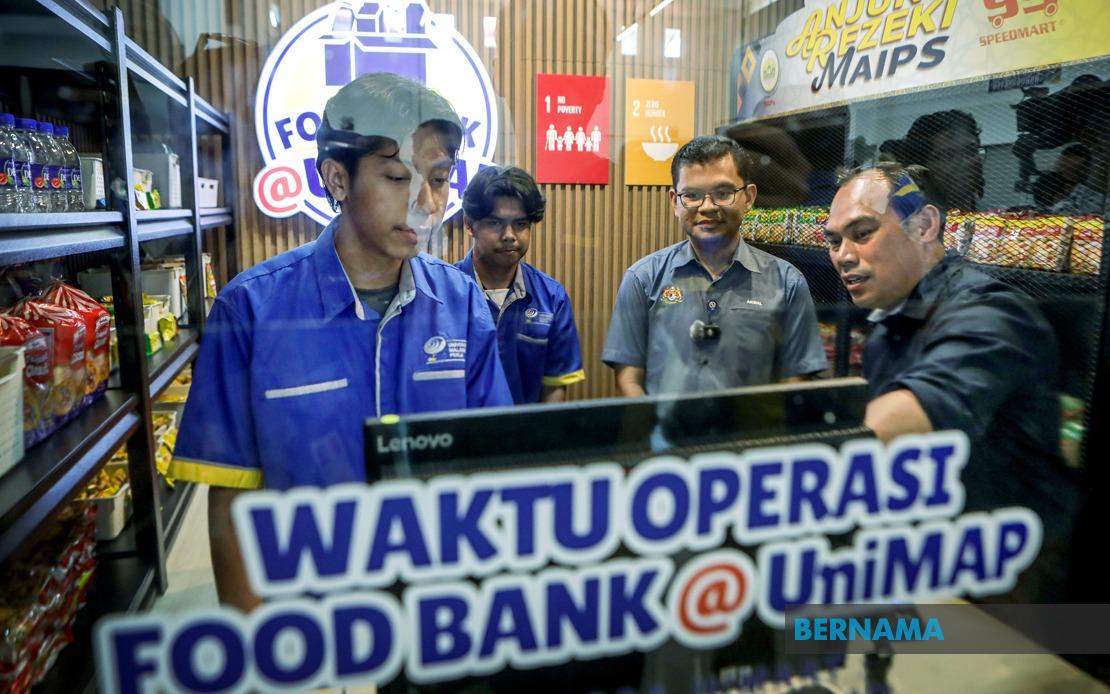
Malaysia's Economy Ministry is moving to secure an extension of the IPR-INSAN programme, citing substantial evidence that the initiative continues to deliver meaningful economic benefits to bottom-income entrepreneurs whilst providing affordable food access to consumers. Economy Minister Akmal Nasrullah Mohd Nasir announced the ministry's decision to petition the Finance Ministry for the programme's continuation during a working visit to Universiti Malaysia Perlis, where he directly observed the scheme's implementation on campus.
The IPR-INSAN initiative, officially known as the People's Income Initiative – Food Entrepreneur Initiative, operates through strategically positioned vending machines that allow B40 entrepreneurs to market home-prepared meals directly to university communities. Rather than relying on traditional hawker stalls or retail premises, which often require substantial upfront capital investment, the vending machine model significantly lowers barriers to entry for aspiring food entrepreneurs from lower-income backgrounds. This technology-driven approach represents a practical response to structural challenges that have historically prevented marginalised entrepreneurs from accessing mainstream commercial opportunities.
During his campus visit, Akmal Nasrullah inspected the IPR-INSAN installations at Universiti Malaysia Perlis and toured complementary student welfare initiatives including the Food Bank and MADANI Dapur Siswa student kitchen. These interconnected programmes reflect a holistic approach to addressing affordability challenges in tertiary education, recognising that food security directly impacts student academic performance and wellbeing. The minister's on-site engagement underscores the government's commitment to evidence-based policy extension, moving beyond theoretical projections to validate operational effectiveness.
The financial performance data collected from participating entrepreneurs demonstrates the scheme's capacity to generate sustainable income streams. At the Tuanku Abdul Rahman Residential College, vendor Norleyana Nordin achieved average monthly sales of RM2,178.80 through her homemade food business, with peak sales reaching RM4,905 in January. Across campus at the Tuanku Tengku Fauziah Residential College, entrepreneur Noor Hasfalela Mohd Noor recorded substantially higher throughput, generating average monthly revenues of RM4,595, with exceptional performance yielding RM10,012 in January and maintaining strong sales of RM5,049 in February and RM4,868 in April. These figures illustrate the income stability and growth potential inherent in the vending machine business model when properly deployed within high-traffic institutional environments.
For the participating entrepreneurs, these income levels represent meaningful contributions to household finances within the B40 demographic, where monthly household earnings typically remain constrained. The ability to generate between RM2,000 and RM4,500 monthly through a scaled food business provides both immediate income supplementation and a foundation for business expansion. Beyond raw revenue figures, the vending machine platform offers crucial non-financial benefits including flexible operating schedules that accommodate personal circumstances, minimal managerial overhead, and direct market feedback that enables rapid product adaptation.
The student consumer base benefits equally from the programme's design philosophy. Campus residents gain convenient access to freshly prepared meals at competitive pricing that undercuts conventional commercial alternatives. This affordability mechanism becomes particularly significant given escalating cost-of-living pressures affecting Malaysian university students, many of whom manage constrained budgets whilst pursuing tertiary qualifications. By bridging supply and demand through technological intermediation, IPR-INSAN simultaneously addresses entrepreneurial opportunity deficits and consumption affordability concerns within a single institutional framework.
The programme's expansion to university campuses represents strategic positioning within environments characterised by concentrated consumer populations, predictable purchasing patterns, and institutional partnerships that facilitate regulatory compliance and operational support. Universities provide stable commercial ecosystems where demand remains consistent across academic calendars, reducing entrepreneurial uncertainty compared to informal street vending arrangements subject to regulatory variability and weather dependency. Additionally, institutional anchoring lends credibility and safety assurances to consumer transactions whilst offering entrepreneurs professional development opportunities through university partnerships.
From a broader policy perspective, IPR-INSAN exemplifies innovative approaches to poverty alleviation that emphasise income generation over transfer mechanisms. Rather than subsidising consumption through voucher schemes or direct assistance, the programme catalyses economic participation by removing structural obstacles confronting marginalised entrepreneurs. This supply-side intervention reflects contemporary development economics recognition that sustainable poverty reduction requires enabling productive participation rather than perpetuating dependency relationships through welfare systems.
The ministry's petition to the Finance Ministry for programme extension arrives as Malaysian policymakers prioritise inclusive growth frameworks addressing documented inequality persistence. The IPR-INSAN evidence base demonstrates tangible poverty-alleviating impacts achieved through modest institutional investment, providing fiscal justification for continuation funding within constrained government budgets. Successful extension would signal committed policy continuity around entrepreneur-centred poverty reduction, reinforcing business confidence among B40 entrepreneurs contemplating similar formal-sector entry opportunities.
Looking forward, the programme offers replicable potential across other institutional settings including hospitals, government offices, and industrial parks with concentrated worker populations. The vending machine template demonstrates flexibility across diverse food products and service types, suggesting scalability possibilities that could eventually encompass non-food entrepreneurship. Successful extension would justify expanded pilot programmes testing applicability across alternative institutional contexts, potentially generating employment opportunities for substantially larger cohorts of B40 entrepreneurs seeking formalised market access.

