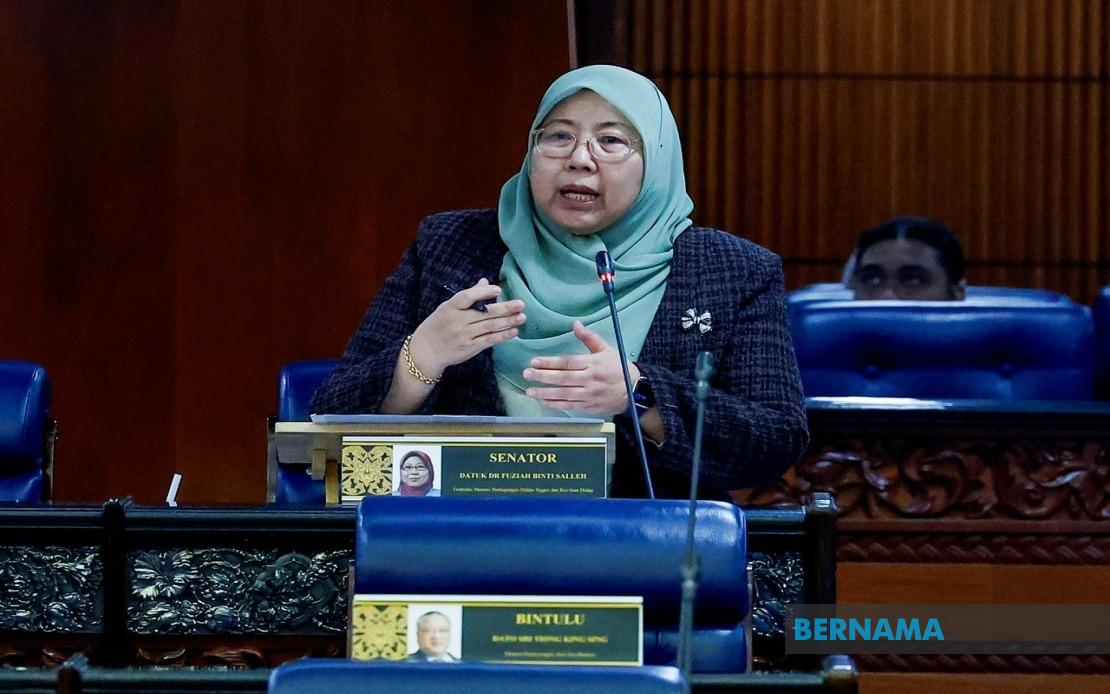
Since its launch last May, Malaysia's Cooking Oil Price Stabilisation Scheme (eCOSS) mobile application has emerged as an effective tool in preventing unauthorised distribution and leakage of subsidised one-kilogramme packet cooking oil to ineligible recipients, according to Deputy Domestic Trade and Cost of Living Minister Datuk Dr Fuziah Salleh. The government has been monitoring the system's performance through two primary measures: the consistency of market supply and the volume of complaints lodged by consumers, both of which suggest the digital infrastructure is achieving its intended objectives.
As of early July, the eCOSS platform had accumulated 5.261 million registered Malaysian users, demonstrating substantial public uptake of the system. This registration base has translated into predictable purchasing patterns, with the average monthly consumption of subsidised cooking oil reaching 18 million packets. The stability of these figures indicates that the application is successfully channelling subsidised product to legitimate domestic consumers while simultaneously creating barriers to diversion toward unintended recipients, particularly foreign nationals who previously exploited gaps in the distribution network.
Johor, which served as one of the pilot states for the eCOSS rollout, provides concrete evidence of the system's impact on ground. The southern state has seen 580,000 downloads of the application among its consumer base, whilst 1,093 of Johor's 2,822 registered retailers have integrated the eCOSS platform into their operations. Most tellingly, the state recorded a dramatic decline in supply complaints, dropping from nine recorded instances in June 2025 to merely two in June of the current year. This reduction in reported shortages suggests that the application has resolved many of the coordination problems that previously plagued the distribution of subsidised cooking oil in retail environments.
The digital nature of eCOSS has raised legitimate concerns about accessibility for vulnerable population segments, particularly elderly citizens and residents in rural and remote areas with limited technological familiarity. Recognising these challenges, the government has implemented a multi-layered support framework to ensure no Malaysian is excluded from accessing subsidised cooking oil due to digital barriers. Retail outlets have been equipped to provide direct assistance to customers struggling with the application interface, effectively creating a bridge between the digital system and those who require hands-on guidance.
Beyond point-of-sale support, the ministry has launched comprehensive public awareness campaigns and outreach programmes designed to demystify the eCOSS platform for less tech-savvy segments of society. Educational videos have been produced in accessible formats to walk potential users through the registration and purchasing process step-by-step. Crucially, the government has maintained manual purchase channels for consumers who either lack smartphones or prefer traditional transaction methods, ensuring that digital transformation does not become a gatekeeping mechanism that denies vulnerable populations access to an essential commodity.
The eCOSS mobile application functions as a complementary layer atop the broader eCOSS digital ecosystem, specialising in what officials term last-mile connectivity. This technical capability enables real-time tracking of subsidised cooking oil throughout its entire supply chain, from refineries and repackaging facilities through wholesale distribution networks and into individual retail outlets before reaching end consumers. This transparency mechanism creates accountability at each juncture and allows authorities to identify bottlenecks, anomalies, or suspicious diversion patterns that might indicate leakage.
Whilst the mobile application itself is not an enforcement tool, the monitoring data it generates has become central to how the government assesses whether the subsidy scheme is functioning as intended. Consumer complaints and feedback collected through the platform serve as early warning indicators when supply disruptions occur or when particular regions experience systematic access problems. This feedback loop enables the ministry to make targeted interventions and adjustments to the distribution network based on real-world evidence rather than speculation or generalised assumptions.
Enforcement operations against illegal cooking oil trafficking and subsidy fraud operate as a separate parallel initiative, distinct from the eCOSS application's data-gathering functions. However, insights derived from the platform's monitoring activities inform enforcement agencies about where leakages are most likely occurring and which distribution nodes warrant closer scrutiny. The combination of digital tracking through the mobile app and targeted enforcement creates a more comprehensive strategy than either mechanism could achieve independently.
For Malaysian policymakers grappling with how to maintain food security whilst managing fiscal pressures, the eCOSS experience offers valuable lessons about deploying technology to plug subsidy leakages without excluding vulnerable populations. The system demonstrates that digital solutions can enhance rather than undermine social protection when accompanied by support mechanisms for those with limited digital capacity. As Southeast Asian governments face mounting pressure to reduce subsidy burdens whilst protecting household food security, particularly as inflation erodes purchasing power, the eCOSS model provides a replicable template worth studying.
The ministry has indicated that it continues evaluating user feedback and system performance data to identify opportunities for further refinement of the eCOSS implementation. This iterative approach acknowledges that even successful systems require ongoing calibration as market conditions change and consumer behaviour adapts to new mechanisms. The relatively low complaint rate and stable supply figures suggest the application is meeting its core objectives, but authorities recognise that complacency could invite new forms of circumvention, requiring continuous monitoring and periodic system upgrades to stay ahead of potential fraud schemes.
Looking ahead, the ministry faces the challenge of expanding eCOSS coverage beyond its current footprint whilst maintaining the quality of implementation achieved in pilot states like Johor. Scaling the system across Malaysia's diverse geography and population segments will require careful attention to infrastructure capabilities in less developed regions and ongoing investment in support systems for digitally marginalised communities. The coming months will reveal whether eCOSS can sustain its early momentum and whether the model can be adapted for other subsidised essentials facing similar leakage challenges.

