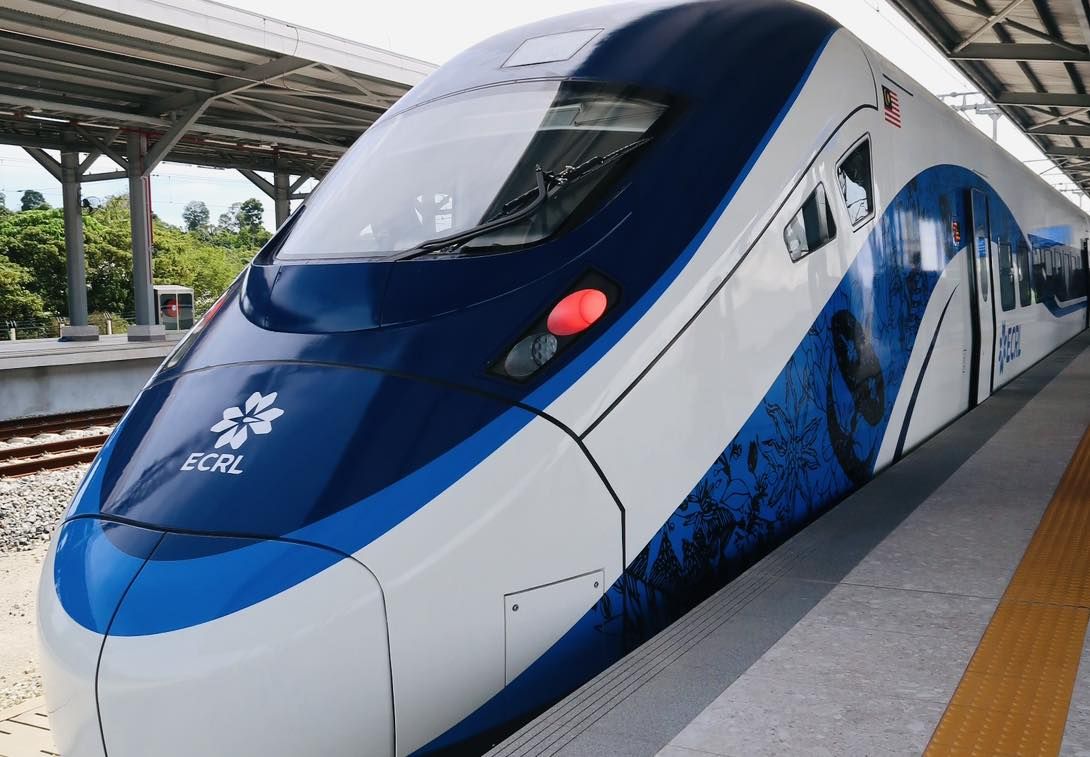
The RM50.27 billion East Coast Rail Link project will serve as far more than a transportation artery for the nation's eastern seaboard—it is positioned to catalyse substantial economic transformation across the region. Deputy Economy Minister Datuk Mohd Shahar Abdullah has revealed that the ECRL will generate between RM80 and RM90 billion in cumulative value-added contributions to Malaysia's gross domestic product by 2047, a projection that underscores the infrastructure's strategic importance to the country's long-term economic trajectory. This figure reflects government confidence in the project's capacity to unlock latent economic potential along a corridor that has historically lagged behind the industrialised west coast.
The economic gains will be primarily channelled through 21 Economic Accelerator Projects that are strategically distributed along the ECRL route. These carefully curated initiatives are designed to catalyse private and public investment, foster industrial clustering, and create sustainable employment pathways for communities in Kelantan, Terengganu, and Pahang. Rather than treating the railway as a standalone transportation solution, policymakers view it as the structural backbone upon which an integrated economic ecosystem will be developed. This holistic approach reflects lessons learned from similar infrastructure projects globally, where connectivity alone yields modest returns unless accompanied by deliberate spatial economic planning.
Three locations have been identified as critical logistics transformation zones. Pasir Puteh in Kelantan will feature a 213-acre logistic hub development, while Kemaman in Terengganu will host a 68-acre facility and Temerloh in Pahang will encompass 50 acres. These hubs are envisioned as modern distribution and warehousing centres that will position the east coast as a competitive alternative to existing port-dependent logistics networks. The strategic placement of these facilities reflects transport geography principles—they can serve both the ECRL's freight capacity and regional connectivity needs. For Malaysia, which faces growing competition from other Southeast Asian nations in supply chain management, establishing efficient logistics nodes along the east coast could prove decisive in retaining manufacturing and distribution activity.
The Perodua logistics hub in Paya Besar, Kuantan, exemplifies how the ECRL integrates with existing industrial plans. The automotive supply chain facility's first phase is scheduled for completion by 2029, signalling serious momentum toward operationalising the corridor's commercial potential. This timeline synchronises with the ECRL's anticipated launch in January 2027, allowing a critical window for hub infrastructure to mature before full-scale freight operations commence. For Malaysian manufacturers seeking to diversify supply chain risks away from traditional west coast concentrations, this represents a genuine alternative infrastructure option.
Deputy Minister Shahar, who represents the Paya Besar constituency, emphasised that the ECRL represents complementary rather than competitive infrastructure within Malaysia's broader logistics architecture. This framing is politically astute and economically sound—the project need not cannibalise existing shipping routes or port activities but can instead absorb growing cargo volumes and distribute them more efficiently across the peninsula. For Singapore and other regional hubs worried about Malaysian infrastructure eroding their positioning, this messaging attempts to position the ECRL as demand-creating rather than demand-diverting.
The initiative is being operationalised within the framework of Malaysia's MADANI Economy, which emphasises inclusive growth, sustainability, and regional equity. The 13th Malaysia Plan's allocation mechanisms, including the Malaysia Development Composite Index and MyRMK system, are designed to channel investments toward areas with genuine development deficits. The east coast—with lower GDP per capita, younger populations, and underutilised agricultural and marine resources—clearly qualifies. This institutional embedding of the ECRL within broader economic planning frameworks increases the likelihood of complementary investments materialising beyond the railway corridor itself.
The infrastructure specifications underscore the project's dual focus on passenger and freight services. The allocation of 11 six-car electric multiple unit train sets for passenger services will enhance urban mobility and inter-city connectivity, potentially reshaping settlement and employment patterns along the corridor. The 12 electric locomotives dedicated to cargo operations signal serious commercial intent, with electric traction reducing operational costs and environmental impact relative to diesel alternatives. For a region increasingly conscious of environmental sustainability and facing pressure to decarbonise transport systems, this choice carries symbolic and practical significance.
Economic impact projections of this magnitude require careful scrutiny. The RM80-90 billion figure represents cumulative value-added over two decades, translating to roughly RM4-4.5 billion annually by 2047—substantial but not transformational for a national economy trending toward the RM3 trillion range. The realisation of these projections hinges critically on the materialisation of the 21 Economic Accelerator Projects, competitive freight pricing that makes the corridor economically attractive relative to existing shipping routes, and the emergence of institutional capacity to manage complex multi-stakeholder logistics coordination. International experience demonstrates that infrastructure often disappoints economically when adjacent institutional or market conditions fail to evolve.
For Malaysia's regional positioning, the ECRL carries strategic weight beyond the financial projections. A functioning east coast rail corridor enhances Malaysia's attractiveness as a transit country for Southeast Asian trade, potentially strengthening relationships with Thailand, Brunei, and Indonesia. The project thus intersects with broader regionalisation trends and could facilitate ASEAN supply chain deepening if integrated thoughtfully with neighbouring countries' transport networks. Thailand's Southern Economic Corridor, in particular, could potentially benefit from eventual interoperability arrangements.
The December 2026 completion target represents the project's near-term critical milestone. Delays at this stage would cascade through the entire economic development timeline, pushing back the materialisation of accelerator projects and logistics hub investments. Conversely, on-time delivery would validate the government's infrastructure planning capacity and demonstrate commitment to equity-oriented development. For investors considering participation in the 21 Economic Accelerator Projects, the railway's delivery timeline functions as a confidence signal.
The ECRL ultimately reflects a deliberate policy choice to rebalance Malaysia's economic geography away from the west coast concentration that has characterised development since colonial times. Whether the RM80-90 billion projection materialises depends less on the railway itself than on the government's ability to orchestrate complementary institutional, regulatory, and investment frameworks. The project exemplifies how infrastructure alone is necessary but insufficient for economic transformation—the human and institutional dimensions will prove decisive.

