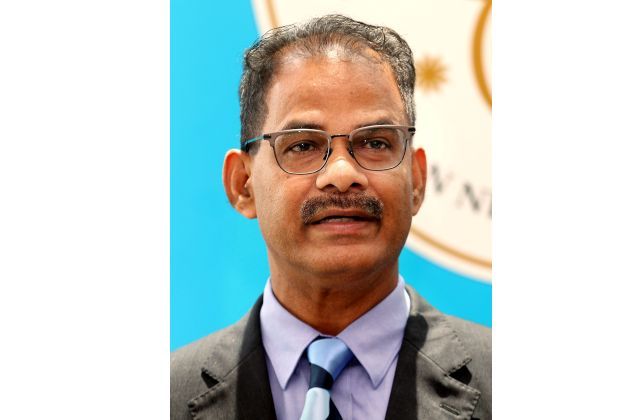
The multi-billion ringgit East Coast Rail Link project stands to deliver significant employment prospects for Selangor's workforce, particularly within the locomotive manufacturing industry. State human resources and poverty eradication committee chairman V. Papparaidu outlined during the state assembly sitting in Shah Alam that the RM50.27 billion infrastructure initiative is expected to create around 2,000 job openings across the sector, with a substantial majority of these positions reserved for local talent.
The employment creation potential of the ECRL underscores the broader economic multiplier effects that major transport infrastructure projects generate within host regions. Papparaidu emphasised that roughly four-fifths of the positions emerging from this undertaking will be sourced domestically, reflecting a deliberate policy focus on prioritising Malaysian workers. This commitment aligns with the state government's strategic objective of channelling economic gains directly to the local population rather than relying on external workforce imports.
Recognising that these emerging opportunities demand specific technical expertise, the Selangor administration has already begun positioning its youth for entry into these high-skilled positions. Papparaidu pledged that the government would provide comprehensive skills development programmes tailored to meet locomotive and advanced manufacturing industry requirements. The approach demonstrates an understanding that infrastructure projects alone cannot guarantee employment outcomes; rather, proactive workforce preparation is essential to bridge the gap between available vacancies and worker readiness.
The state government has deployed several mechanisms to facilitate this skills-to-employment pipeline. Among these initiatives is Kerjaya Selangor, a collaborative framework developed in partnership with the Social Security Organisation (PERKESO) that leverages the MyFuture Jobs platform to connect job-seekers with employers. This digital matching system accounts for individual qualifications, technical capabilities, and specific sectoral requirements, reducing friction in the labour market and improving placement outcomes. Beyond digital platforms, the government has organised JobCare Selangor events, large-scale recruitment fairs designed to create direct interview opportunities for Technical and Vocational Education and Training (TVET) graduates.
Selangor's TVET pipeline appears robust. Between January and July this year, the state produced 10,111 TVET graduates according to PERKESO data, demonstrating consistent output from technical institutions. However, the broader labour market reveals a significant skills mismatch that requires attention. During the same seven-month period, Selangor registered 78,030 job vacancies demanding diploma-level qualifications or higher, with 3,965 of these positions concentrated in high-skill sectors including automotive, semiconductor, and manufacturing. Roles such as automotive engineers, data scientists, and software developers—all commanding premium salaries and offering strong career progression—predominantly emerge from these advanced sectors.
The ECRL's locomotive manufacturing component represents a particularly valuable employment category within this advanced skills landscape. Unlike lower-wage, lower-skill manufacturing roles, locomotive production demands sophisticated technical knowledge encompassing mechanical engineering, electrical systems, quality control, and production management. TVET qualifications, when properly aligned with industry standards, equip graduates to fill these positions competitively, providing pathways to middle-class earning potential that extend beyond traditional manual labour.
Yet realising this potential requires more deliberate coordination across Selangor's diverse economic geography. Acknowledging this need, Papparaidu signalled the state government's intention to undertake district-level skills mapping exercises. Such mapping would contrast the educational output of particular areas against the specific industrial requirements of those regions. This approach recognises that Shah Alam, with its significant automotive and locomotive manufacturing base, faces distinct labour needs compared to port-dependent Pelabuhan Klang or other districts with divergent economic structures. A one-size-fits-all training strategy would inevitably misdirect resources and leave pockets of unmet employer demand.
Implementing such granular mapping demands institutional coordination that extends beyond the state human resources apparatus. Universities and technical colleges across Selangor maintain detailed enrolment and graduation data across various disciplines and specialisations. Consolidating this intelligence would require these institutions to align closely with state labour planning agencies and industry stakeholders. The challenge lies not merely in data collection but in establishing feedback mechanisms whereby employers continuously signal emerging skills shortages, enabling educational institutions to adjust curriculum design responsively.
The ECRL initiative thus serves as a catalyst for broader workforce development reform across Selangor. The project's timeline and scale—generating 2,000 positions in a single locomotive sector across a state of 6.5 million people—render it significant enough to justify substantial preparatory investment in skills infrastructure. Moreover, successful ECRL workforce integration could establish replicable models for subsequent megaprojects, from the Hyper-Integrated Manufacturing facility commitments to potential semiconductor expansion initiatives.
For Malaysian policymakers, Selangor's approach offers instructive lessons regarding the infrastructure-employment nexus. Large-scale capital projects generate job openings, yet these opportunities remain unrealised unless educational systems, labour intermediaries, and employers coordinate effectively before project execution commences. The ECRL demonstrates that even infrastructure-driven employment creation requires sophisticated human capital development strategies, carefully calibrated to sectoral and geographic realities. Success hinges not on infrastructure investment alone but on parallel commitment to systematic workforce preparation across the pre-employment pipeline, from secondary TVET intake through to job placement support and continuous upskilling mechanisms.

