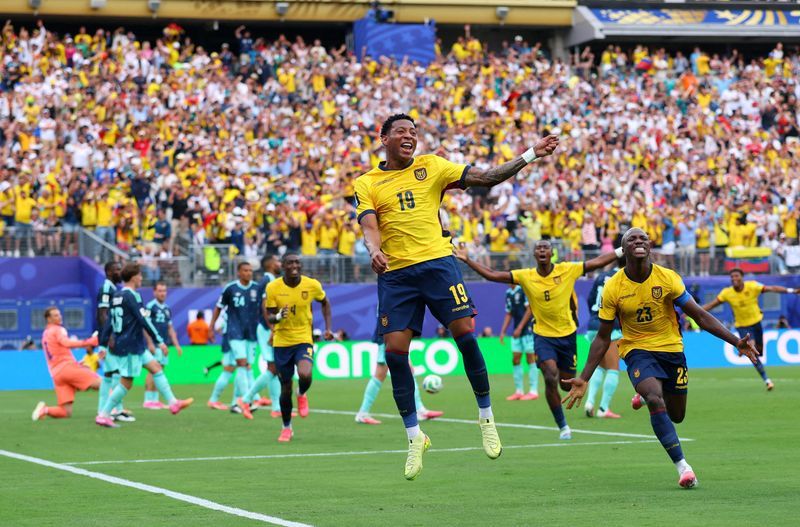
In a dramatic reversal of fortunes at East Rutherford, New Jersey, on Thursday, Ecuador completed an improbable escape from World Cup elimination by defeating the already-qualified Germany 2-1, thereby advancing to the tournament's round of 32. The South American side, facing their final chance to salvage a struggling campaign, orchestrated a stunning turnaround that erased an early deficit and sent their travelling supporters into jubilant scenes at the sold-out stadium.
The match began disastrously for Ecuador when Germany's Leroy Sane converted a chance in the second minute, putting the European side ahead with a confident left-footed finish from inside the penalty area. This goal, which marked Sane's first-ever international tournament objective in his 15th major competition appearance, appeared to confirm Ecuador's fears of an early exit. The quick strike came after Florian Wirtz executed a sharp ball forward from a recycled throw-in, creating the opening that Sane gratefully accepted.
However, Ecuador's response proved equally swift and decisive. In the ninth minute, Nilson Angulo curled a delicate shot from the edge of the penalty box beyond Manuel Neuer, sparking wild celebrations across the yellow-clad section of the crowd. This leveller held significant symbolic weight, as it represented Ecuador finally breaking through after 39 fruitless attempts in the tournament—a drought that had haunted them throughout their group campaign and left their qualification prospects appearing grim.
The breakthrough carried particular weight given Ecuador's precarious position entering the fixture. Having suffered a defeat to Ivory Coast and managed only a draw against Curaçao, the South Americans desperately required a victory to harbour any realistic hopes of progression. Their inability to score in previous matches had compounded pressure on the squad, and Angulo's strike provided the psychological lift needed to sustain their challenge against a formidable opponent.
Controversies punctuated the contest, testing referee Tori Penso's judgment. When Sane opened the scoring, Ecuador's players protested that Aleksandar Pavlovic had committed a foul in the buildup, raising his foot dangerously high in a challenge with Pedro Vite. Penso, however, allowed the goal to stand, denying Ecuador an opportunity to dismiss the early setback. Such incidents reflected the heightened stakes and emotional intensity surrounding a match carrying knockout-stage implications for the visitors.
The second half witnessed another moment of scrutiny when Penso initially awarded Germany a penalty after Kai Havertz went to ground during an attack orchestrated by Felix Nmecha. Joel Ordonez appeared to have made contact, prompting the referee's decision. However, a VAR review prompted Penso to overturn his call, determining that the buildup to the incident involved an earlier foul by Germany. This reversal proved pivotal, denying the Europeans an opportunity to extend their advantage and restore comfort to their position.
Gonzalo Plata ultimately settled the contest in the 78th minute with a composed finish that proved decisive. Following a corner kick delivery, substitute Kevin Rodriguez flicked the ball toward the near post, and Plata reacted with alertness to stab home past Neuer. The goal ignited scenes of unbridled celebration within the venue, confirming Ecuador's improbable passage into the knockout stage and deflating German ambitions for a perfect group finish.
Germany's defeat prevented them from achieving a third consecutive victory within Group E and halted their pursuit of a 12th successive win in international competition. Despite topping the group with six points, the European powerhouse demonstrated defensive vulnerabilities that could prove problematic in the knockout rounds. They conceded in all three group matches, suggesting structural weaknesses despite their attacking prowess and dominant possession throughout their fixtures.
The final standings saw Germany finish as group leaders ahead of Ivory Coast, who qualified second following their 2-0 victory over Curaçao. Ivory Coast's triumph on goal difference highlighted the competitive intensity across Group E, where multiple contenders vied for advancement. Ecuador, despite their earlier struggles and apparent impending elimination, ultimately qualified as one of the eight best third-placed teams, rewarding their dramatic turnaround and resilience when circumstances appeared most bleak.
For Southeast Asian observers, Ecuador's recovery carries lessons about tournament unpredictability and the significance of maintaining composure during adversity. Their transformation from goalless frustration to clinical finishers demonstrates how momentum and collective determination can overcome statistical disadvantages. Meanwhile, Germany's defensive shortcomings, despite their elite attacking personnel, underscore how even established football powers face vulnerabilities when tournament structures demand immediate results across compressed timeframes.
Ecuador's qualification represents a validation of their late-tournament adjustment and psychological fortitude. Having absorbed early disappointment without surrendering, they converted their opportunity when it arrived, demonstrating qualities that often distinguish successful World Cup campaigns. As they advance toward knockout competition, their capacity to overcome adversity may prove as valuable as technical ability in navigating an increasingly unpredictable tournament environment.

