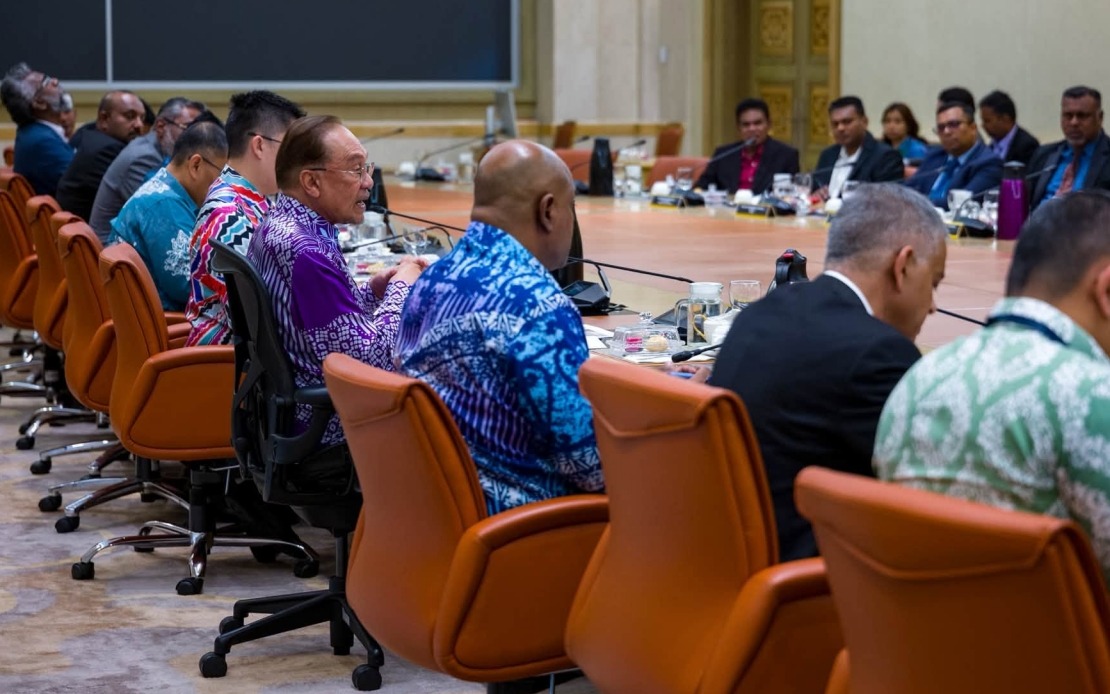
Prime Minister Datuk Seri Anwar Ibrahim has set out a comprehensive framework for advancing the Indian community in Malaysia, placing education and social welfare at the centre of his administration's empowerment agenda. Speaking through a social media statement this week, Anwar articulated a vision grounded in practical interventions across multiple fronts, signalling renewed governmental attention to a demographic that has historically faced persistent socioeconomic disparities within the nation's multicultural fabric.
The Prime Minister, who also holds the Finance portfolio, identified four interconnected pillars as critical to meaningful progress: quality education, comprehensive welfare systems, skills development, and improved employment pathways. This holistic approach reflects recognition that no single policy intervention can address the complex layers of disadvantage experienced by segments of the Indian community. By linking educational opportunity to employment prospects and underpinning both with robust social safety nets, the government appears to be adopting an integrated strategy rather than treating these areas as separate policy domains.
During discussions with Indian community leaders, Anwar emphasised the necessity for the Malaysian Indian Transformation Unit (MITRA) and allied governmental agencies to shift toward more proactive engagement at the grassroots level. This pivot represents a tacit acknowledgment that top-down policies, however well-intentioned, may fail to reach those most in need or address their actual circumstances. Grassroots-level work demands sustained presence within communities, direct dialogue with residents, and responsiveness to locally-identified challenges rather than assumptions made from central offices.
The Prime Minister issued a specific directive to MITRA and related bodies: they must maintain continuous dialogue with the Indian community, undertake proper needs assessment to understand ground realities, and ensure that government initiatives genuinely benefit those facing the greatest hardship. This language suggests frustration with programmes that may have existed on paper without translating into tangible improvements in people's lives. Effective governance requires not merely the announcement of schemes but verification that resources reach intended beneficiaries and produce measurable outcomes.
Anwar framed his approach around three governance principles: compassion, accountability, and good governance. Compassion acknowledges the lived experiences and vulnerabilities of marginalised communities. Accountability means government agencies must answer for how they deploy resources and whether outcomes match intentions. Good governance encompasses transparency, efficiency, and inclusive decision-making. Together, these principles form a counterweight to bureaucratic inertia or tokenistic gesture politics that can characterise development work affecting minority communities.
The stated objective—ensuring no segment of Malaysian society is left behind in national development—carries particular resonance given historical patterns of economic inequality along ethnic lines. The Indian community, despite significant professional and entrepreneurial representation, contains a substantial portion facing persistent poverty, limited educational access, and employment precarity. Anwar's emphasis on inclusive development implicitly acknowledges this uneven landscape and positions equitable opportunity as a prerequisite for social cohesion.
For Malaysian readers and observers of Southeast Asian politics more broadly, this announcement carries several implications. First, it demonstrates that minority community concerns have gained sufficient political salience to warrant prime ministerial attention and public commitment. Second, it reflects a broader shift toward needs-based rather than purely identity-based governance—the focus is on material improvement rather than symbolic recognition alone. Third, the emphasis on institutional reform (making MITRA and agencies more responsive) suggests the Prime Minister views existing mechanisms as potentially inadequate to the task.
The timing and framing of these comments also merit consideration within Malaysia's political economy. Education and employment represent domains where investment generates both immediate welfare benefits and longer-term human capital development. A government prioritising these areas is essentially betting on community advancement through capacity-building rather than redistributive transfers alone, a philosophy that appeals across ideological divides and promises sustainable improvement rather than temporary relief.
The invocation of fair opportunity for all Malaysians to build better futures represents the government's normative vision but also acknowledges an existing deficit—implying that at present, opportunity is not equally distributed. Whether MITRA and governmental agencies possess sufficient resources, staffing, and autonomy to execute this agenda remains an open question. The strength of the Prime Minister's statement lies in identifying clear priorities and demanding institutional responsiveness; its ultimate test lies in implementation and measurable outcomes for Indian communities across Peninsular Malaysia, Sabah, and Sarawak.

