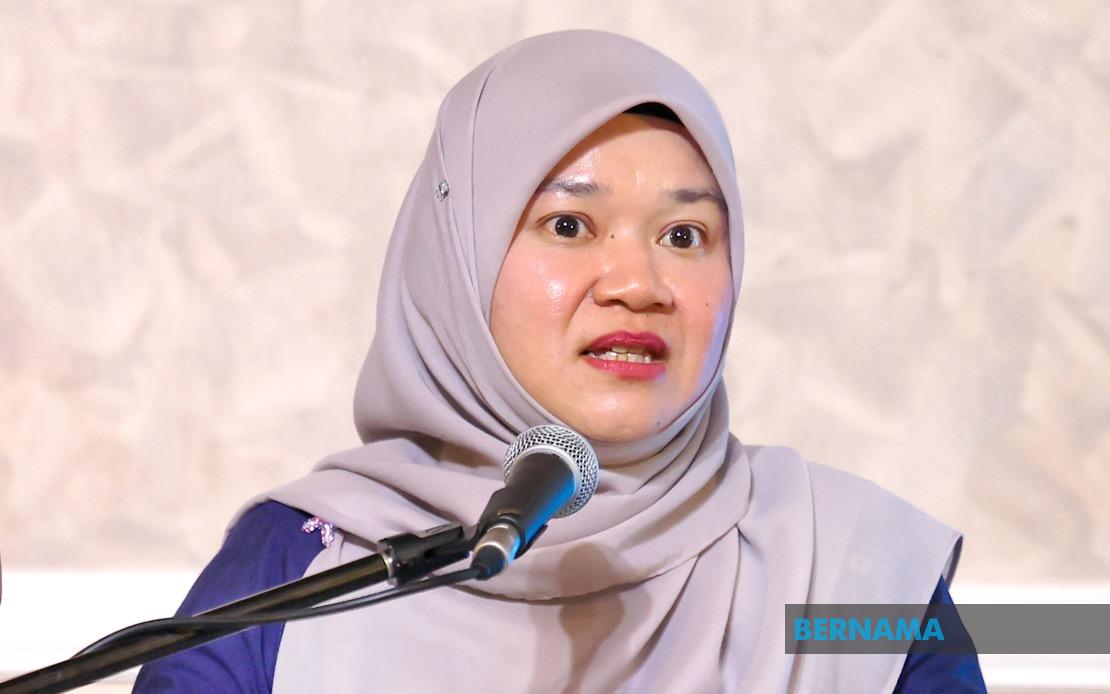
Education Minister Fadhlina Sidek, who heads the PKR Wanita wing, has escalated her response to a fabricated video by lodging a formal police complaint in Kuala Lumpur. The artificial intelligence-generated content, which has been spreading across digital platforms, contains false and damaging allegations designed to undermine her standing and character. Her decision to pursue official channels reflects growing concerns within Malaysia's political establishment about the weaponisation of deepfake technology to attack public figures, particularly women in positions of power.
In a statement released today, Fadhlina expressed deep concern about the nature and intention behind the video's distribution. She characterised the circulation as deliberately malicious, targeting not merely her reputation but her personal integrity. The minister made clear that she views this incident as part of a broader pattern of coordinated attacks rather than an isolated occurrence, suggesting that the video's creation and spread followed a deliberate strategy to damage her credibility within weeks of significant political developments.
The filing of a police report represents an official acknowledgement of the severity of the threat posed by synthetic media technology to Malaysia's political discourse. By invoking law enforcement, Fadhlina has signalled that such attacks will not be tolerated passively and that those responsible should expect serious legal consequences. This approach aligns with growing international recognition that deepfakes and AI-manipulated content constitute genuine threats to democratic processes and personal safety, particularly when deployed against vulnerable targets.
Fadhlina's statement encompassed a broader call to action beyond her individual case. She urged all stakeholders—political parties, civil society organisations, and the public—to adopt an uncompromising stance against slander, character assassination, and sexual harassment directed at women in politics. This framing positions her complaint as part of a larger struggle for protecting women's participation in governance from increasingly sophisticated forms of abuse. Her appeal resonates with international movements documenting how online harassment disproportionately affects female politicians, often forcing talented individuals to withdraw from public service.
The use of artificial intelligence to generate the defamatory content marks a troubling evolution in the arsenal of political attack tactics. Traditional forms of character assassination required a degree of material evidence or at least plausible narrative construction, but AI-generated deepfakes eliminate even these minimal barriers to creating seemingly convincing false material. This technological advancement has outpaced Malaysia's legal framework and enforcement capacity, creating vulnerabilities that require urgent policy responses and updated legislation specifically addressing synthetic media offences.
The incident occurs within a context of rising tensions in Malaysian politics, where social media has become an increasingly weaponised space for political competition. The ease with which false content can be generated and disseminated, combined with algorithmic amplification that rewards engagement regardless of accuracy, creates an environment where malicious actors face minimal friction in launching reputation attacks. Women politicians appear particularly vulnerable to these campaigns, facing attacks that frequently employ sexual or defamatory content rather than engaging with their policy positions or political records.
Fadhlina's decision to appeal to law enforcement rather than merely condemning the video publicly suggests confidence in institutional mechanisms while also highlighting their limitations. The police investigation will likely grapple with technical challenges in identifying those responsible for creating and distributing the deepfake, as these operations frequently involve multiple jurisdictions and anonymous online infrastructure. Nonetheless, the formal complaint creates an official record and establishes legal precedent for treating AI-generated defamatory content with the same seriousness as traditional forms of libel and slander.
The broader implications for Malaysian politics extend beyond Fadhlina's individual situation. As deepfake technology becomes more accessible and sophisticated, the risk of widespread deployment in future electoral cycles intensifies considerably. Political parties face mounting pressure to develop both defensive strategies against such attacks and their own ethical guidelines restricting use of synthetic media. Regulators and law enforcement must simultaneously work to enhance technical capacity for identifying and investigating deepfakes while civil society advocates for media literacy initiatives that help citizens critically evaluate online content.
Fadhlina's appeal for solidarity on issues affecting women politicians acknowledges that this problem cannot be solved through individual legal action alone. Systemic change requires cultural shifts within political organisations and broader society that elevate standards for acceptable political discourse. Her framing of the attack as inseparable from broader patterns of sexual harassment and character assassination targeting women suggests recognition that the deepfake represents merely the latest iteration of long-standing efforts to marginalise women's political participation through intimidation and reputational damage.
The case also raises questions about platform responsibility and the role of social media companies in preventing the spread of malicious deepfakes. While the police investigation proceeds, attention will likely turn toward documenting exactly how and where the video circulated, which platforms failed to remove it promptly, and what systemic failures permitted its distribution. This information could inform future regulatory discussions about content moderation standards and platform accountability for synthetic media harms.
Moving forward, Fadhlina's complaint may catalyse broader conversations about strengthening Malaysia's legal frameworks around defamation, cybercrime, and emerging technologies. Policymakers will need to balance protecting freedom of expression and political speech with safeguarding individuals from demonstrable harms created through technological manipulation. The Education Minister's public commitment to pursuing this matter through established legal channels demonstrates determination to resist intimidation while setting expectations for how institutions should respond to such attacks.