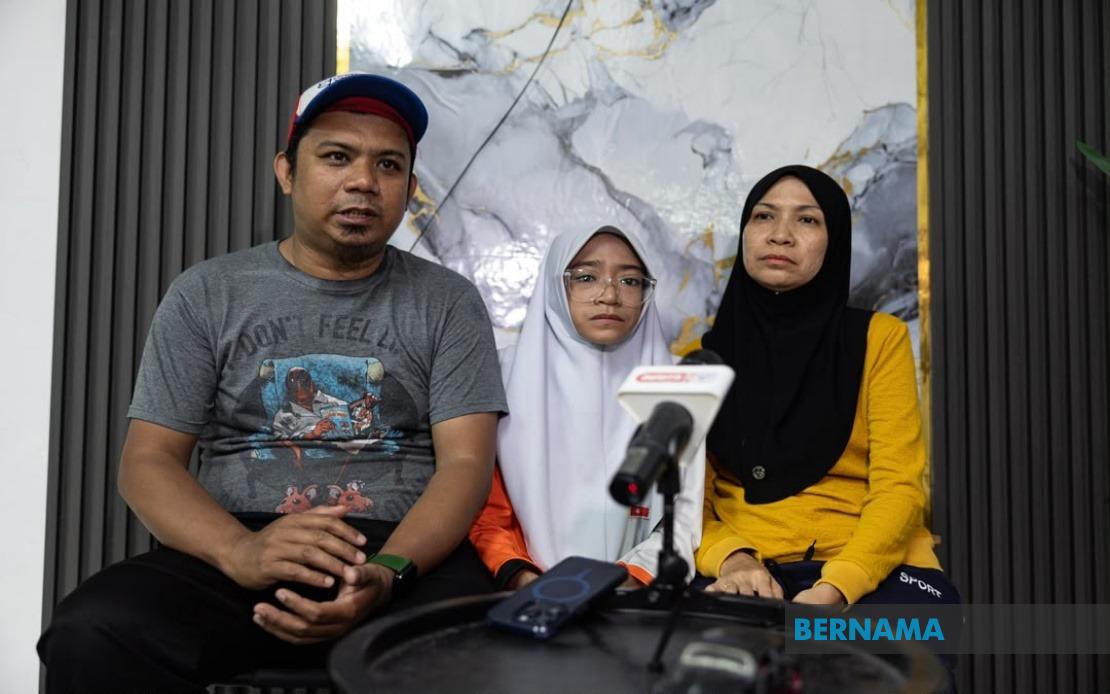
Education Minister Fadhlina Sidek and the Tun Hussein Onn Teachers' Foundation (YGTHO) have jointly committed RM10,000 to finance corrective spinal surgery for Arissa El Zahra Reduan, a 13-year-old student whose procedure is scheduled for September 8 at Raja Permaisuri Bainun Hospital in Ipoh. The contribution addresses a critical gap in the family's ability to afford the specialised medical intervention required to treat the teenager's scoliosis, a condition characterised by abnormal curvature of the spine that, left uncorrected during formative years, can impede mobility and quality of life into adulthood.
Fadhlina announced the funding through a personal video call to Arissa and her mother, seeking to deliver the news directly and reassure the family that financial barriers would no longer obstruct the teenager's path to recovery. During the conversation, the minister emphasised the ministry's commitment to facilitating comprehensive care, instructing her team to expedite all necessary arrangements with Raja Permaisuri Bainun Hospital to ensure seamless coordination between the family and medical personnel. The immediate disbursement of funds signals institutional readiness to transform bureaucratic approval into tangible healthcare access, a distinction particularly meaningful in contexts where procedural delays frequently compound medical vulnerability.
In a Facebook statement, Fadhlina reflected on the emotional weight of such interventions, noting that witnessing a young person's determination to continue formal education despite physical constraints served as a catalyst for governmental action. Her observation underscores a broader recognition within Malaysia's education sector that absenteeism driven by untreated medical conditions represents not merely individual hardship but systemic educational loss. When adolescents miss school due to health complications, cumulative learning deficits accumulate rapidly, potentially derailing academic trajectories and limiting future employment prospects. By intervening medically, the minister's office simultaneously addresses an educational equity issue, removing impediments to school attendance that disproportionately affect lower-income families unable to self-fund surgical interventions.
Arissa's father, Reduan Saad, had publicly appealed for financial assistance to bridge the gap between the procedure's actual cost and his family's capacity to pay. Such appeals, increasingly visible through social media and news outlets, reflect genuine constraints within Malaysia's healthcare financing landscape. While the country maintains a robust public health infrastructure, specialised surgical procedures for paediatric conditions frequently entail ancillary costs—preoperative imaging, specialist consultations, postoperative physiotherapy, and mobility aids—that extend beyond standard ward care. Families navigating these expenses often exhaust savings rapidly, necessitating external support from government bodies, philanthropic foundations, or community networks to proceed with medically necessary treatment.
The YGTHO's participation in funding Arissa's surgery reflects the foundation's mandate to support teachers and the education community, interpreted expansively to encompass student welfare initiatives. Founded to honour former Prime Minister Tun Hussein Onn's legacy, the foundation has historically directed resources toward educator development and institutional strengthening within schools. This contribution suggests evolving institutional understanding that student health directly influences teaching effectiveness and school performance. Teachers operating within systems where pupils suffer untreated medical conditions face compounded challenges in delivering quality instruction, managing classroom dynamics, and maintaining pedagogical focus. By funding Arissa's treatment, YGTHO invests indirectly in educational environments where both students and educators function optimally.
Scoliosis diagnosis and treatment in Malaysia typically follows international protocols, with surgical intervention reserved for cases where curvature magnitude or progression rate poses functional risk. Raja Permaisuri Bainun Hospital, a tertiary institution in Perak, maintains orthopaedic surgical capacity requisite for complex spinal reconstruction procedures. The September 8 scheduled date allows adequate preoperative preparation, including imaging studies, anaesthetic assessment, and psychological readiness counselling—elements essential for optimising surgical outcomes in adolescent patients. Extended perioperative timeframes also enable families to arrange post-discharge support, whether through workplace leave, caregiver arrangements, or home modifications facilitating recovery.
The minister's intervention through direct personal communication, rather than impersonal financial transfer, adds relational dimensions frequently absent from bureaucratic healthcare assistance. Arissa received not merely monetary support but also explicit ministerial endorsement of her medical priority, affirming that her condition warranted high-level governmental attention. Such recognition carries psychological weight for young patients confronting bodily vulnerability and medical uncertainty. Adolescence constitutes a developmental period of heightened body consciousness and identity formation; receiving institutional validation that one's medical needs matter positions treatment as socially sanctioned rather than shameful or burdensome, potentially improving patient engagement with rehabilitative protocols.
The public disclosure of this assistance through ministerial social media channels inevitably creates demonstration effects, signalling to other families with unmet medical needs that governmental support remains accessible through appropriate channels. Malaysian citizens increasingly utilise digital platforms to publicise health-related financial crises, effectively mobilising institutional responses through media amplification. Fadhlina's explicit gratitude toward media intermediaries acknowledges their role in constructing awareness pathways linking community vulnerability with ministerial intervention capacity. This ecosystem of information flow, while sometimes appearing ad hoc, increasingly functions as quasi-formal mechanism through which resource-constrained populations access discretionary government assistance.
For Malaysian and Southeast Asian education systems broadly, cases such as Arissa's illuminate persistent intersections between health equity and educational access. Across the region, students from economically disadvantaged backgrounds experience higher rates of untreated medical conditions that precipitate school withdrawal or chronic absenteeism. Governments grappling with universal education coverage simultaneously confront healthcare financing constraints that leave specialised surgical care inaccessible to significant population segments. Strategic responses require integrated policy approaches coupling educational access initiatives with healthcare financing mechanisms specifically designed for paediatric populations. Malaysia's intervention in Arissa's case, while individually beneficent, simultaneously hints at systemic gaps requiring more comprehensive structural solutions.
Moving forward, Arissa's recovery trajectory will likely extend beyond surgical correction into postoperative rehabilitation, physiotherapy, and psychological adjustment to altered physical capacities and appearance. Educational institutions play crucial roles during this reintegration period, whether through modified physical education protocols, accessibility accommodations, or peer support initiatives that normalise her return to full school participation. Fadhlina's emphasis on Arissa's return to classroom life with classmates suggests ministerial awareness that medical intervention constitutes merely initial intervention; genuine recovery encompasses social reintegration and educational continuity. By framing surgery as pathway to resumed normalcy rather than terminal medical event, the minister contextualises treatment within Arissa's broader developmental trajectory as student, peer, and emerging adult.

