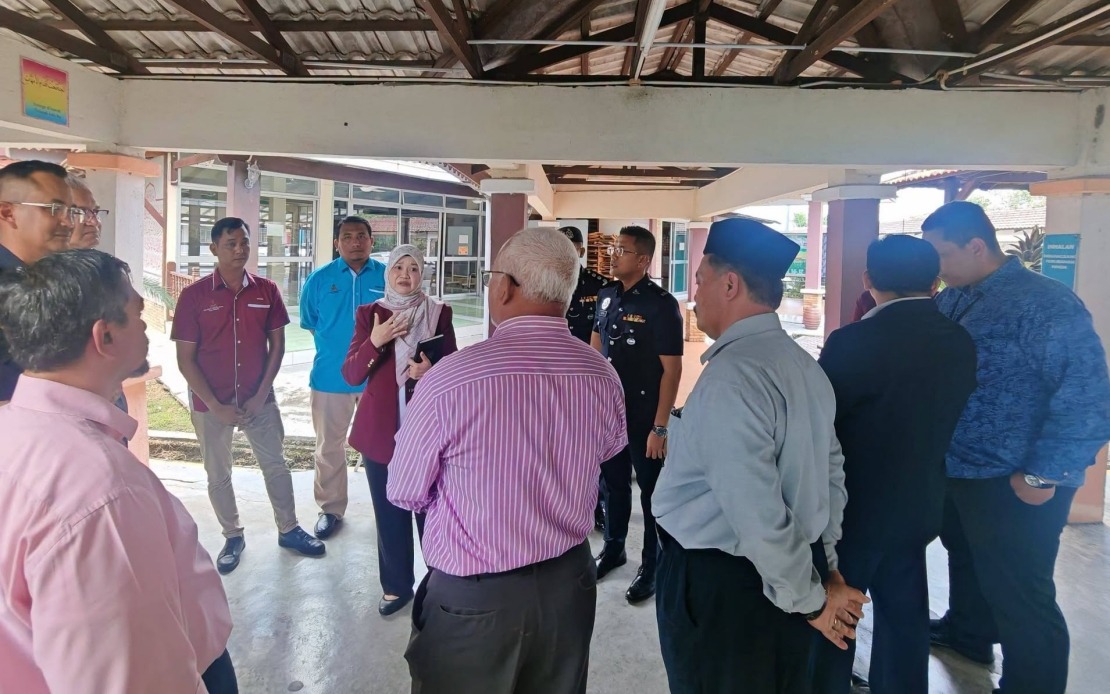
Education Minister Fadhlina Sidek travelled to a secondary school in Banting, Kuala Langat, on July 6 to assess the situation following a stabbing incident involving a Form Three student earlier that morning. The minister arrived at the school at 1.20 pm and spent time with the school management to gather comprehensive details about the incident and its immediate aftermath.
Police received notification of the stabbing at 9.50 am, according to Kuala Langat district police chief Supt Mohd Akmalrizal Radzi. Investigators determined that the victim, a teenage schoolgirl, was stabbed with a knife by another female student. The injured student was transported to Banting Hospital, where medical staff reported her condition as stable under ongoing care. Authorities moved quickly to apprehend the suspected attacker, who remains in custody for questioning as the police investigation progresses.
Fadhlina emphasised that ensuring the victim receives appropriate medical treatment and that psychological support is extended to both affected students and school staff remains the immediate focus for all involved agencies. Her statement reflected concern not only for the physical recovery of the injured student but also for the emotional wellbeing of the broader school community, many of whom may have witnessed or been deeply affected by the violent incident on school grounds.
In a social media statement, the minister appealed to the public to exercise restraint and avoid circulating unverified accounts or speculation while the police investigation is underway. She acknowledged the role of the school leadership and teaching staff in supporting their students through this difficult period, calling on the community to provide strength and resilience to those directly impacted. Fadhlina also expressed appreciation for the coordinated response from the various government agencies and law enforcement personnel who responded to the emergency.
Selangor Human Resources and Poverty Eradication Committee chairman V. Paparaidu, who represents Banting in the state assembly, commended the swift action taken by the State Education Department in mobilising psychosocial support and counseling services. These services have been made available to the stabbing victim, her family members, and other students who may require emotional or psychological assistance following the traumatic event. Paparaidu's statement underscored the importance of comprehensive support extending beyond immediate medical intervention.
The incident has reignited discussion about school safety protocols and security measures. Paparaidu used the opportunity to stress that protecting students within educational institutions cannot be treated as a secondary concern. He called for heightened vigilance among security personnel, particularly during peak arrival and departure times when schools tend to be busiest and supervision becomes more challenging. The assemblyman advocated for strengthened gatekeeping procedures designed to prevent unauthorised individuals from accessing school grounds.
Pararaidu emphasised that educational institutions should function as sanctuaries where young people can pursue their studies free from fear or the threat of violence. His remarks reflected a broader concern across Malaysia about school safety, an issue that periodically surfaces when violent incidents occur on educational campuses. The challenge facing schools involves balancing the need for robust security infrastructure with maintaining an open, welcoming environment that does not feel overly restrictive or prisonlike to students and staff.
The stabbing at a Banting school represents another incident in a pattern that continues to trouble Malaysian education authorities and policymakers. While serious violence within schools remains statistically uncommon, each occurrence generates significant public concern and prompts calls for enhanced preventive measures. Schools across Malaysia have grappled with varying approaches to security, from employing security guards to implementing visitor registration systems and surveillance technology.
For Southeast Asian nations like Malaysia, school safety intersects with broader questions about youth behaviour, mental health support in educational settings, and early intervention programmes designed to identify at-risk students. The swift response by authorities in this instance, including rapid police deployment and the provision of psychological support services, reflects established protocols. However, questions remain about how schools can more effectively prevent such incidents from occurring in the first place, particularly those involving student-on-student violence that emerges from interpersonal conflicts or underlying psychological distress.
The investigation into the motivations and circumstances surrounding this stabbing incident will likely provide insights into whether this was an impulsive act, a planned confrontation, or the result of escalating tensions between the two students involved. Authorities will need to determine what warning signs, if any, might have been present and whether existing safeguarding procedures within the school could have prevented the incident from occurring. Such findings could inform recommendations for policy adjustments at both institutional and district levels.

