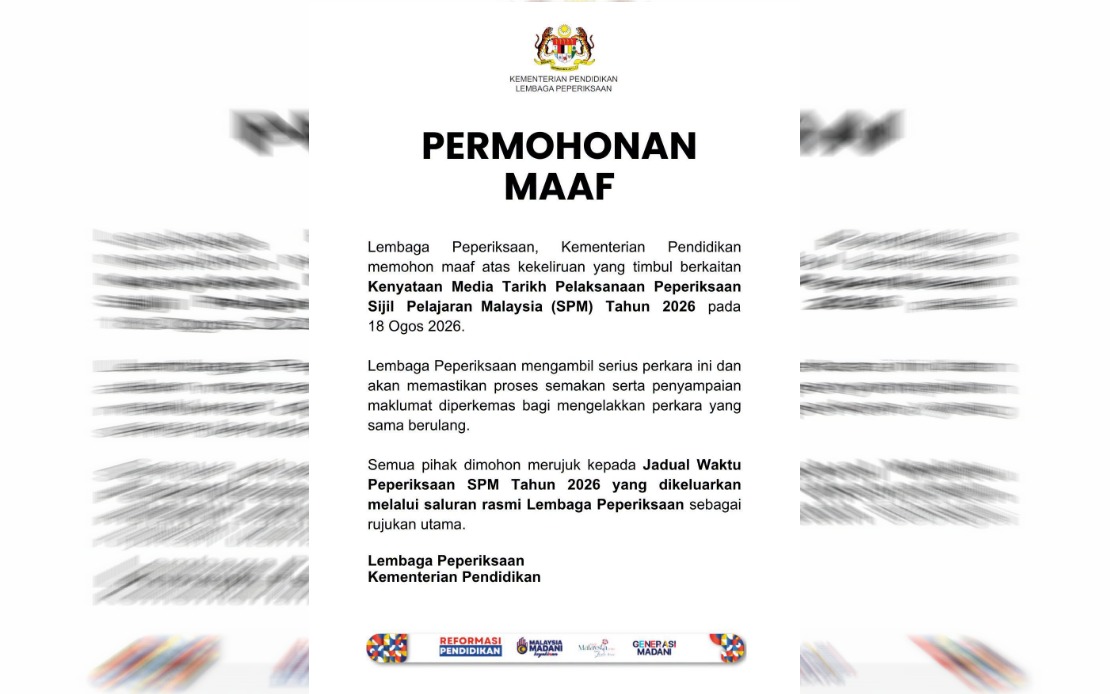
The Examination Board under Malaysia's Ministry of Education has publicly apologised for the confusion generated by contradictory statements issued in its press release yesterday regarding the implementation dates for the 2026 Sijil Pelajaran Malaysia examination. The apology, delivered through an official statement, acknowledges that the matter carries significant weight and has prompted the board to commit to reviewing its internal processes to prevent similar incidents in future.
According to the board's clarification, stakeholders are advised to rely solely on the official 2026 SPM Examination Timetable disseminated through established channels of the Examination Board rather than other sources of information. This directive aims to establish a single authoritative reference point and eliminate the ambiguity that arose from yesterday's conflicting communications. The emphasis on official channels underscores the board's recognition that contradictory announcements undermine public confidence and create operational difficulties for schools and students preparing for the national examination.
The incident highlights underlying challenges in the Malaysian education administration's communication infrastructure. As one of the most significant examinations in the Malaysian education system, the SPM examination schedule affects hundreds of thousands of students, their families, and educational institutions across the country. Any miscommunication regarding examination dates can disrupt preparation schedules, school planning, and student stress management strategies. The board's acknowledgment that it will streamline its review and information delivery processes suggests recognition of these broader impacts.
The scale of this examination cycle underscores why clarity is paramount. A total of 420,879 candidates have registered to participate in the 2026 SPM examination, sitting at 3,334 examination centers distributed nationwide. This represents a substantial portion of Malaysia's student population and requires meticulous coordination across multiple educational authorities, schools, and administrative bodies. Any administrative misstep affecting such large numbers carries proportionate consequences for educational planning and resource allocation.
The 2026 SPM examination is scheduled to run from November 23 through December 17, a timeframe that the board has now officially confirmed. This six-week testing period demands careful logistical preparation, including examination room arrangements, invigilator scheduling, question paper distribution, and answer script management. Schools and examination centers have likely already begun preliminary planning based on earlier announcements, making yesterday's confusion potentially disruptive to established schedules.
The incident also reflects broader institutional challenges facing Malaysia's education bureaucracy. As the nation increasingly emphasizes examination standards and student performance metrics, the infrastructure supporting these examinations must operate with precision. This includes not only the administrative machinery that organizes testing but also the communication systems that keep all stakeholders informed. Yesterday's confusion represents a breakdown in the latter, despite presumably adequate resources and established protocols.
For Malaysian students currently in lower secondary classes who will sit the 2026 SPM examination, clear and consistent information from education authorities is essential for their long-term preparation planning. Secondary school education in Malaysia typically involves substantial preparation for major examinations, with students often adjusting their subject selections and study strategies based on announced dates and formats. Conflicting information creates uncertainty that can affect academic planning.
The apology and commitment to process improvement signal that the Examination Board takes these responsibilities seriously. Educational institutions depend on timely, accurate information to function effectively. The board's statement that it will ensure review and information delivery processes are streamlined suggests internal recognition that current systems may require enhancement. This could involve implementing additional verification steps before public announcements or establishing clearer communication protocols between the board and external stakeholders.
From a broader Southeast Asian perspective, Malaysia's education examination system operates within a region where standardized testing remains central to educational outcomes. Reliable examination administration affects not only individual student futures but also Malaysia's competitive positioning in regional educational rankings and workforce development. Maintaining examination system credibility requires both sound administration and transparent, accurate communication.
The direction to refer to official Examination Board channels as the definitive source attempts to restore clarity following the confusion. However, the incident raises questions about how quickly corrective information can reach all affected parties, particularly schools in remote areas with potentially limited access to digital platforms. Educational institutions throughout Malaysia will need to verify their understanding of the correct examination schedule and communicate this reliably to their students.
Looking forward, the Examination Board's commitment to preventing recurrence should involve examining what specifically caused yesterday's confusion and implementing systemic solutions rather than temporary fixes. Whether the issue stemmed from inadequate review procedures, unclear approval processes, or communication channel failures will determine what improvements prove most effective. Malaysian education stakeholders will likely monitor subsequent announcements to assess whether the promised streamlining produces tangible improvements in information reliability.

