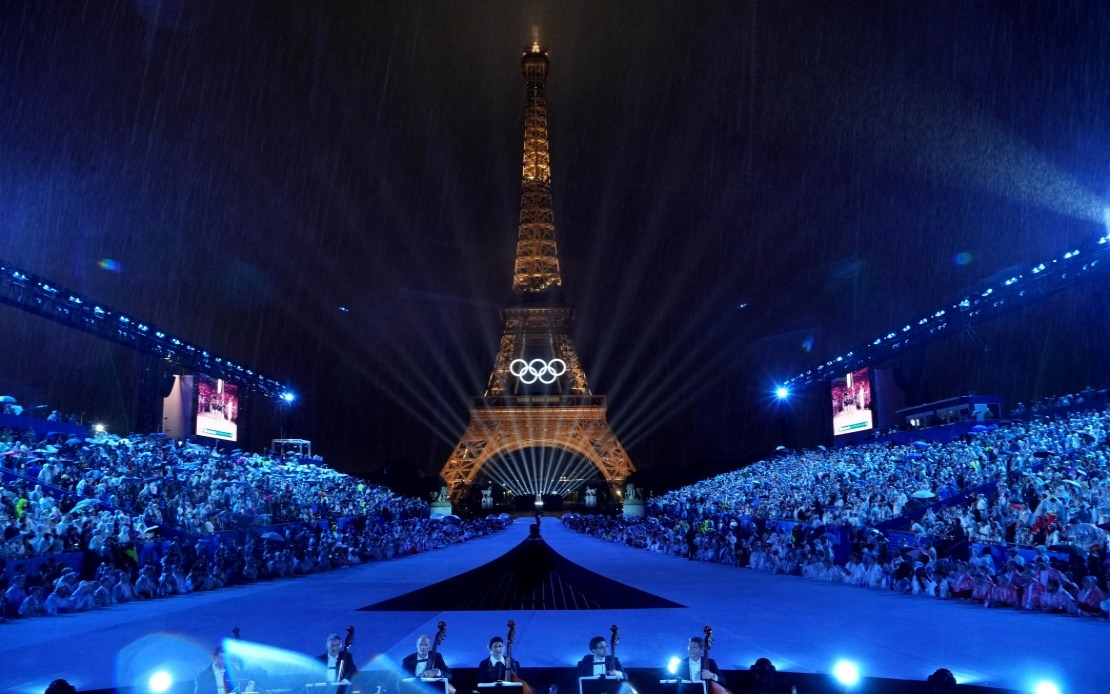
Paris's most celebrated monument, the Eiffel Tower, made an unusual operational decision on Tuesday by closing its doors to visitors at 4:00 pm local time in response to an advancing heatwave that has gripped France. The management company Sete announced that the last admission would be permitted at 12:15 pm, a significant curtailment of normal visiting hours. This precautionary measure underscores the severity of the meteorological emergency unfolding across the country, where heat conditions have reached levels that pose genuine risks to both staff welfare and visitor safety.
Tourists who had secured tickets for later time slots will not be left in the lurch, as the Eiffel Tower's operators have arranged automatic refunds for all visitors whose scheduled entry fell from 11:30 am onwards for stair access and from noon for lift-based visits. This administrative response, while welcome news for disappointed guests, highlights the economic disruption that extreme weather events can inflict upon major tourism operators during peak season.
The Eiffel Tower's decision to shorten its operating hours did not occur in isolation. The Louvre Museum, another cornerstone of Paris's cultural landscape, similarly announced abbreviated opening times commencing Wednesday and extending through Saturday. Rather than remaining open until the customary 6:00 pm closing time, the world-renowned art institution will cease admissions at 4:00 pm for four consecutive days, creating a coordinated response among Paris's most visited attractions to the atmospheric hazard.
According to Meteo-France, the national meteorological service, the capital and surrounding regions are in the grip of an intense thermal event expected to persist through Thursday with little respite. On Tuesday, thermometers in Paris had already climbed to 36 degrees Celsius by mid-afternoon, yet forecasters predicted even more oppressive conditions ahead. Wednesday's maximum temperature in the French capital was anticipated to reach as high as 38 degrees Celsius, representing potentially dangerous heat stress conditions for outdoor workers, elderly residents, and the unprepared.
The geographical scope of this weather emergency extends far beyond the boundaries of the Île-de-France region. Meteo-France activated its most severe warning level—the red heatwave alert—across 54 departments in mainland France by Tuesday, signalling conditions of genuine public health concern. A further 35 departments received the orange alert classification, the second-highest warning tier, indicating that roughly one-third of France's metropolitan territory was experiencing or anticipated to experience dangerously elevated temperatures.
For Malaysian and Southeast Asian observers, such extreme heat events serve as sobering reminders of how climate patterns are shifting globally. While tropical regions like Malaysia have long adapted to elevated temperatures and humidity, the vulnerability of temperate nations to heat stress reveals how unprecedented meteorological conditions can overwhelm established infrastructure and social systems. France's response—closure of major tourism infrastructure—demonstrates that even wealthy, developed nations must occasionally retreat when atmospheric conditions exceed safe operational parameters.
The decision to close these monuments reflects a fundamental prioritisation hierarchy established by French authorities: human welfare supersedes commercial or cultural imperatives. Sete's official statement captured this sentiment succinctly, noting that adaptation to extreme conditions was mandatory and that staff and visitor safety represented the paramount concern. Such explicit acknowledgment of climate-related vulnerability represents a significant institutional acknowledgment of environmental change.
The timing of this heatwave carries additional significance, arriving during the peak European summer tourism season. Millions of international visitors to Paris during June and July depend upon access to major attractions, and early closures create cascading complications for tour operators, hospitality providers, and travel planners across the region. The economic ripples from such disruptions extend beyond Paris itself, affecting accommodation providers, restaurant reservations, and the broader continental tourism ecosystem.
From a public health perspective, the activation of multiple alert levels across French territory indicates that authorities anticipate stress upon healthcare systems, cooling centres, and emergency response services. Extreme heat events disproportionately affect vulnerable populations—the elderly, those with chronic medical conditions, and individuals experiencing homelessness—and government warnings signal mobilisation of resources to protect these at-risk groups. The coordinated alert system demonstrates how modern meteorological science enables preventive public health intervention before emergencies fully materialise.
The broader context reveals how climate variability, increasingly driven by anthropogenic factors, is reshaping the operational landscape of both tourism and daily life across Europe. What were once considered exceptional meteorological events are becoming more frequent, prompting institutions to develop adaptive strategies and threshold-based protocols for managing visitor access during hazardous conditions. For Malaysia, a nation already accustomed to heat and humidity, these European experiences offer cautionary lessons about infrastructure resilience and the non-linear ways that climate change manifests across different geographical and climatic zones.