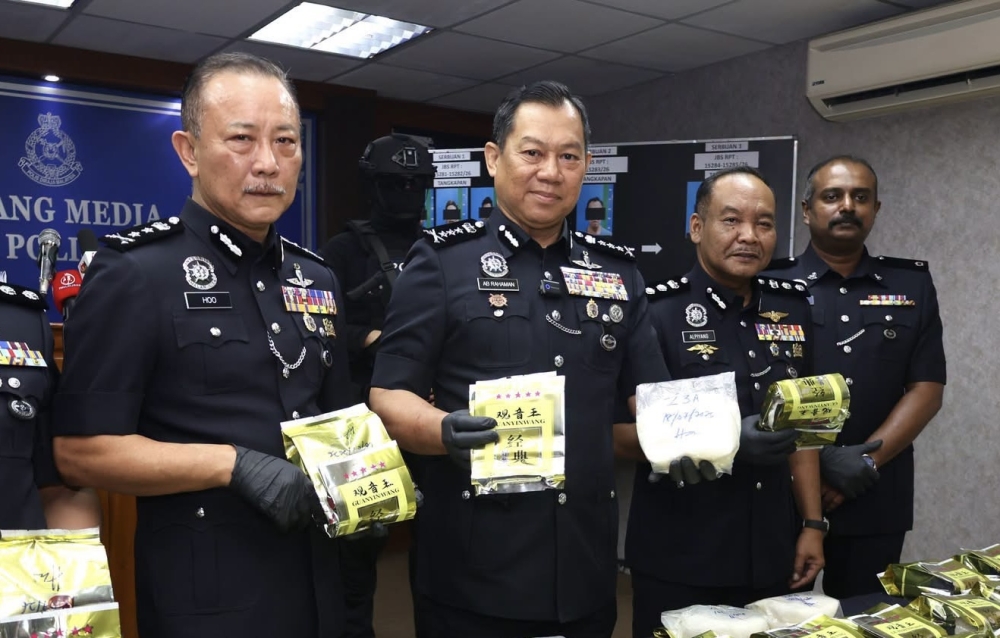
Law enforcement authorities in Johor Bahru have successfully broken up a drug trafficking network after conducting coordinated raids that resulted in the arrest of eight suspects, a development that highlights the growing involvement of teenagers in organised narcotics operations within Malaysia. The operation culminated in the apprehension of individuals ranging in age and background, with the youngest suspect being just 16 years old, raising fresh concerns about how criminal syndicates are increasingly recruiting younger members to evade detection and carry out street-level distribution.
According to police statements, the illicit enterprise was being operated with considerable operational sophistication, particularly in its distribution methods. The syndicate was reportedly utilising a motor vehicle registered to an elderly man to conduct their transactions and move their inventory across Johor. This elderly individual, whose relationship to the young suspect has been identified as his grandfather, appears to have unwittingly become part of the infrastructure supporting the drug network. The use of vehicles belonging to family members, particularly those less likely to be subject to intense police scrutiny, is a increasingly common tactic employed by trafficking organisations seeking to reduce their exposure and maintain operational security.
The seizure of the vehicle during the raids represents a significant aspect of the investigation, as it effectively removed a key logistical asset from the gang's operations. Police discovered what they characterised as substantial quantities of synthetic drugs within the vehicle, indicating that it served as something approaching a mobile distribution centre. This method of operation allows traffickers to avoid maintaining fixed locations that might draw police attention, while simultaneously bringing their products closer to street-level consumers. The mobility also permits traffickers to adjust their distribution routes rapidly in response to law enforcement activity.
The synthetic drug trade in Johor, and increasingly across Malaysia more broadly, has become a matter of pressing concern for law enforcement agencies. These substances, often chemically engineered variants of controlled drugs, present particular challenges to authorities because their compositions can be modified relatively easily to circumvent existing legal frameworks. Additionally, synthetic drugs frequently command premium prices in illicit markets, making them particularly attractive to trafficking organisations seeking to maximise profits. The Johor operation appears to have been focused on this lucrative segment of the drug market.
The involvement of a minor in the distribution chain underscores a troubling trend that local law enforcement has been documenting. Young individuals are often recruited by criminal networks because they typically receive more lenient treatment within the juvenile justice system, and their perceived innocence can facilitate their passage through communities and checkpoints. Furthermore, teenagers often lack sufficient life experience to fully comprehend the legal consequences and health risks associated with drug trafficking. Rehabilitation programmes and preventive education initiatives remain critical components of any comprehensive strategy to counter this phenomenon.
The investigation that led to these arrests presumably extended beyond the initial raids, involving surveillance, intelligence gathering, and coordination among different police units and departments. Operations of this scale typically require weeks or months of preparatory work before enforcement actions commence. The successful dismantling of the network suggests that police had developed reliable intelligence regarding the gang's structure, membership, and operational methods before moving forward with arrests.
From a regional perspective, drug trafficking networks operating in Johor frequently have connections extending into other Malaysian states and beyond. Johor's geographical proximity to Singapore and its position as a major commercial and transport hub make it a strategically significant location for trafficking organisations. The state's dense urban areas, particularly around Johor Bahru itself, provide environments where illicit transactions can occur with relative anonymity. Simultaneously, the state's major ports and land borders create natural entry and exit points for drug shipments.
The arrested individuals now face serious criminal charges under Malaysia's drug trafficking laws, which carry substantial penalties including lengthy prison sentences and, depending on quantity and drug type, potentially capital punishment for those convicted of trafficking in large quantities. The investigation will likely continue as authorities attempt to identify higher-level organisers and suppliers who may have been operating behind the street-level distribution network. This upstream focus is essential for disrupting the supply chain rather than merely addressing its most visible components.
This operation reflects the ongoing commitment of law enforcement to counteract the drug trade, which remains one of Malaysia's most persistent and damaging public health and security challenges. However, the case also illustrates how traffickers continue to evolve their methods, develop new distribution strategies, and lower barriers to entry for younger recruits. Successful counter-narcotics efforts require not only reactive enforcement operations of the type conducted in Johor, but also proactive community engagement, school-based prevention programmes, and support systems for at-risk youth who might otherwise become vulnerable to recruitment by criminal enterprises.

