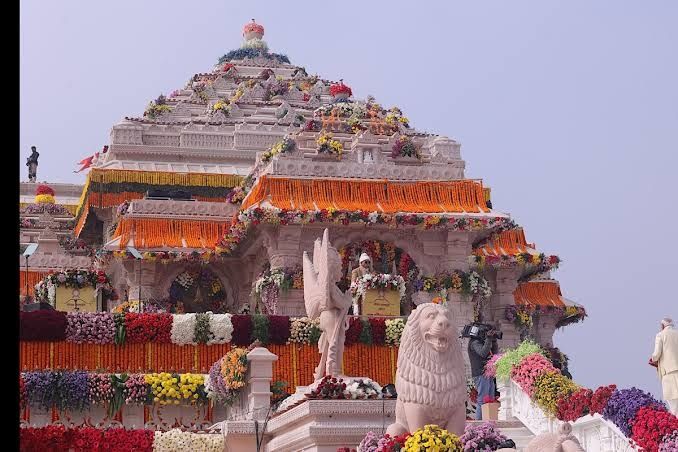
Police in India have arrested eight individuals on charges stemming from alleged theft and misappropriation of donations at the Ram Mandir temple in Uttar Pradesh, marking a significant embarrassment for one of Prime Minister Narendra Modi's most symbolically important religious and political projects. The arrests, announced on Thursday following a criminal investigation launched the same day, have brought into sharp focus the handling of vast sums of money flowing into the facility, which has become emblematic of the ruling Bharatiya Janata Party's Hindu-nationalist political identity.
The Ram Mandir stands on a site in the city of Ayodhya that carries immense religious and political significance in Hindu India. According to devotional belief, the deity Ram was born there more than 7,000 years ago, though Hindu nationalists have long contended that a mosque—the Babri Masjid—was constructed over this sacred location by a Mughal emperor in the 16th century. The mosque remained standing until 1992, when it was demolished during communal violence, an event that fundamentally transformed India's political landscape and catapulted the BJP into prominence as the champion of Hindu causes.
Modi himself inaugurated the newly constructed temple in 2024 with considerable ceremony, reinforcing its significance as a centrepiece of his government's broader agenda of Hindu-first governance. The construction project itself cost an estimated US$240 million, entirely financed through public donations collected by the temple trust managing the site. This reliance on voluntary contributions from devotees across India meant the temple operated with financial systems designed to handle massive inflows of money from donors seeking to participate in what many view as a spiritually and culturally momentous undertaking.
The eight individuals now in custody include temple employees tasked with managing the practical aspects of donation handling. Most of those arrested were directly involved in the critical functions of counting, sorting and safeguarding cash, gold and silver offerings given by pilgrims. These positions, while essential to temple operations, evidently created opportunities for financial irregularities to occur without immediate detection, particularly given the scale and complexity of donations flowing through the facility.
Though official statements have remained circumspect about the alleged financial losses, opposition parties and independent media investigations have suggested the embezzlement could exceed US$20 million—a staggering sum that would represent a meaningful fraction of the temple's total construction cost. The precise scale of the alleged theft remains undisclosed by authorities, creating uncertainty about the true extent of the financial impropriety and fuelling wider suspicion about accountability mechanisms at the temple.
The charges filed against the arrested individuals carry serious legal weight, encompassing criminal breach of trust, outright theft, criminal conspiracy and corruption. These allegations strike at the heart of what should be an institution managed with absolute integrity, particularly one sustained entirely through the faith-driven contributions of millions of devotees. The severity of the charges reflects official acknowledgment that this case involves more than mere administrative oversight or accounting errors.
The scandal has triggered profound distress among the temple's donor community, many of whom now question whether their contributions were handled appropriately. Viti Saxena, a 44-year-old homemaker from the region who donated to the temple, expressed deep dismay at the allegations, lamenting that a religious site of such global and spiritual importance should be discussed for financial impropriety rather than devotional significance. Her concerns echo a broader anxiety among Hindu believers about whether the institution they supported through donations truly safeguarded their contributions.
Uttar Pradesh Chief Minister Yogi Adityanath, whose state government established the Special Investigation Team that uncovered and is pursuing the case, has publicly committed to ensuring that all guilty parties face justice. The establishment of a dedicated investigative unit suggests that authorities take the matter seriously and are attempting to project an image of decisive action, though observers may question why more robust financial controls were not implemented from the outset at an institution handling such substantial sums.
The timing and prominence of this scandal carry broader political implications for India's ruling establishment. The BJP has built considerable electoral support on appeals to Hindu religious sentiment and promises to protect Hindu interests, using symbols like the Ram Mandir as focal points for mobilizing its base. Financial mismanagement at such a emblematic site threatens to undermine the moral authority that the party derives from championing Hindu causes and managing Hindu-sacred spaces, potentially creating openings for opposition parties to question the government's stewardship and competence.
For Southeast Asian observers, the Ram Mandir scandal offers instructive lessons about the challenges of managing large religious institutions with complex financial flows across diverse populations. Malaysia's own experience with religious institutions and their governance structures provides relevant parallels, particularly regarding the balance between spiritual autonomy and financial accountability. The case also illustrates how political symbolism and religious authenticity can become entangled, with institutional failures carrying consequences far beyond mere administrative concerns.
The broader Hindu community's response to the scandal will likely shape public confidence in both the temple as a functioning institution and in the government's capacity to manage high-profile religious projects. The case underscores the tension between rapid, high-profile construction initiatives driven by political momentum and the slower work of building institutional safeguards and transparency mechanisms that prevent future misconduct. As investigations continue, the temple faces a crucial period in rebuilding the trust of its devotee base and demonstrating that rigorous accountability measures can coexist with religious reverence.

