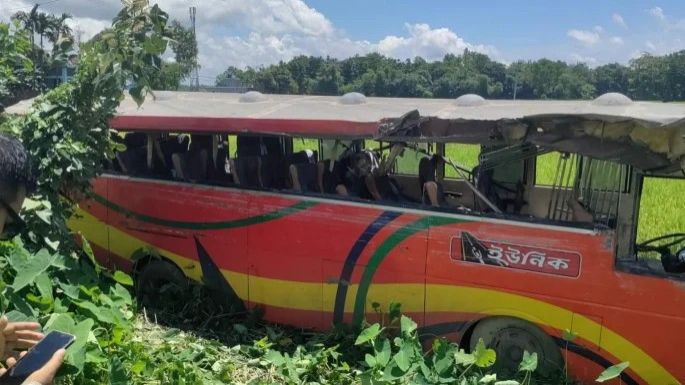
A catastrophic road accident unfolded in Bangladesh's Sylhet region on Friday morning when two passenger buses collided head-on, leaving eight people dead and a further 25 injured in what authorities are still investigating. The incident occurred at approximately 7:30 a.m. local time along a route some 240 kilometres northeast of Dhaka, underscoring the region's continuing vulnerability to fatal transport accidents.
Golam Mostafa, the officer-in-charge at Sylhet's Osmani Nagar police station, confirmed the casualty figures to journalists shortly after emergency responders reached the scene. The collision's precise cause remains under official investigation, though preliminary assessments point toward factors commonly implicated in similar accidents across Bangladesh. Rescue operations swiftly mobilised to extract trapped passengers from the mangled wreckage, with local hospitals receiving the injured for treatment.
The tragedy reflects a deeply entrenched pattern of fatal transport accidents that has become a defining feature of Bangladesh's transportation infrastructure. The nation consistently records among the world's highest road fatality rates relative to vehicle density, a grim statistic that demands urgent systemic intervention. This latest incident adds to a mounting toll of preventable deaths that have prompted growing calls from civil society and international observers for comprehensive reforms across multiple sectors of the transport ecosystem.
The root causes of Bangladesh's road safety crisis are multifaceted and well-documented by transport safety experts. Deteriorating highway conditions across many routes create hazardous driving environments, with poorly maintained road surfaces, inadequate signage, and absent safety barriers contributing to accident severity. A significant proportion of buses operating on intercity routes operate with deferred maintenance schedules, their mechanical systems showing signs of wear that compromise braking capability and structural integrity during high-impact collisions.
Driver behaviour and competence represent another critical vulnerability in Bangladesh's transport safety profile. Traffic rule violations are endemic among professional drivers, who frequently exceed speed limits, operate vehicles while fatigued, and demonstrate aggressive overtaking practices. Licencing requirements for bus drivers often lack rigorous enforcement, allowing individuals with inadequate training or medical unsuitability to pilot large vehicles carrying dozens of passengers. The pressure operators place on drivers to meet tight schedules further incentivises reckless conduct that trades passenger safety for commercial expedience.
Government oversight of the transport sector remains substantially below levels required to ensure public safety. The traffic department and road transport authority lack sufficient resources, personnel, and enforcement capacity to maintain consistent monitoring of operating carriers. Regulatory compliance checks occur sporadically rather than systematically, enabling operators to circumvent safety standards with minimal consequence. Penalties for violations often prove insufficient to deter non-compliance, creating a cost-benefit calculus that favours expedience over safety investment for many transport operators.
For Malaysian readers and regional observers, the Sylhet accident demonstrates a cautionary tale about transport infrastructure challenges that resonate across South Asia. While Malaysia has substantially higher road safety standards than Bangladesh, comparative analysis reveals that systematic investment in vehicle maintenance, driver training protocols, and infrastructure quality directly correlates with fatality reduction. The contrast underscores how regulatory capacity and enforcement consistency determine whether transport systems protect or endanger their users.
The immediate human cost extends beyond the eight fatalities recorded at the scene. The 25 injured passengers face uncertain recovery timelines, and their families confront both emotional trauma and potential financial hardship. In Bangladesh's context, where social safety nets remain limited, accident victims and bereaved families often lack adequate compensation mechanisms. Insurance coverage remains patchy across the bus transport sector, leaving many families without recourse to formal claims processes.
International development partners and regional bodies have increasingly emphasised transport safety as a foundational component of sustainable development. The World Health Organisation and regional organisations have designated road safety as a priority area requiring integrated approaches spanning infrastructure, vehicle standards, driver training, and enforcement. Bangladesh's experience demonstrates how quickly inadequate investment in these areas translates into preventable deaths that burden families, communities, and national healthcare systems.
The accident's investigation will likely confirm technical failures, human error, or environmental factors as contributing causes, yet these proximate explanations should not obscure the systemic nature of Bangladesh's road safety crisis. Meaningful progress requires sustained commitment to vehicle inspection regimes, comprehensive driver licensing reform, infrastructure investment, and credible enforcement mechanisms. Without such foundational reforms, similar tragedies will continue to punctuate Bangladesh's transport narrative with depressing regularity, claiming lives that safety improvements could demonstrably preserve.

