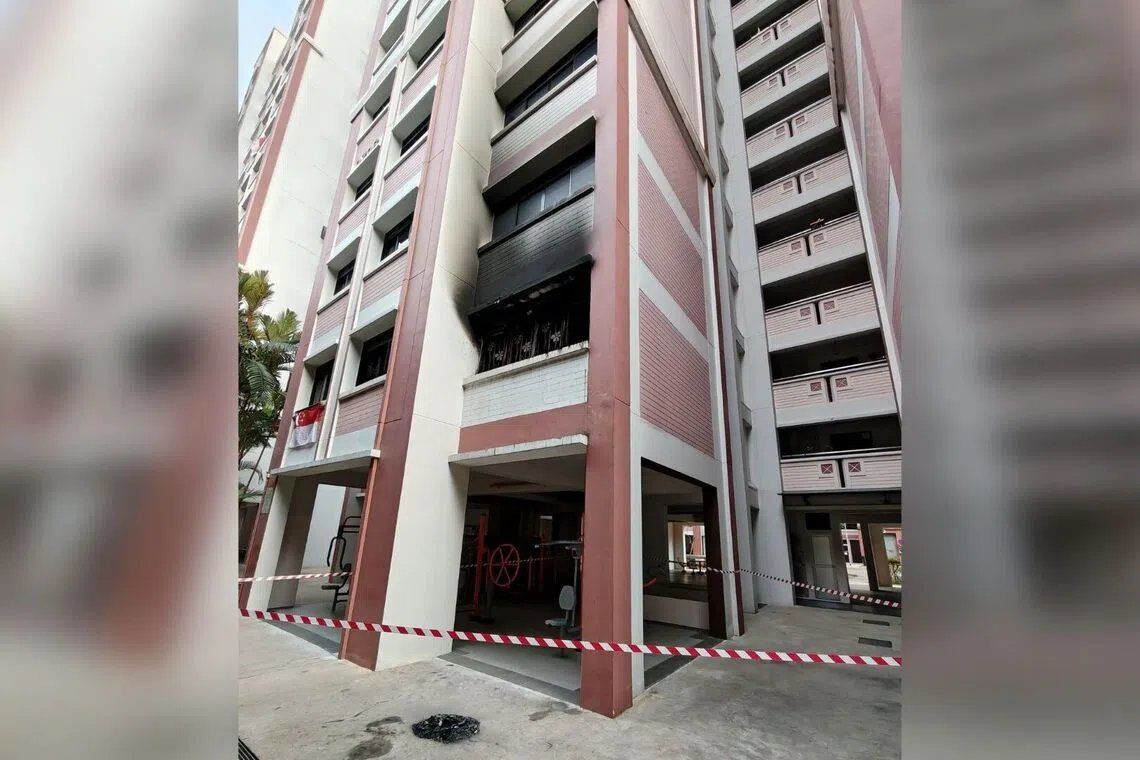
Singapore's Civil Defence Force responded to a residential fire in Buangkok Crescent just after midnight on Thursday, August 20, when flames engulfed the bedroom contents of a second-floor apartment. The blaze, which erupted at Block 979B, prompted emergency crews to deploy water jets to contain and extinguish the fire during the early morning hours. The incident underscores the ongoing fire safety challenges in densely-populated public housing estates across Singapore and the wider region, where rapid response times and neighbour intervention often prove decisive in preventing tragedy.
Authorities transported one person to Sengkang General Hospital following the fire, though the extent of injuries initially remained unclear. However, Ang Mo Kio GRC Member of Parliament Victor Lye provided clarification through a Facebook update posted around midday on August 20, revealing that the hospitalised resident was an elderly man who had sustained cuts to his feet during the evacuation. Lye noted that the patient had since been discharged from the hospital, suggesting his injuries were not serious. The rapid recovery and discharge highlighted that despite the frightening nature of such incidents, the outcome could have been far worse without timely intervention.
What distinguished this particular fire response was the critical role played by an ITE student residing in the neighbouring unit. The young student, acting with remarkable presence of mind during an emergency, grabbed a fire extinguisher and deployed it against the advancing flames while simultaneously helping to guide three residents out of the affected flat to safety. Such actions by civilian responders often mean the difference between a contained incident and a catastrophic event in residential settings. The student's quick thinking demonstrated the value of fire safety awareness among younger generations and the importance of having functioning fire extinguishers readily available in multi-unit housing blocks.
Mp Lye took to social media to publicly commend the student's heroism, recognising that his actions had likely prevented further escalation of the fire and potential harm to additional residents. In doing so, Lye elevated the profile of community-based emergency response and highlighted how vigilant neighbours serve as the first line of defence in high-density residential areas. This acknowledgment reflects a broader regional trend of governments and community leaders emphasising personal responsibility and mutual aid in disaster preparedness. For Malaysian readers living in similar terrace or apartment settings, the incident reinforces the critical importance of maintaining working fire safety equipment and understanding evacuation procedures.
Following the fire, Lye visited the affected flat to provide direct support and reassurance to the displaced family. Such political engagement, while sometimes viewed cynically, serves practical purposes in Malaysian and Singaporean contexts by signalling institutional responsiveness and mobilising additional resources for affected residents. The MP's visit also provided an opportunity to assess the family's immediate needs and coordinate assistance through local community networks. This type of personalised political engagement remains influential in Southeast Asian governance structures, where constituency relationships and direct politician-constituent interaction carry substantial weight.
The affected family was offered accommodation at the local Residents' Network centre, a community facility designed specifically to assist households temporarily displaced by emergencies such as fires or floods. However, the family declined this formal support option and instead chose to remain with their neighbour, the same student who had helped evacuate them. This decision reflects both the strong community bonds that can develop in public housing estates and the practical reality that informal support networks sometimes prove more comfortable and flexible than official emergency provisions. The gesture also speaks to the character of the neighbourhood, suggesting a community where residents look out for one another during times of crisis.
Investigators have not yet determined the underlying cause of the fire, with official inquiries still ongoing at the time of reporting. Understanding how the bedroom fire started remains crucial for preventing similar incidents in other units, particularly if the cause relates to appliances, electrical faults, or hazardous materials commonly found in residential settings. Preliminary investigations into such fires typically examine whether the unit had adequate smoke alarms, functional fire extinguishers, and clear evacuation routes. The findings, once released, may prompt renewed fire safety campaigns across Singapore and potentially inform policy discussions in neighbouring countries like Malaysia, where similar HDB-style public housing comprises a significant portion of the urban residential stock.
This incident carries implications for housing safety conversations throughout Southeast Asia, where rapid urbanisation has produced countless similar multi-storey residential complexes housing millions of families. The vulnerability of ground and lower-floor units to fire, combined with challenges in swift evacuation from higher floors, remains a persistent concern for urban planners and safety officials. Singapore, despite its reputation for rigorous building codes and enforcement, continues to experience occasional residential fires that test emergency response systems and community preparedness. Malaysian cities and towns, with their own substantial HDB and public housing populations, can derive valuable lessons from how Singapore's SCDF responded and how community members contributed to limiting damage.
The broader context of this incident highlights how emergency preparedness depends on multiple interconnected factors: reliable emergency services with fast response times, properly maintained safety equipment within residential buildings, community awareness and training, and most crucially, the willingness of ordinary citizens to act decisively during emergencies. The ITE student's intervention exemplifies this final element, demonstrating that formal institutions cannot be the only guardians of public safety. In Malaysia, where apartment and terrace fires periodically claim lives, similar emphasis on training young people in basic fire safety and encouraging neighbourly vigilance could save lives. The incident also underscores the importance of regular maintenance of fire extinguishers and smoke alarms in all residential units, from ground-floor flats to upper-storey apartments, ensuring that residents have immediate access to firefighting tools when seconds count.

