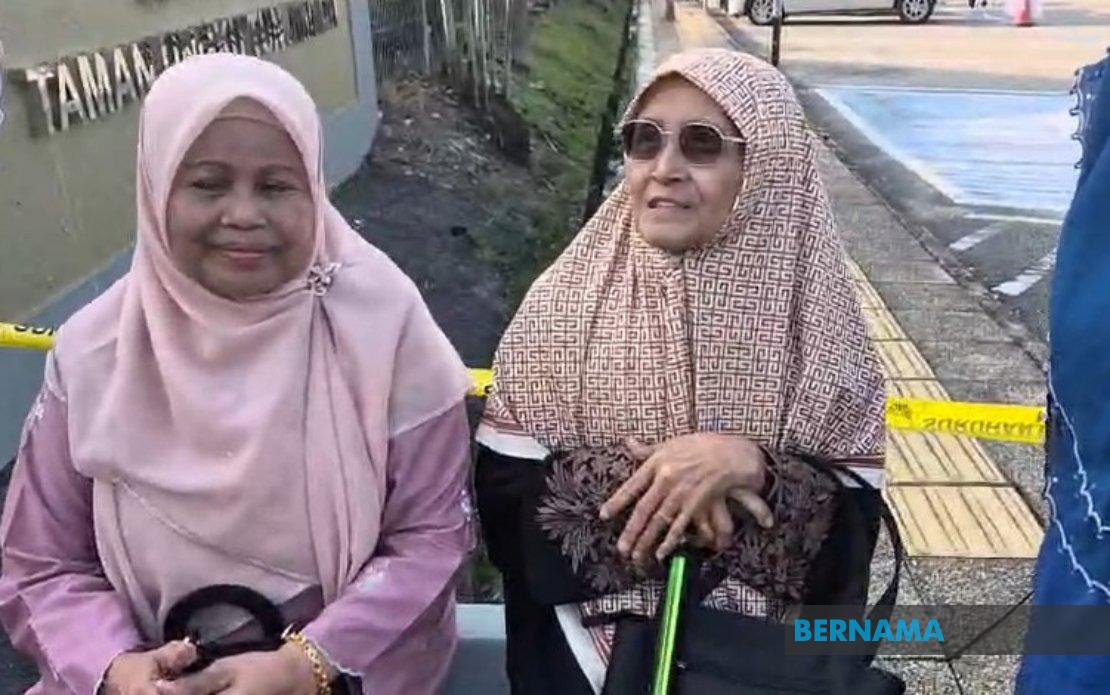
The 16th Johor State Election witnessed an encouraging display of civic engagement as elderly voters, many facing mobility challenges, arrived at polling stations across the state well before official opening times. Their early appearance—some arriving as early as 6.40 am—reflected a deliberate strategy to navigate both weather concerns and crowd management, highlighting the serious approach senior citizens take toward their electoral responsibilities even in their advancing years.
The early voting patterns were evident across multiple constituencies. At SJKC Kulai Besar in Bukit Batu, 70-year-old Gan Hin demonstrated the determination typical of older voters, arriving before dawn to complete his ballot before heading to work at a farm in Indahpura. His employer's accommodation of his voting needs underscores how workplace practices in Malaysia increasingly recognise the importance of electoral participation, allowing workers time off to fulfil this fundamental democratic duty.
For many elderly voters, the polling experience carried emotional significance beyond the mechanics of casting a ballot. Sapiah Abdul Rahman, 74, described her voting experience with genuine enthusiasm, comparing the atmosphere at the Taman Ungku Tun Aminah Community Hall to festive occasions like Hari Raya. Her comments reveal how elections serve as important social occasions for senior citizens, providing opportunities to reconnect with friends and community members while exercising their democratic rights.
Physical limitations presented no barrier to participation. In Johor Bahru, 84-year-old Rohani Sohod, who relies on a wheelchair for mobility, was among the earliest arrivals at SK Seri Melati. Such examples demonstrate that Malaysian electoral infrastructure, despite potential accessibility concerns, has enabled even the most physically vulnerable citizens to participate. The presence of wheelchair users at polling stations underscores the importance of continued investment in accessible voting facilities nationwide.
Salma Wahid, 74, who has maintained perfect voting attendance since 1981, brought an intergenerational perspective to the election. Her expressed hope that younger voters would turn out in greater numbers reflects a concern among long-time voters about sustaining democratic participation across all age groups. Her four decades of electoral involvement stand as testimony to the institutionalisation of voting habits among Malaysia's older population.
In Muar, weather conditions tested voter commitment more severely. Heavy rain that commenced around 4 am did not discourage participation, particularly among retirees. Private sector retiree P. Gunasekaran, 63, woke at 4 am and departed home by 6 am specifically to vote before conditions worsened. His decision reflected practical concerns about transportation and health risks, yet he prioritised fulfilling his democratic obligation regardless. His arrival by 7 am at SMK Seri Muar demonstrated that weather—even significant rainfall—posed insufficient obstacle to voting.
Rokiah Yunos, an 80-year-old retiree, incorporated her voting trip into her morning religious observance, leaving after dawn prayers to reach her polling station. This integration of voting into daily routines and spiritual practices reflects how deeply embedded electoral participation has become in Malaysian society, particularly for senior citizens who view voting as a central responsibility equivalent to other important obligations. Her experience of minimal waiting—the polling centre gates opened immediately upon her arrival—suggests efficient voter flow management even during early morning periods.
The logistics of the 16th Johor State Election accommodated this substantial elderly voter contingent. More than 2.7 million registered voters across the state had the opportunity to elect representatives for 56 state seats. The 172 candidates contesting across 1,076 polling centres throughout Johor provided voters with meaningful choices across diverse constituencies. Such extensive infrastructure reflects Malaysia's commitment to enabling broad participation despite the geographical dispersal of voters across Johor's various regions.
The early arrival patterns observed across multiple constituencies suggest that senior citizens approached this election with considerable forethought. Rather than relying on last-minute voting arrangements, they planned their participation strategically, accounting for weather, health considerations, and personal schedules. This methodical approach contrasts sometimes with younger voter behaviour and highlights how decades of electoral participation instil systematic approaches to fulfilling civic duties.
The intergenerational commentary from long-time voters like Salma Wahid raises important questions about sustaining electoral participation across age groups. As Malaysia's population demographics shift toward an older society, understanding the motivations and practices of dedicated senior voters becomes increasingly relevant for policymakers seeking to maintain robust democratic engagement. The enthusiasm demonstrated by elderly voters, despite physical challenges, suggests that addressing accessibility barriers might significantly boost overall turnout.
Beyond the individual stories, the early voting surge among seniors reflects broader patterns in Malaysian electoral behaviour. Older voters, having witnessed the nation's political evolution across decades, often demonstrate higher turnout rates and more consistent voting habits than younger demographics. This election provided fresh evidence of that commitment, with senior citizens prioritising their democratic participation despite personal inconvenience and adverse weather conditions.
The experiences recorded across Johor's polling stations offer valuable lessons for election management. The efficiency with which elderly voters were processed, combined with their early arrival strategy, suggests that encouraging early voting or extending polling hours might serve older citizens particularly well. As elections become increasingly complex with larger candidate slates and more constituencies, accommodating the preferences and physical needs of older voters becomes essential for maintaining inclusive democratic participation.

