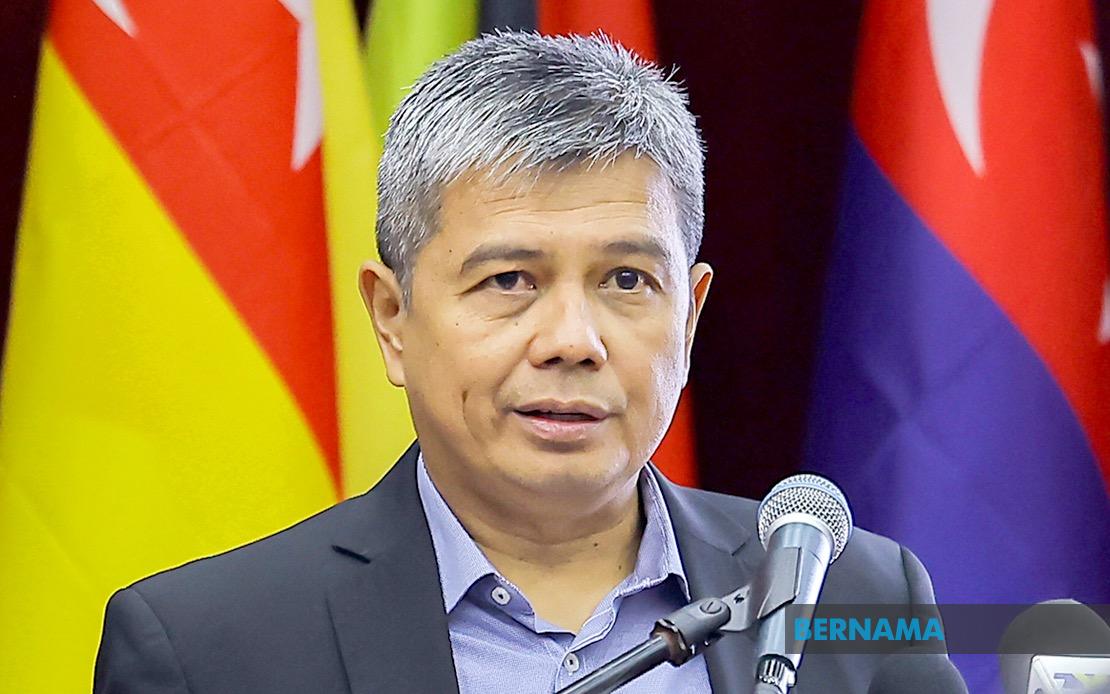
The Election Commission (EC) has issued a firm directive to all political parties and candidates contesting tomorrow's 16th Johor State Election to completely cease their campaign operations once the clock strikes 11.59 pm tonight. This final reminder from EC secretary Datuk Khairul Shahril Idrus underscores the commission's commitment to enforcing a level playing field and maintaining electoral integrity as polling day approaches.
The prohibition on campaign activities carries significant breadth. Beyond the traditional forms of street canvassing and public rallies, the EC's scope extends to the digital realm, explicitly banning any further promotional content on social media platforms including Facebook, X, Instagram, TikTok, and Threads. This comprehensive approach reflects the increasingly blurred lines between offline and online campaigning in Malaysian politics, where viral content and social media engagement have become as consequential as traditional grassroots mobilisation. Parties that continue their messaging efforts after the deadline risk breaching electoral regulations.
Another critical restriction concerns the physical presence of party operatives at polling locations. Datuk Khairul Shahril made unambiguous that the establishment or maintenance of party booths, known locally as barung, constitutes a punishable offence under the Election Offences Act 1954. This rule is designed to prevent intimidation or undue influence at voting stations and to ensure that the polling environment remains neutral and accessible to all voters regardless of their political leanings.
Voters themselves face strict guidelines governing their conduct inside polling stations. The use of mobile phones is entirely prohibited within polling streams, a measure intended to prevent the recording and dissemination of ballot papers or voting activity, which could compromise the secrecy of the ballot. The EC will display prominent notices at all polling locations warning voters of this restriction. Those who bring phones must surrender them to designated storage areas immediately after collecting their ballot papers and retrieve them only after completing their vote.
The commission has advised voters to avoid last-minute queuing by staggering their voting according to suggested timeslots available through the MySPR Semak application. However, flexibility remains built into the system, as all registered voters retain the right to cast ballots between 8 am and 6 pm, or within the gazetted hours of their specific polling centre. This balance between encouraging orderly voting flow and protecting universal access reflects practical consideration of poll-day logistics in a state with varied geography and population distribution.
Documentation requirements remain straightforward but essential. Voters must bring valid identity cards for verification by election officials and are strongly cautioned never to surrender these documents to anyone other than authorised personnel. The EC has encouraged voters to verify their registration details beforehand using available platforms, a step that can prevent confusion and delays on the day itself. Such preparation contributes to the overall smoothness and efficiency of the electoral process.
Employers across Johor have also received guidance reminding them of their legal obligations to grant employees who are registered voters reasonable time off to exercise their franchise. This requirement, grounded in the Election Offences Act 1954, ensures that workplace demands do not create practical barriers to participation, a consideration particularly relevant in the commercial and industrial sectors where shift work and tight scheduling might otherwise conflict with voting opportunities.
The commission has undertaken rigorous preparatory work to ensure operational readiness. Equipment checks conducted on Thursday and Friday encompassed all critical polling materials including ballot boxes, indelible ink, ballot papers, and voting booths. These inspections verify that supplies are complete and functional before their distribution to Presiding Officers stationed at each polling stream. Such systematic verification minimises the risk of procedural hiccups or technical failures that could disrupt voting or cast doubt on the integrity of results.
These various measures reflect the EC's multi-layered approach to safeguarding electoral integrity in Johor. The restrictions on late campaigning aim to prevent last-minute manipulation; the mobile phone prohibition protects ballot secrecy; the equipment checks reduce technical failure; and the emphasis on voter preparation promotes efficiency. Together, they form a framework designed to ensure that the 16th Johor State Election proceeds as a fair contest decided solely by voter preference, free from intimidation, deception, or procedural breakdown. Voters, candidates, and employers all have roles to play in making this framework function effectively.

