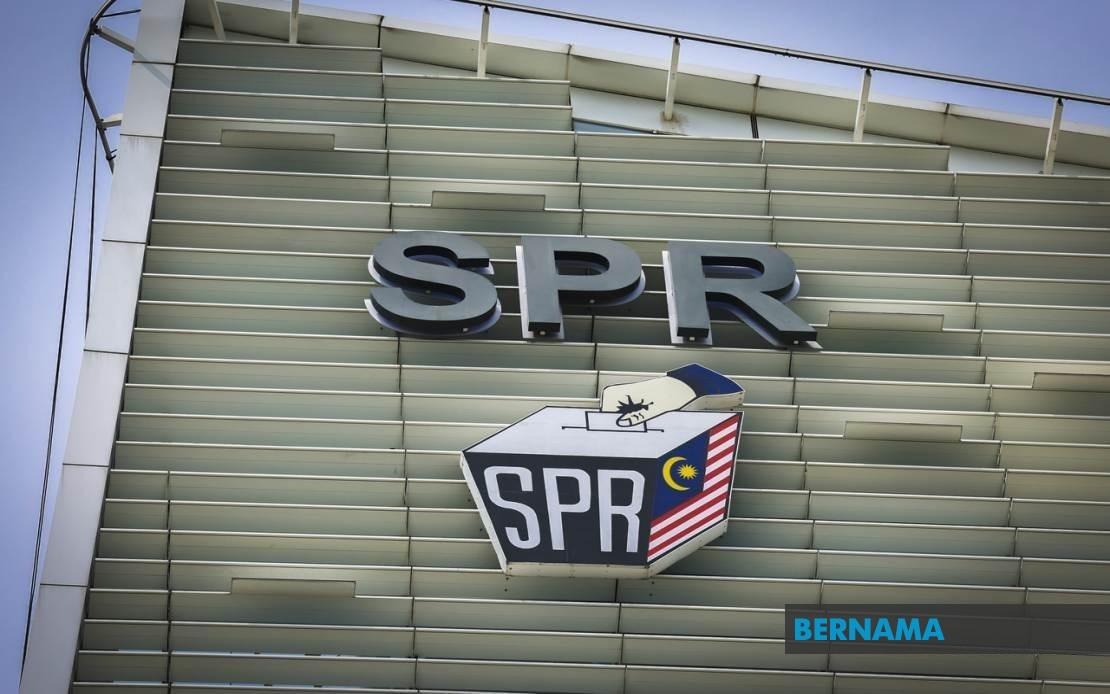
Malaysia's Election Commission has committed to reviewing a proposal that would extend postal voting privileges to auxiliary police officers deployed at the nation's strategic and critical facilities, Deputy Minister in the Prime Minister's Department M. Kulasegaran announced on Wednesday. The decision follows a parliamentary motion tabled by Senator Datuk Salehuddin Saidin during the Dewan Negara's adjournment session, highlighting operational challenges faced by security personnel who cannot simultaneously take leave during elections without compromising facility protection.
The proposed examination will encompass three crucial considerations: the operational necessities of maintaining security at essential infrastructure, the existing legal framework governing electoral procedures, and the practical logistics of implementing expanded voting access without disrupting the electoral process itself. Kulasegaran acknowledged that while current voting categories are defined by regulation, the Election Commission recognises the validity of the auxiliary police concern and views the proposal as worthy of formal assessment.
Currently, postal and early voting facilities remain restricted to three established voter categories. Category 1A encompasses Election Commission staff and officers, election day workers, armed forces and police personnel on duty, plus accredited media. Category 1B covers Malaysian citizens permanently residing abroad. Category 1C includes selected government department and agency employees required to work during polling. Auxiliary police officers, despite their critical security roles, fall outside these designations, creating an inequitable situation compared to other uniformed personnel.
The auxiliary police sector represents a significant workforce across Malaysia's essential services. Approximately 27,000 auxiliary police officers are deployed across multiple sectors including government ministries, state-owned enterprises, public transport operators, airports, seaports, energy utilities, financial institutions, and the oil and gas industry. These officers maintain continuous presence at locations requiring round-the-clock security, making simultaneous electoral leave impractical and operationally risky.
Salehuddin's motion underscored the vulnerability of these officers' voting rights. Without access to early or postal voting, auxiliary police who cannot obtain leave on polling day face potential disenfranchisement. The senator specifically warned that granting all officers simultaneous leave to vote could create dangerous security gaps at nationally critical facilities, presenting authorities with an impossible choice between electoral participation and national security. This dilemma has never been adequately addressed through existing regulations.
The proposal advocates for comprehensive government action involving the Election Commission, Home Ministry, and relevant agencies to develop solutions accommodating auxiliary police voting needs. Such solutions might require amendments to the Election (Registration of Electors) Regulations 1981, suggesting that legislative change could be necessary to implement any expanded access. The scope of this review extends beyond simple administrative adjustment to potentially reshape how electoral law treats security personnel.
Kulasegaran also highlighted an alternative immediate measure available to all voters, including auxiliary police: transferring one's voting constituency to their current residence. This approach removes geographical barriers but requires individual initiative and advance planning. The minister's suggestion implies that the Commission sees this option as complementary to any future postal voting expansion, potentially addressing a portion of auxiliary police concerns without requiring regulatory overhaul.
The auxiliary police situation reflects broader tensions within Malaysia's electoral system between ensuring universal franchise and managing operational security at government facilities. Unlike regular police and armed forces personnel, who receive explicit postal voting rights, auxiliary police occupy a grey area despite performing similar security functions. This inconsistency has become increasingly apparent as Malaysia's critical infrastructure expands across multiple sectors, each relying on auxiliary police protection.
The Dewan Negara proceedings also marked a procedural milestone. Awang Bemee Awang Ali Basah, the Senate president, noted that Salehuddin's motion represented the first government administrative matter debated under the adjournment speech mechanism since this parliamentary procedure was introduced in 2022 under Standing Order 16. This indicates growing parliamentary willingness to scrutinise government operations through the Senate chamber.
Parallel to the auxiliary police motion, Senator Datuk Phoong Jin Zhe raised concerns about cross-border e-commerce pricing practices by platforms such as Pinduoduo and Temu, highlighting their competitive threats to Malaysia's micro, small and medium enterprises and traditional retail sector. These concurrent motions illustrate the diverse governance issues demanding parliamentary attention beyond purely legislative business.
For Malaysia's electoral framework, the auxiliary police proposal represents a meaningful test of whether postal voting can expand beyond its traditionally narrow categories without compromising security or administrative feasibility. The Election Commission's willingness to study the matter signals openness to reform, though the actual outcome remains uncertain. Implementation could establish precedent for future voting access expansions, potentially affecting other worker categories requiring polling day availability. The comprehensive review process suggests decisions will not come quickly, but the formal commitment represents significant progress for auxiliary police voting rights advocacy.

