The Election Commission has launched a fresh appeal to Malaysian voters to realign their electoral registration with their actual places of residence, highlighting the fundamental principle that underpins Malaysia's democratic architecture. Speaking during a radio programme, EC deputy chairman Dr Azmi Sharom stressed that the integrity of constituency-based representation hinges on voters participating in elections within the areas they genuinely inhabit, rather than retaining registration in distant hometowns.
Malaysia's electoral framework rests on geographic constituencies, with voters electing State Assemblymen and Members of Parliament tasked with addressing the needs and concerns of the communities within their defined boundaries. When voters maintain registration addresses far removed from where they live and work, this foundational principle becomes compromised. Dr Azmi articulated the practical implications plainly: citizens should have a say in determining who represents them locally, particularly on matters affecting their immediate neighbourhoods, schools, and municipal services.
The convenience factor, while secondary to constitutional principle, nonetheless represents a meaningful incentive. Voters registered kilometres away from their homes face logistical obstacles on polling day, from travel time to potential unfamiliarity with local voting centres. More significantly, the disconnect between electoral rolls and actual population distribution creates information asymmetries, where representatives may prioritise areas where their registered voters cluster rather than where constituents genuinely reside.
To facilitate address updates, the EC has streamlined administrative procedures substantially. Voters must first ensure their identity card reflects their current residential address, a prerequisite before modifying their electoral registration. Crucially, the online registration system now permits remote updates without requiring physical visits to EC offices, removing a traditional barrier to participation. This technological adaptation represents meaningful progress toward reducing administrative friction.
The acceleration of the electoral roll update cycle from quarterly to monthly intervals demonstrates institutional responsiveness to modern demographic patterns. In an era of heightened internal migration—driven by employment opportunities, urban expansion, and changing family circumstances—quarterly updates proved inadequate. Monthly refreshes enable the EC to maintain relatively current records, ensuring that representation more accurately reflects where populations actually concentrate and that voting logistics function smoothly.
Acknowledging the emotional dimensions of this issue, Dr Azmi recognised that many Malaysians harbour deep attachments to their hometowns, viewing their original electoral constituencies as repositories of identity and heritage. For some, maintaining distant voter registration represents a symbolic connection to roots, even after establishing lives elsewhere. Nevertheless, he emphasised that sentimental considerations, however understandable, cannot override the functional requirements of representative democracy.
The timing of this appeal coincides with imminent state elections in Johor and Negeri Sembilan, contexts where addressing misalignment between voters and constituencies becomes particularly acute. For the Johor state election scheduled for July 11, the EC reported that final logistical preparations were substantially complete, with over 43,000 personnel mobilised to ensure efficient polling operations. The machinery for conducting an election of this scale—involving countless polling stations, trained staff, and security arrangements—depends partly on accurate voter rolls that facilitate efficient resource allocation.
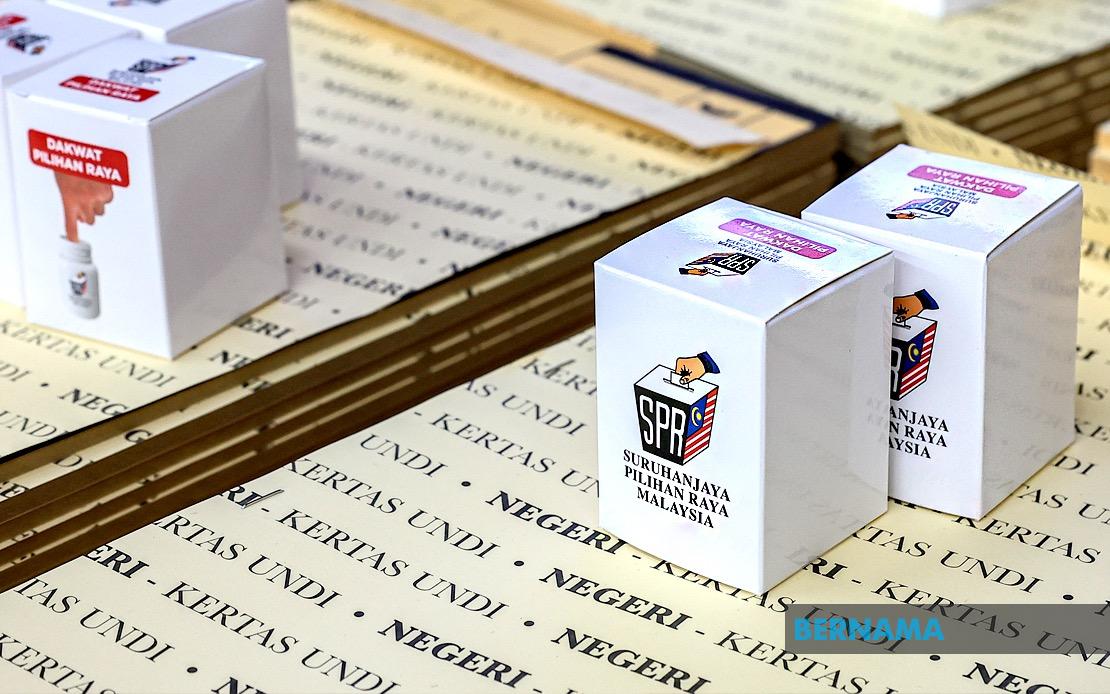
Negeri Sembilan's electoral preparations remained in earlier stages, with nomination procedures still outstanding and ballot printing pending. This staggered timeline illustrates how state elections, though simultaneous in some instances, often require distinct administrative cycles. The deployment of over 15,000 personnel for the Negeri Sembilan polls underscores the human and logistical intensity underlying what citizens often perceive as routine democratic exercises.
For Malaysian voters, particularly those in major urban centres experiencing sustained population inflow, the call to update addresses carries practical weight. Kuala Lumpur, Selangor, and other economic hubs witness continuous streams of internal migration as individuals and families relocate for employment and opportunity. Without corresponding electoral adjustments, these dynamic populations risk becoming substantially underrepresented in terms of elected officials genuinely responsive to their circumstances.
Beyond individual constituencies, the aggregation of misaligned voters produces systemic effects. Electoral maps may not reflect actual population distribution, potentially creating imbalances where some areas remain over-represented whilst others struggle with under-representation. This geographical mismatch complicates long-term urban planning, infrastructure allocation, and service delivery, as elected representatives may focus on registered voters rather than resident populations requiring their attention.
The EC's emphasis on this matter also reflects broader global trends in electoral administration, where maintaining accurate voter rolls constitutes a cornerstone of democratic legitimacy. Nations across Southeast Asia and beyond grapple with similar challenges as migration patterns intensify and traditional notions of permanent, rooted residency become less descriptive of modern life. Malaysia's monthly update cycle and online registration capabilities position it relatively favourably within regional comparisons.
Looking forward, the commission's push for address alignment should be understood as preventative maintenance of democratic institutions rather than mere administrative housekeeping. When representation functions as designed—with voters genuinely living in constituencies whose elected officials serve their needs—the entire democratic apparatus gains legitimacy and effectiveness. Conversely, when disconnects widen between electoral rolls and actual populations, public confidence in representation inevitably erodes.
Voters contemplating whether to update their addresses should recognise that doing so enhances not only personal convenience but the collective functioning of Malaysia's democratic system. The EC's streamlined procedures and enhanced update frequency have removed traditional obstacles, leaving primarily the decision itself. For a constituency-based system to serve its intended purpose, the fundamental alignment between voters and the places they inhabit must remain robust.

