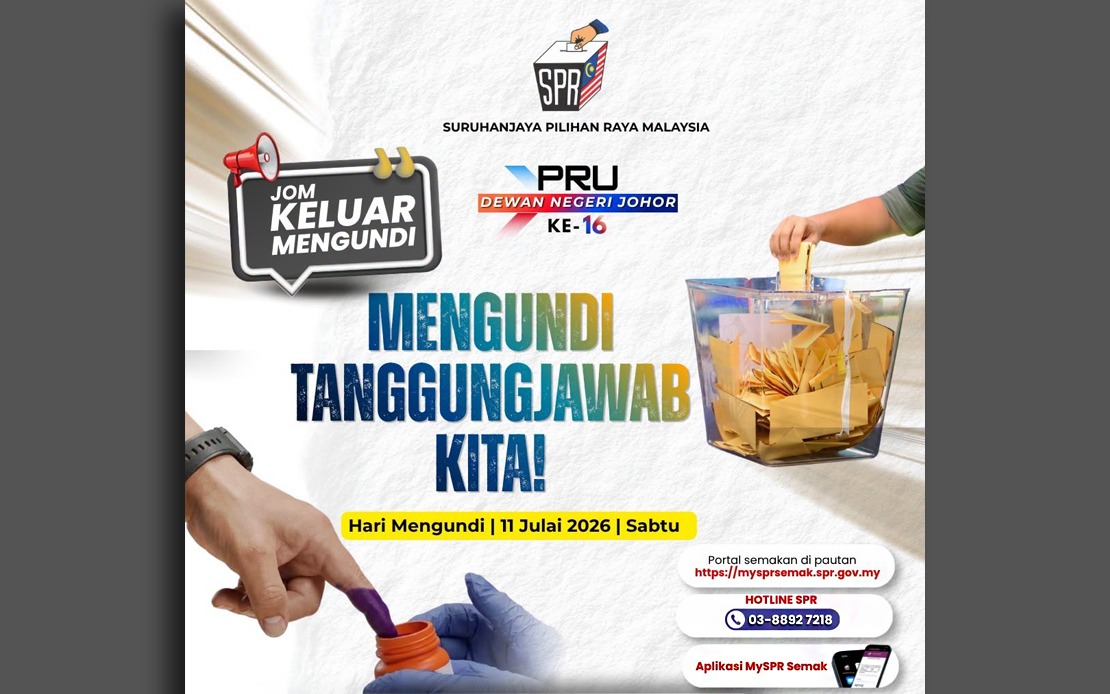
With Johor's 16th State Election scheduled for Saturday, the Election Commission has issued a forceful reminder to employers that they must grant workers sufficient time to vote, following mounting public concerns about workplace obstacles to electoral participation. EC Secretary Datuk Khairul Shahril Idrus stressed the commission's determination to protect voter rights, emphasizing that the authority had received multiple complaints from citizens worried that some businesses might restrict employee access to polling stations.
Under Section 25 of the Election Offences Act 1954, employers face strict legal obligations that supersede workplace operations on polling day. The law explicitly prohibits any reduction in worker compensation or imposition of penalties for time spent voting, establishing a clear constitutional hierarchy where civic participation ranks above commercial scheduling concerns. This legislative framework reflects Malaysia's commitment to protecting the fundamental right of citizens to exercise their franchise without financial or professional consequences.
The EC secretary's statement carried particular weight given the institutional authority behind it, functioning as both a legal clarification and a public warning to any employer considering non-compliance. Datuk Khairul Shahril articulated the commission's position with directness: employers cannot demand compensation deductions, withhold wages, or threaten disciplinary action against staff members who take time to vote. Such actions would constitute clear violations of electoral law, regardless of the business's operational pressures or scheduling difficulties.
The penalties for employer non-compliance are substantial enough to deter violations. Upon conviction, offenders face potential fines reaching RM5,000, imprisonment up to one year, or both sentences imposed simultaneously. These consequences represent genuine legal jeopardy for business owners or managers who prioritize profit margins over democratic participation, creating real incentive structures for lawful behaviour during election periods. The severity reflects the state's position that workplace pressure on voters undermines the integrity of the electoral system.
The commission explicitly warned that violations extend beyond overt refusal to allow voting time. Indirect prevention of voting rights—through scheduling strategies, intimidation, or administrative barriers—also violates the law. This broader interpretation means that employers cannot circumvent legal obligations through subtle or coercive methods; the spirit of the law protects worker participation as thoroughly as its letter. Workplace culture that subtly discourages voting is thus legally actionable, not merely discouraged.
For Malaysian workers, particularly those in small businesses with tight margins or demanding operational schedules, the EC's reminder provides essential legal backing. Many employees in Malaysia's retail, manufacturing, and service sectors work under conditions where requesting time off feels risky, making explicit legal protections crucial safeguards. The Election Commission's public statement signals enforcement intent, strengthening worker confidence that raising voting concerns with management will not trigger retaliation.
Saturday's election will determine control of 56 state seats across Johor, with 172 candidates competing for these positions. The scale of the contest means that voter turnout patterns significantly influence outcomes, particularly in marginal constituencies where small participation shifts can determine winners. High overall turnout benefits democratic legitimacy and tends to produce more representative outcomes, whereas suppressed turnout through workplace pressure or other obstacles skews results toward those most able to surmount participation barriers.
From an organisational perspective, the EC has framed employer cooperation not merely as legal compliance but as a contribution to electoral integrity and high voter engagement. By appealing to employers' sense of civic responsibility, the commission simultaneously establishes expectations and offers a face-saving framework for lawful behaviour. Employers who voluntarily grant voting time can characterize this as patriotic support for the electoral process, transforming a legal obligation into apparent corporate virtue.
The timing of the EC's statement demonstrates institutional vigilance ahead of the election. By reminding employers of their legal duties several days before polling, the commission provided businesses time to adjust schedules and communicate policies to staff, reducing likelihood of last-minute conflicts or confusion. This proactive approach represents best practice election administration, establishing clear expectations rather than waiting to prosecute violations after voting concludes.
For Southeast Asian observers monitoring Malaysia's democratic practices, the EC's intervention reflects institutional mechanisms designed to protect electoral access. Worker disenfranchisement through workplace pressure represents a subtle but genuine threat to democratic quality, and explicit legal protections with meaningful enforcement penalties help safeguard against such threats. The commission's willingness to publicly warn employers signals that Malaysia takes this issue seriously rather than treating it as peripheral to broader election administration.
Implementation remains the critical variable determining whether the EC's reminder translates into actual worker protection. Individual employers facing genuine operational constraints may calculate that modest fines justify non-compliance, particularly if enforcement appears inconsistent or detection unlikely. Achieving genuine compliance requires both clear legal frameworks—which exist—and committed enforcement monitoring during and immediately after polling day. The EC's credibility depends partly on demonstrating that public warnings translate into actual consequences for violators.

