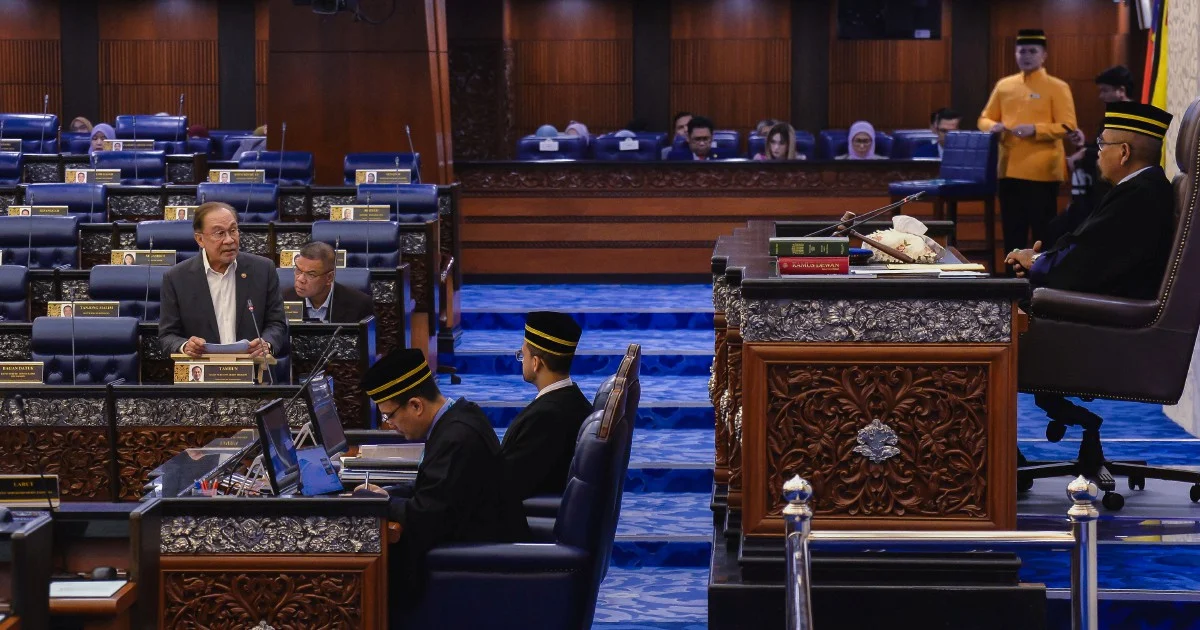
Prime Minister Datuk Seri Anwar Ibrahim has affirmed the Election Commission's commitment to hold caretaker governments accountable for breaching established election conduct guidelines, particularly when they make announcements or decisions carrying financial consequences. This statement represents a significant enforcement stance that could reshape how interim administrations operate during election campaigns, a critical period when temporary leadership typically avoids major policy shifts to ensure electoral fairness.
The Prime Minister's assurance addresses longstanding concerns about the scope of authority caretaker governments wield between the dissolution of Parliament and the election of a new one. Historically, Malaysia's caretaker administrations have occupied a grey zone where the boundaries of permissible governance remain ambiguous, creating potential for administrative overreach. By clearly stating that the Election Commission will intervene when financial implications arise, Anwar's government sends a signal that election integrity encompasses not merely voting procedures but also fiscal responsibility during transitional periods.
This enforcement mechanism carries particular relevance for Malaysia's increasingly competitive electoral landscape. Political parties have occasionally used caretaker periods strategically to announce benefits, allocate contracts, or pursue projects intended to influence voter sentiment. Such actions, while sometimes operating within technical legality, arguably violate the spirit of caretaker conventions that exist across Commonwealth democracies. The Election Commission's proactive stance signals an expectation that interim governments will restrain spending and policy announcements to preserve level playing fields for all contending parties.
The implications for Malaysia's federal structure and state-level politics warrant careful consideration. Caretaker governments operate not only at the federal level but also in state administrations when state elections are called. The Election Commission's authority to enforce guidelines across these jurisdictional levels ensures consistency in standards. However, defining precisely what constitutes a "decision with financial implications" remains complex. Does routine operational spending qualify, or only discretionary policy announcements? Does maintenance of existing contracts differ from awarding new ones? These definitional questions will inevitably test the Election Commission's judgment and interpretation.
Southeast Asian readers should recognize that Malaysia's approach reflects broader regional trends toward institutionalizing election conduct standards. Countries like Indonesia and the Philippines have similarly grappled with regulating caretaker government behaviour, though enforcement remains inconsistent. By empowering the Election Commission to act decisively, Malaysia positions itself as strengthening democratic guardrails during vulnerable transitional periods. This demonstrates that election integrity extends beyond voting mechanisms to encompass the entire electoral cycle, including preparatory phases.
The practical enforcement of these guidelines will require clear communication about permissible conduct. Caretaker government officials need explicit parameters about what spending constitutes prohibited activity. Bureaucrats managing routine operations must understand which decisions require postponement until a new elected government assumes office. Without precise guidance, enforcement could appear arbitrary or politically motivated, potentially undermining confidence in the Election Commission's impartiality. The Commission's ability to issue detailed directives and educational materials will determine whether this policy succeeds in preventing abuse or generates controversy.
International precedent offers instructive models for Malaysia's approach. In Australia and Canada, caretaker conventions operate through tradition and political culture rather than legal enforcement, with parties accepting self-imposed restrictions. India's Election Commission, by contrast, actively enforces detailed caretaker guidelines with punitive authority. Malaysia's model appears to lean toward the Indian approach, embedding enforcement power within the constitutional commission rather than relying solely on political self-discipline. This reflects recognition that political competition sometimes incentivizes rule-bending, making formal enforcement mechanisms necessary.
The timing of the Prime Minister's statement deserves attention given Malaysia's electoral calendar. Recent federal elections in 2022 demonstrated how caretaker periods can extend through complex post-election negotiations. State elections scheduled across the federation will provide testing grounds for Election Commission enforcement. Each incident where caretaker governments potentially breach guidelines will either validate or undermine the Commission's credibility. Public perception of fairness during these tests will shape confidence in future electoral processes.
For civil service officials and political appointees in caretaker administrations, this policy imposes significant accountability. Those implementing government policies must now consider whether their decisions might trigger Election Commission intervention. This creates a chilling effect on discretionary spending and policy announcements, which proponents view as democratically healthy but critics might characterize as administrative paralysis. The balance between maintaining government functionality and preventing electoral manipulation thus becomes operationalized through the Commission's enforcement decisions.
The broader significance extends to Malaysia's democratic maturation. As a nation with competitive elections and multiple contending coalitions, establishing clear rules that apply consistently regardless of which party forms the caretaker government strengthens systemic legitimacy. When all parties understand and accept that their governments will face identical scrutiny, acceptance of electoral outcomes becomes easier. Conversely, if enforcement appears selective or politically motivated, it erodes faith in institutional impartiality. The Election Commission's future conduct will determine whether this policy becomes a cornerstone of democratic conduct or a controversial flashpoint.
Looking ahead, clarification through formal Election Commission directives would benefit all stakeholders. Detailed guidelines specifying prohibited activities, permissible spending categories, and enforcement procedures would provide transparency. Political parties could internalize these rules during campaign preparation. Caretaker officials would understand boundaries clearly. And the Election Commission would demonstrate that enforcement follows pre-announced standards rather than reactive judgment calls. Such institutional clarity represents the ultimate test of whether Anwar Ibrahim's assurance translates into stronger democratic practice or merely rhetorical commitment to enforcement principles.

