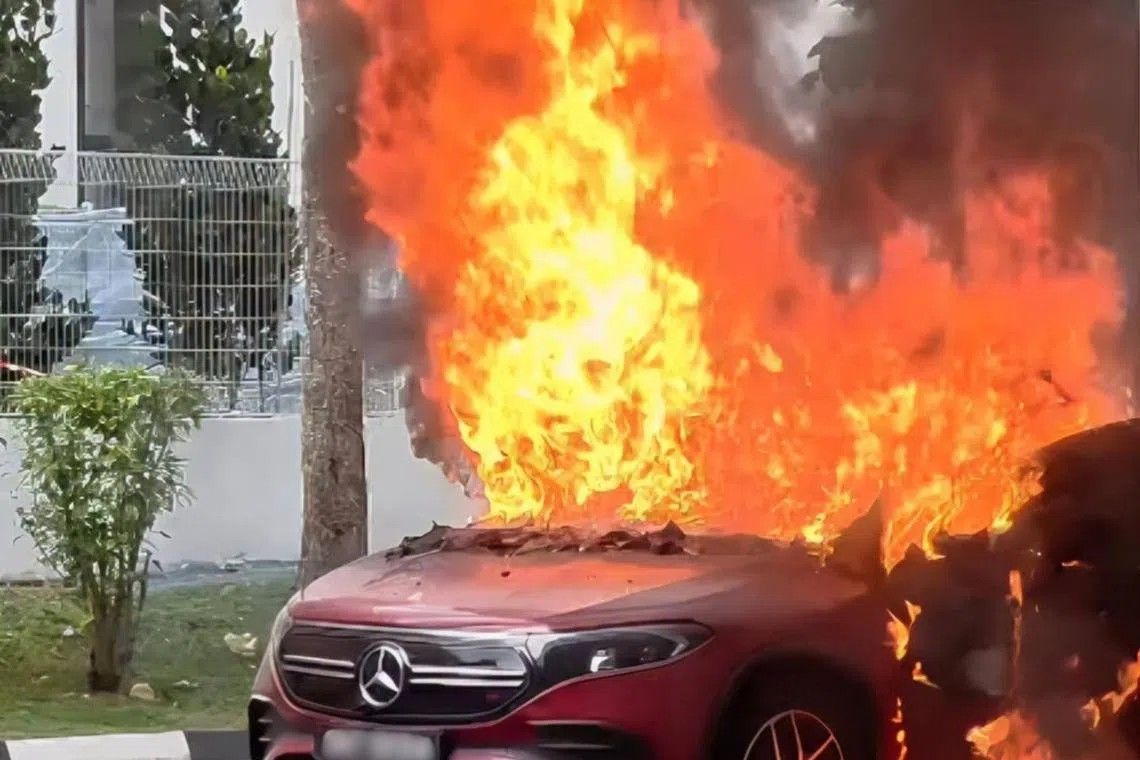
An electric vehicle ignited and burned extensively near the entrance of a multi-storey carpark in Singapore's Woodlands estate on the morning of July 21, triggering a response from emergency services. The Singapore Civil Defence Force arrived at Block 548 Woodlands Drive 44 around 10.10am after receiving reports of the incident and swiftly contained the blaze affecting the car's interior using a single water jet. Fortunately, no one was hurt in the incident, though the severity of the damage raises fresh questions about EV safety in residential settings across the region.
According to the vehicle operator, she was in the process of exiting the carpark when she detected an acrid smell emanating from the car. Upon stopping the vehicle and investigating, she observed smoke billowing from within the cabin. The fire appeared to originate in the area between the driver and front passenger seats, directly above the battery housing—a critical component in electric vehicles where intense chemical reactions can rapidly spread flame and heat. This location is significant because battery-related thermal events remain one of the most concerning failure modes in EV technology, particularly when the cells rupture and ignite.
The driver's immediate response was to seek assistance from security personnel stationed nearby, but the guards lacked the capability to suppress the expanding fire using standard portable extinguishers. As flames continued to spread throughout the vehicle's interior and the structural integrity of the car appeared compromised, fears mounted that the battery could undergo a catastrophic failure. The group made the prudent decision to evacuate the immediate vicinity and summoned professional firefighters, potentially averting further damage or injury. The vehicle was subsequently towed away at approximately 12.15pm.
Photographic evidence from the scene documents the extensive nature of the destruction. The entire interior compartment shows signs of severe charring, with upholstery and trim completely consumed by the flames. The dashboard configuration has warped and melted substantially, rendering the vehicle's control systems inoperable. The metal framework supporting the seats has become exposed through the burnt remnants of padding and fabric, indicating temperatures inside the cabin reached several hundred degrees Celsius during the incident.
The Singapore Civil Defence Force has initiated a formal investigation into the root cause of the fire, which remains officially undetermined. While the driver's account and the fire's location point toward a battery malfunction, SCDF has not yet released preliminary findings or mechanical assessments. Understanding whether this was a manufacturing defect, a result of impact damage, a charging system fault, or an inherent vulnerability in the battery design will carry implications for both vehicle recalls and safety protocols across the region.
This incident comes amid growing scrutiny of EV safety standards in Southeast Asia, where electric vehicle adoption is accelerating rapidly. Countries across the region have been scaling up incentives and infrastructure for electric mobility as part of broader environmental and energy security objectives. However, high-profile battery fires in Singapore, Malaysia, and other neighboring jurisdictions have sparked public concern about whether manufacturers, regulators, and charging infrastructure providers have adequately prepared for the thermal risks these vehicles present in densely populated residential areas.
The incident at Woodlands HDB is particularly noteworthy because it occurred not during charging—when batteries are most vulnerable—but during routine driving operation. This suggests the failure was not necessarily linked to charger malfunction or overcharging procedures, but rather an internal battery cell breakdown or external damage that compromised the pack's structural and thermal integrity. Such events, though statistically rare, highlight a critical vulnerability in EV ecosystems where shared residential infrastructure like multi-storey carparks serves hundreds of vehicle owners simultaneously.
For Malaysian and other regional readers, this episode underscores the importance of robust pre-purchase inspection protocols, regular servicing by qualified technicians, and clear safety guidelines for parking electric vehicles in residential compounds. Unlike conventional internal combustion engines, EV batteries require specialized knowledge to diagnose and repair, and substandard maintenance or repair practices could increase failure risks. Additionally, property managers and municipal authorities may need to develop carpark guidelines that address EV-specific hazards, including dedicated charging zones with enhanced fire suppression systems and adequate ventilation.
The broader regulatory landscape in the region will likely be influenced by incidents such as this one. Authorities in Singapore, Malaysia, and other ASEAN nations are gradually tightening certification and testing requirements for imported vehicles and locally assembled EVs, but standards vary considerably. This fragmentation creates challenges for manufacturers, who must navigate multiple compliance frameworks, and for consumers, who face uncertainty about which vehicles have undergone the most rigorous safety assessments. International coordination on EV battery safety testing and certification could help ensure consistent protection across the region.
As investigations proceed, the Woodlands incident serves as a timely reminder that the transition to electric mobility, while essential for decarbonization goals, requires parallel investments in safety infrastructure, technical expertise, and regulatory harmonization. Both individual vehicle owners and policymakers should treat EV fire risks with appropriate seriousness, neither dismissing them as negligible nor exaggerating their prevalence. Clear, evidence-based communication from manufacturers, authorities, and safety organizations will be crucial to maintaining public confidence in electric vehicles as they become increasingly mainstream across Malaysia and the broader region.

