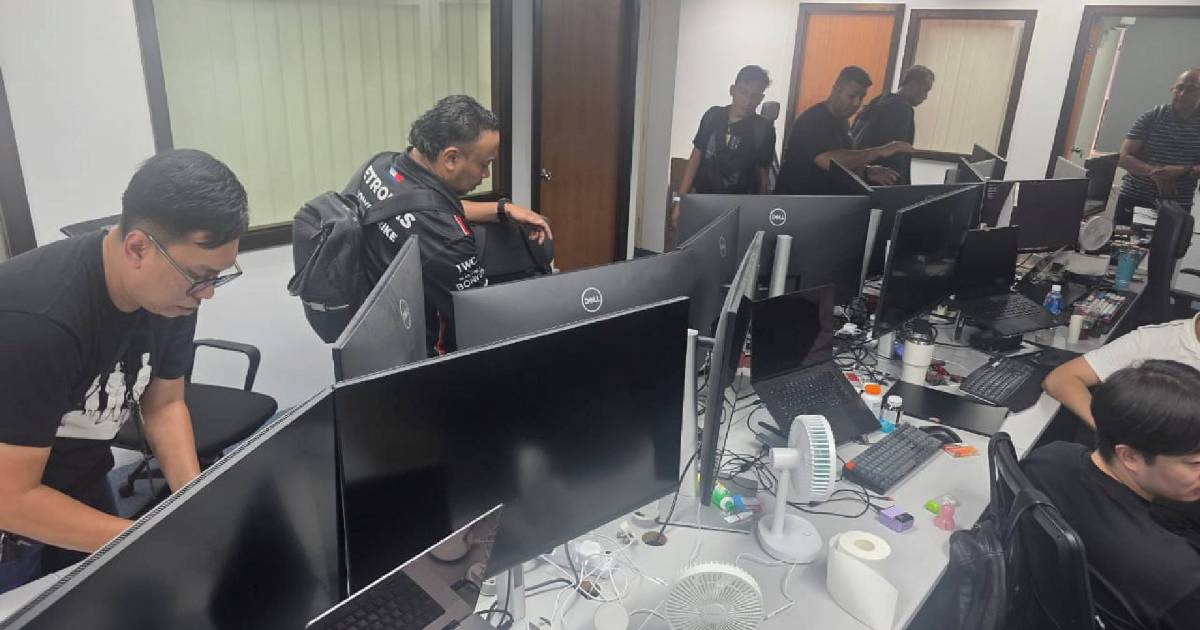
Police in Kuala Lumpur have moved against an international football betting syndicate, apprehending eleven individuals during a coordinated raid on an office building in the Taman Desa area of Brickfields. Among those detained are six nationals from South Korea, suggesting the operation maintained cross-border organizational links and coordination. The enforcement action underscores the scale of underground gambling networks that leverage major international sporting events to drive illegal wagering activity.
The call centre facility, discovered operating from commercial office space in one of Kuala Lumpur's established business districts, had been conducting illegal bookmaking operations related to World Cup matches. The decision to establish such operations in mainstream business environments reflects how sophisticated gambling syndicates attempt to camouflage their activities within legitimate urban landscapes. The choice of location in Brickfields, a densely populated commercial corridor, suggests the operators were banking on the anonymity afforded by high foot traffic and numerous registered businesses.
The presence of six South Korean nationals indicates the syndicate operated as a transnational enterprise, likely with technical expertise and operational personnel sourced from abroad. This pattern mirrors broader trends across Southeast Asia, where international criminal networks recruit specialized talent to manage complex illegal gambling infrastructure. The involvement of foreign nationals also complicates law enforcement response, as it touches on immigration and international cooperation matters beyond domestic betting law violations.
World Cup tournaments historically trigger spikes in illegal gambling activity across the region. The global focus on football, combined with the compressed schedule of matches across multiple time zones, creates intense betting demand that underground syndicates are well-positioned to service. Malaysian law enforcement has consistently targeted such operations during major tournaments, recognizing the connection between organized illegal gambling and associated crimes including money laundering, loan sharking, and organized crime financing.
The operational model of a call centre approach allows syndicates to accept wagers remotely from multiple locations, making detection more challenging than traditional physical betting establishments. Operators can rapidly relocate operations or distribute staff across multiple venues to evade enforcement. The scale of eleven arrests suggests the police investigation had likely gathered substantial evidence of coordinated criminal activity spanning an organized hierarchy rather than isolated individuals.
Malaysia's regulatory environment maintains strict prohibitions on unlicensed gambling operations, with only authorized venues like licensed casinos and Sports Toto outlets permitted to facilitate legal wagers on sporting events. Underground syndicates representing this bust operate entirely outside this regulatory framework, depriving the government of tax revenue while creating unprotected environments for consumers with no dispute resolution mechanisms. The illegal nature also means participants face heightened vulnerability to fraud and violence.
Law enforcement agencies across Southeast Asia have intensified efforts to disrupt football betting rings ahead of major tournaments, recognizing these operations generate substantial criminal proceeds and serve as infrastructure for broader organized crime enterprises. Intelligence sharing among regional authorities has improved significantly, enabling coordinated takedowns of networks with multinational personnel. The arrest of foreign nationals in this case demonstrates how Malaysian police are increasingly focused on dismantling the international dimensions of gambling syndicates operating within national territory.
The financial scale of such operations often exceeds surface indications. Even moderately sized call centres can process millions in monthly wagers, particularly during high-profile tournaments when betting intensity peaks. Funds generated flow through informal money movement channels, conversion networks, and legitimate business fronts, making financial investigation a critical component of enforcement efforts. The connection between gambling proceeds and organized crime financing makes these busts significant beyond their immediate impact on sports betting.
The investigation leading to this raid likely involved months of surveillance, electronic monitoring, and financial analysis to build prosecutable cases against all eleven suspects. Coordination between multiple police units and departments would have been necessary to simultaneously apprehend personnel at the identified location while preventing the destruction of evidence. The timing of the operation during the World Cup period reflects deliberate enforcement scheduling to maximize disruption during peak demand periods.
Future cases of this nature may face complications regarding the extraterritorial status of foreign nationals and questions of jurisdiction in international prosecutions. Malaysian courts will need to process charges against the six South Korean suspects, while relevant authorities in Seoul may also pursue parallel investigations depending on the extent of operational command originating from South Korea. Mutual legal assistance treaties facilitate such coordination, though the process remains time-consuming and complex.
The broader implications extend to cybersecurity and digital betting infrastructure vulnerabilities. Underground syndicates increasingly utilize encrypted communications, cryptocurrency channels, and sophisticated technology platforms to conduct operations. Law enforcement agencies must continually upgrade their capacity to investigate digitally-native criminal enterprises. This particular bust focused on traditional call centre operations, but evolving online betting infrastructure represents the emerging frontier for illegal gambling enforcement across Southeast Asia.
Police have indicated that investigations remain ongoing, suggesting additional suspects may be identified and that the full scope of the syndicate's operations is still being mapped. Participants across the chain—from operational staff to financial handlers to regional managers—may face charges ranging from operating unlicensed gambling establishments to money laundering depending on their specific roles. The ultimate success of enforcement will be measured not only in prosecutions but in disruption of the network's capacity to resume operations.

