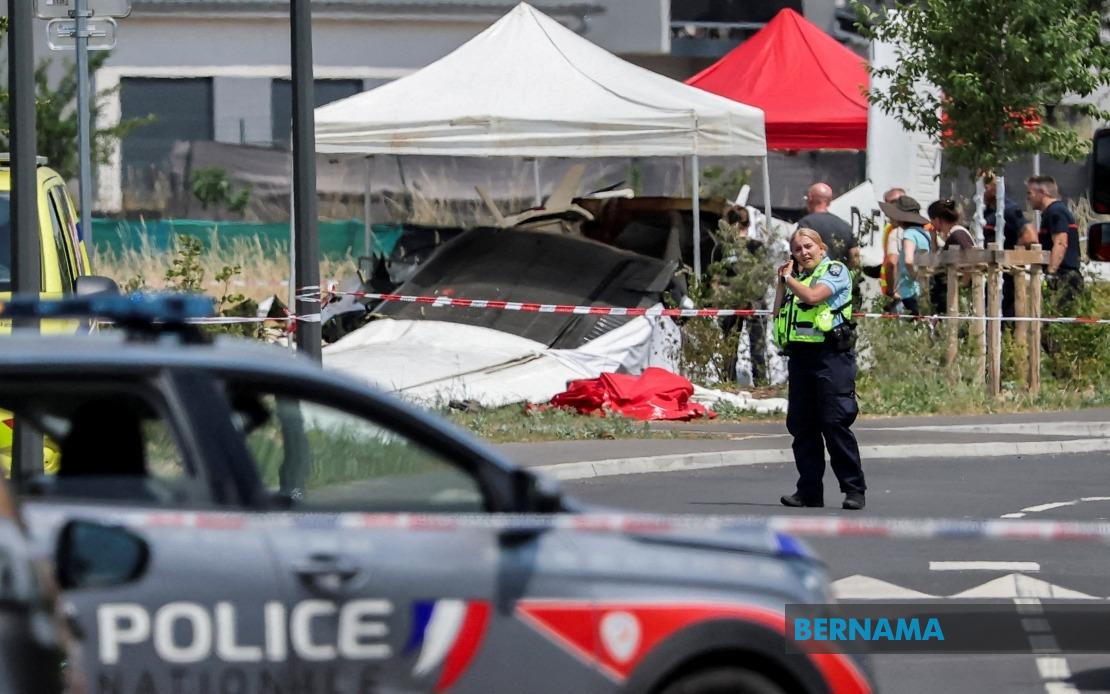
A civilian aircraft plummeted to the ground near the eastern French city of Nancy on Sunday, resulting in the deaths of all 11 people aboard. The plane came down in Tomblaine, a town within the Meurthe-et-Moselle department, shortly after departing from Nancy-Essey Airport, according to local French authorities and regional media reports. The tragedy has prompted an immediate emergency response from French government officials, with Interior Minister Laurent Nunez expected to visit the crash site to assess the situation.
Among those killed in the disaster were the aircraft's pilot and two separate groups of skydivers who had been preparing for a parachuting operation. According to Thierry Pechey, head of the Meurthe-et-Moselle branch of the Order of Independent Nurses, the victim list appears to include independent nurses who were participating in what officials have characterised as an initiation event. This suggests the flight had been organised as a joint recreational activity combining skydiving with what may have been a professional or social gathering for nursing professionals.
The circumstances surrounding the crash remain under investigation by French authorities. The aircraft had only recently become airborne when it encountered difficulties and descended rapidly toward the residential area of Tomblaine. The sudden nature of the incident, combined with the aircraft's proximity to populated areas, has raised concerns about potential dangers to residents on the ground, though initial reports indicate the crash site was managed without additional casualties.
In response to the tragedy, Meurthe-et-Moselle Prefect Yves Seguy has mobilised departmental emergency services and established an operational coordination centre to oversee the response effort. This activation ensures that rescue teams, law enforcement, and investigation personnel can work in a coordinated manner to handle both immediate emergency response and the subsequent inquiry into what caused the aircraft to fail. The establishment of such a centre is standard protocol in France for major transport accidents.
Local police have implemented restricted access protocols around the crash site, specifically in the area surrounding Rue Salvador Allende in Tomblaine. Authorities have instructed members of the public to remain clear of the vicinity to enable emergency responders and law enforcement personnel to operate without obstruction. This cordon is essential both for safety reasons and to preserve the integrity of the investigation scene, allowing accident investigators to examine the wreckage and gather evidence without interference.
For Malaysian readers and Southeast Asian observers, aviation incidents of this nature underscore the importance of rigorous safety protocols in recreational flying activities. While skydiving is a regulated sport in Malaysia and across the region, commercial aircraft supporting such activities must meet stringent international safety standards. This French incident may prompt regional aviation authorities to review safety procedures governing charter flights used for recreational purposes, particularly regarding pre-flight inspections and maintenance schedules.
The involvement of independent nurses in the event adds a dimension of professional group activity to what might otherwise be characterized as purely recreational. Such organised activities within professional communities are common across Europe and increasingly in Malaysia, where professional associations organise team-building and social events. The tragedy raises questions about duty of care and liability when professional groups charter aircraft for group activities.
French aviation authorities will conduct a thorough technical investigation to determine the root cause of the crash. Factors under examination will likely include mechanical failure, pilot error, adverse weather conditions, and maintenance history. The French Bureau of Enquiry and Analysis for Civil Aviation Safety will coordinate this investigation, working with regional authorities and international aviation safety bodies as required.
The incident reflects the inherent risks associated with small aircraft operations, even when conducted under regulated conditions. While commercial aviation maintains an exceptional safety record globally, smaller aircraft used for specialised purposes such as parachute jumping operations face different risk profiles and operational constraints. The integration of skydiving activities with commercial passenger services creates unique operational demands that require careful management and oversight.
For the families and colleagues of those involved, the tragedy represents an unexpected loss within communities that were gathered for what they anticipated would be an enjoyable and safe experience. The incident will likely prompt discussions within French professional nursing associations about risk management in group activities and the protocols governing external service providers contracted for organised events.
The timing and circumstances of this crash will undoubtedly attract international attention within aviation safety circles across Europe and beyond. Preliminary findings from the investigation may influence regulatory discussions within the European Union and potentially impact international standards for small aircraft operations supporting recreational activities. Malaysian aviation authorities will monitor developments and may consider whether any lessons or regulatory adjustments are warranted for domestic operations.

