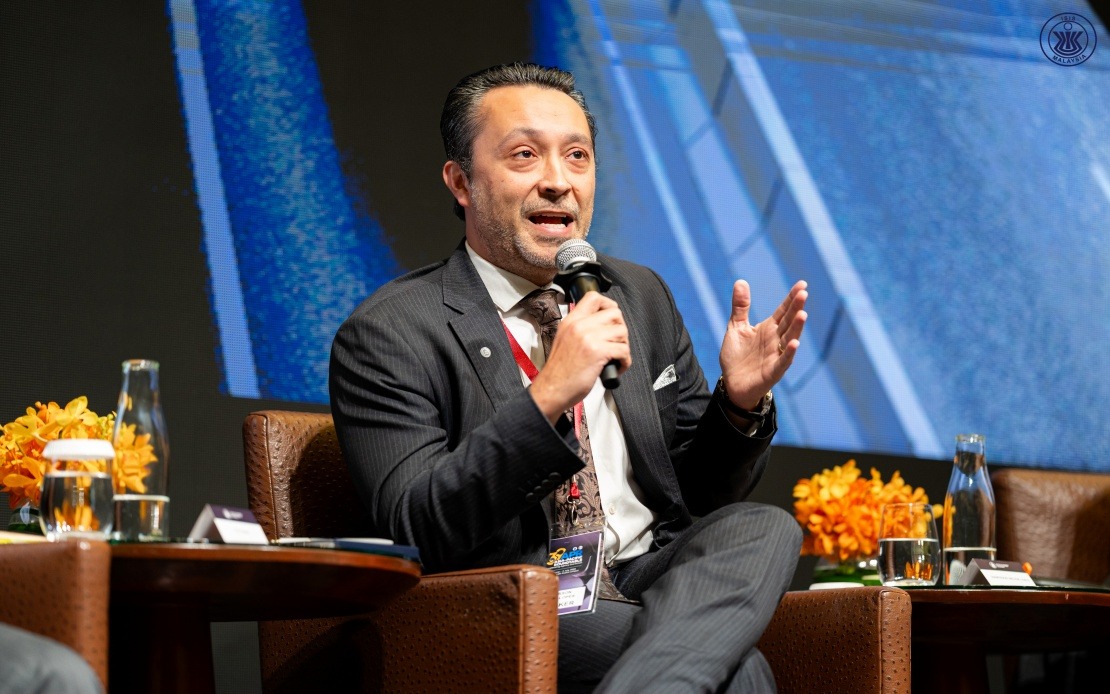
The international system underpinning global affairs for nearly eight decades is in flux, and countries in the Global South must seize this moment to chart independent courses aligned with their own strategic interests. This message emerged clearly at the 39th Asia-Pacific Roundtable held in Kuala Lumpur, where leading scholars and policy experts convened to examine how rising powers should navigate an increasingly multipolar world.
Prof Dawisson Belém-Lopes from Federal University of Minas Gerais in Brazil drew a critical distinction during the two-day conference organised by the Institute of Strategic and International Studies (ISIS) Malaysia. Rather than grouping emerging and established middle powers together, he argued, the international community must recognise that these two categories represent fundamentally different political realities and trajectories. Emerging middle powers—a category encompassing Malaysia, Brazil, India, Indonesia, Turkiye, and Mexico—operate from vastly different starting points than their established counterparts and should not be expected to follow the same playbook.
The Global South's relationship with the post-World War Two liberal international order has always been complicated and contested. Belém-Lopes noted that emerging middle powers have historically harboured deep discomfort with this system and have consistently advocated for comprehensive reforms to address structural inequalities. Unlike established middle powers that benefited from and helped construct the existing order, emerging economies have often found themselves on the periphery of decision-making forums and rule-setting mechanisms designed by earlier industrialised nations.
What distinguishes these emerging powers today is their accumulating leverage. Belém-Lopes highlighted that the Global South now commands both greater economic resources and institutional platforms that were unavailable to previous generations of developing nations. Regional groupings such as BRICS, the Shanghai Cooperation Organisation, and various ASEAN-centred initiatives have created spaces where these countries can coordinate positions and advance collective interests outside traditional Western-dominated forums. This shift represents a significant rebalancing of international power dynamics.
Peter Varghese, Chancellor of the University of Queensland and former secretary of Australia's Department of Foreign Affairs and Trade, offered a broader perspective on the current transition. The world, he contended, exists in a liminal state—suspended between two international orders. The post-war architecture constructed and led primarily by the United States is gradually losing coherence and influence. However, the replacement system has not yet crystallised into a stable replacement framework.
Various structural forces are accelerating this transition. Varghese identified China's sustained economic and technological rise as a primary driver, challenging American primacy in ways that previous powers never could. The movement toward a genuinely multipolar world has begun, with power diffusing across multiple centres rather than concentrating in a single hegemon or narrow great-power directorate. Simultaneously, the Washington Consensus—the set of economic principles and prescriptions that dominated development thinking for decades—has lost much of its prescriptive authority. Identity politics and cultural nationalism are increasingly shaping electoral outcomes and foreign policy calculations in ways that defy the rationalist assumptions embedded in liberal internationalism.
Yet Varghese cautioned against excessive optimism about rapid systemic transformation. Building a new multilateral architecture requires time, institutional innovation, and coordination among diverse actors with competing interests. While strategic agency—the capacity of nations to shape their circumstances—is essential, it cannot unilaterally construct a new world order. Instead, Varghese recommended that countries prioritise strengthening both regional cooperation mechanisms and cross-regional partnerships that can provide stability during this transitional period.
Prof Ken Jimbo from Keio University in Japan addressed concerns about Asia's role in the evolving order. Despite shifts in United States foreign policy, he emphasised that Asia will remain strategically central to global affairs. The United States, regardless of the political orientation of its administration, will continue to depend on regional partnerships to advance its strategic objectives in one of the world's most economically vital regions. Even under an "America First" approach, Washington cannot afford to withdraw significantly from Asian commitments.
Jimbo's analysis also reflected Japan's particular position and concerns. Nations like Japan remain fundamentally dependent on the maintenance of a free and open rules-based international order for their security architecture and economic prosperity. These countries have built their post-war development models on access to global markets and the assurance that international rules would constrain great-power coercion. Any fundamental breakdown of international order would threaten these hard-earned gains.
For Malaysia and other Southeast Asian nations, the implications are substantial. The region's strategic position makes it a focal point for competing great powers, while its own development aspirations require stable international frameworks for trade, investment, and resource flows. The current transformation offers both opportunities and risks—chances to negotiate better terms within emerging institutional arrangements, but also potential instability if the transition becomes chaotic or conflict-ridden.
The consensus among experts suggests that passive acceptance of whatever order emerges is not a viable strategy. Emerging middle powers must actively participate in shaping the new frameworks, building coalitions that reflect their interests rather than deferring to established powers. This requires coordinated diplomacy, strategic clarity about core interests, and willingness to pursue independent paths when necessary.

