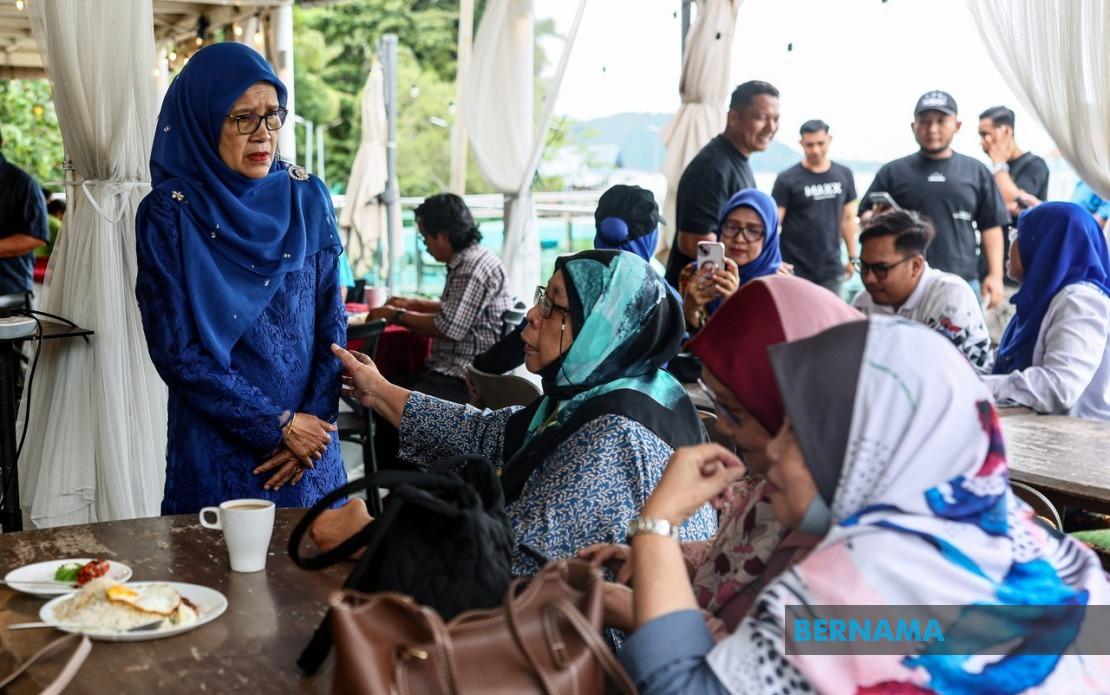
The Endau state seat in northern Johor is shaping up as one of the Johor election's most compelling contests, pitting the established credentials of two-term Barisan Nasional incumbent Alwiyah Talib against the ambitious reform programme of Pakatan Harapan newcomer Saiful Nizam Samat. The constituency's 28,767 registered voters will navigate a four-cornered fight that also includes Perikatan Nasional's Hasnul Hakimi Hussien and independent Parti Orang Asli Malaysia candidate Jati Awang, when polling takes place on July 11, with early voting available on July 7.
Alwiyah, commonly referred to as Kak Awi, has constructed her campaign narrative around the tangible outcomes of her two consecutive terms representing the constituency. She emphasises continuity and the momentum of projects already underway, arguing that Endau requires sustained focus to realise its considerable economic potential. Her policy emphasis centres on transforming the region's tourism infrastructure, which currently generates significant revenue but remains underdeveloped relative to its natural advantages. She identifies the untapped opportunity within inland tourism development, which would complement the established island tourism operations that draw visitors to Mersing's offshore attractions.
Kak Awi's tourism vision encompasses several specific initiatives designed to diversify visitor experiences and extend spending within the constituency. She points to existing attractions including KampungStay@Teluk Buih, Penyabong and Tanjung Resang as proof points that domestic tourists already favour the area, with many facilities reaching full capacity during weekends. Rather than resting on these successes, she proposes rebranding Mersing's identity beyond its current role as a mere transit point to island destinations. Her strategy involves elevating lesser-known locations such as Pulau Mawar, Pantai Air Papan and Teluk Gorek into sustainable homestay destinations, effectively converting the entire district into an integrated tourism ecosystem that captures more visitor spending locally.
Education rounds out Kak Awi's policy priorities, reflecting her concern that Endau's students lack sufficient local educational infrastructure. The constituency currently depends on a single secondary school, Sekolah Menengah Kebangsaan Ungku Husin, to serve the entire student population. She commits to building an additional secondary institution within Pekan Endau to address overcrowding and provide students with genuine educational choice. Beyond facility expansion, she advocates for ensuring equitable access to educational benefits across all income levels, from primary through tertiary education, signalling awareness that rural constituencies often experience educational inequality.
Saiful Nizam, at 42 years old, brings a markedly different credential profile to the contest. Currently pursuing doctoral studies in economics, he positions himself as an intellectual voice advocating for systemic economic restructuring rather than incremental improvements. His challenge to Kak Awi's incumbent status reflects broader generational and ideological divisions within Malaysian electoral politics. Where the incumbent emphasises proven service delivery, Saiful Nizam proposes comprehensive reformulation of Endau's economic foundation, with particular emphasis on reversing youth outmigration to urban centres—a phenomenon that threatens the long-term viability of rural constituencies across Malaysia.
The cornerstone of Saiful Nizam's economic platform is his 'Fishermen's Economy 2.0' agenda, which seeks to modernise the constituency's traditional primary sector. He argues that sustainable fisheries development generates multiplier effects throughout the local economy, supporting not only fishing families but also the traders, processors and service providers dependent on seafood industries. His approach combines sectoral reform with broader small and medium enterprise development, proposing targeted support for digital marketing, business training and entrepreneurship initiatives aimed at generating employment sufficient to retain young people within their home communities. This reflects recognition that urban migration represents a failure of rural economic opportunity rather than voluntary population movement.
Complementing his fisheries reform, Saiful Nizam emphasises food security through modern agricultural practices, positioning Endau's farming sector as critical infrastructure deserving policy attention and technical support. His education proposals parallel Kak Awi's commitment to infrastructure expansion but extend further into workforce development. He advocates for Technical and Vocational Education and Training (TVET) and Science, Technology, Engineering and Mathematics (STEM) programmes tailored to Endau's economic structure, plus English language training designed to enhance employee competitiveness in Malaysia's increasingly globalised labour market. The proposed Endau Children's Education Fund specifically targets financial barriers to educational access, addressing equity concerns systematically rather than generally.
Saiful Nizam's framework demonstrates awareness that rural electoral politics increasingly demands explicit attention to infrastructure disadvantages beyond traditional development categories. His commitment to resolving internet access deficits and improving fishermen's welfare reflects understanding that contemporary rural constituents expect policy responses to digital divides, which directly constrain economic opportunity and educational access. His undertaking to escalate local concerns regarding infrastructure, fisheries and connectivity to relevant federal and state agencies suggests recognition that state assemblypersons require effective advocacy mechanisms to overcome institutional barriers that often marginalise rural constituency interests within centralised bureaucratic structures.
The contest between Kak Awi and Saiful Nizam encapsulates broader Malaysian political debates concerning whether continuity and incremental development better serve rural constituencies than ambitious structural reform. Kak Awi's previous switch from Perikatan Nasional to Barisan Nasional demonstrates the fluid nature of electoral alignments in contemporary Johor politics, while her emphasis on proven delivery suggests that voters reward demonstrated competence. Conversely, Saiful Nizam's intellectual credentials and systematic reform proposal appeal to constituencies experiencing genuine economic stress and youth departure, phenomena that incremental tourism and education projects may insufficient address.
The Endau race occurs within the context of the 16th Johor state election, where a total of 172 candidates contest 56 state seats. This broader electoral framework influences constituency-level campaigns, as voters assess not only individual candidates but also the capacity of state coalitions to deliver effective governance. For Malaysian and Southeast Asian observers monitoring rural political dynamics, the Endau contest illustrates how regional constituencies increasingly demand sophisticated economic policy engagement beyond traditional development rhetoric. The outcome will signal voter preferences concerning experienced incumbency versus reform-oriented newcomers—a question resonating throughout rural Malaysia as demographic and economic pressures reshape constituency concerns and political expectations.

