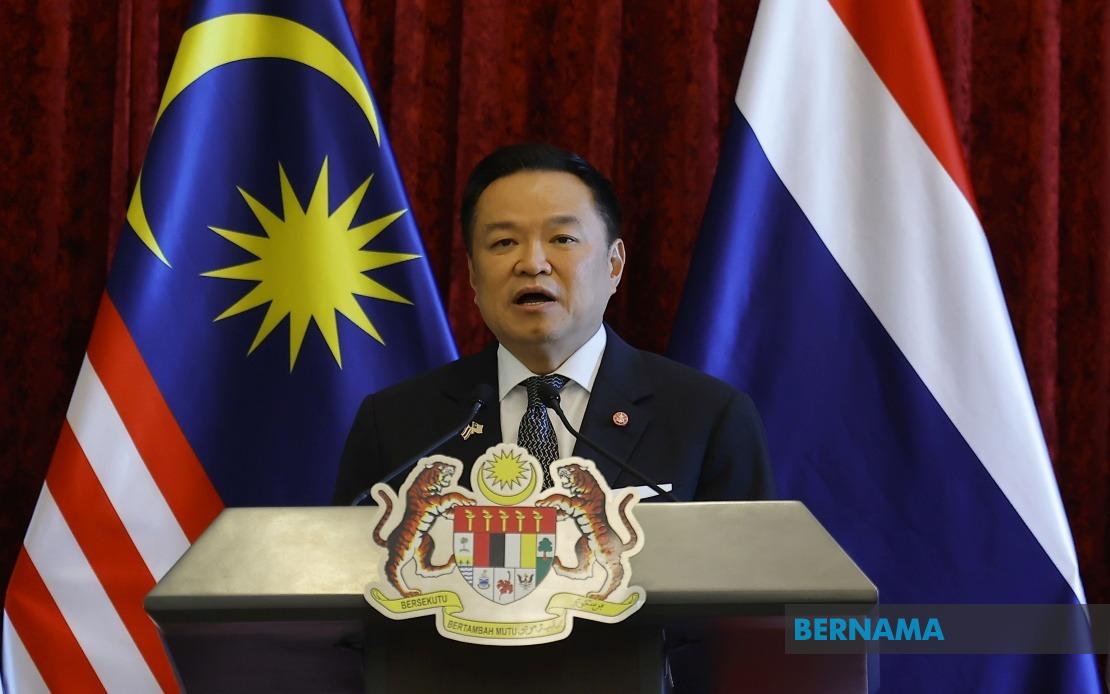
Thai Prime Minister Anutin Charnvirakul has reasserted his government's unwavering commitment to ending violence and tackling the deep-seated challenges afflicting Thailand's southern border provinces, describing these objectives as central pillars of his administration's policy agenda. Speaking alongside Malaysian Prime Minister Datuk Seri Anwar Ibrahim during a joint press engagement in Putrajaya on Thursday, Anutin underscored the necessity of sustained bilateral cooperation to advance both security and economic development across the troubled frontier region.
The dialogue between the two premiers reflected the growing diplomatic momentum surrounding efforts to bring stability to an area that has endured decades of armed conflict. Anutin articulated a fundamental principle underpinning regional peace initiatives: the interdependent nature of security and prosperity. In his remarks, he stressed that stability provides the essential foundation upon which development projects can take root, while simultaneously, tangible improvements in living standards and economic opportunity serve as catalysts for building durable peace among communities previously fractured by violence.
A particularly significant element of Thursday's engagement was Anutin's public acknowledgment of Malaysia's crucial facilitatory role in the Southern Thailand Peace Dialogue process. This recognition underscores Kuala Lumpur's elevated position as an honest broker in negotiations that have long proven intractable. Malaysia's involvement carries considerable diplomatic weight, given the country's historical relationships across the region and its credibility with various stakeholders invested in resolving the conflict.
Anwar, for his part, conveyed Malaysia's firm stance against violence in any manifestation while pledging continued close coordination with Bangkok to bring perpetrators of attacks to account through judicial mechanisms. This reassurance carries practical importance, as transnational security threats frequently demand coordinated law enforcement responses and intelligence sharing across borders. The Malaysian premier's commitment reflected understanding that sustainable peace requires not merely dialogue but also tangible security cooperation and accountability measures.
The current peace facilitation framework involves substantial institutional depth. Datuk Mohd Rabin Basir, appointed on July 1, 2024, leads the Malaysian negotiating team. His credentials as former director-general of the National Security Council bring institutional memory and technical expertise to the delicate negotiation process. On Thailand's side, Thanat Suwannanont, director of the National Intelligence Agency (NIA), serves as chief negotiator, ensuring that security apparatus perspectives remain integrated within diplomatic channels. This leadership composition reflects recognition that resolving the southern conflict demands simultaneous engagement of diplomatic, security, and intelligence expertise.
The inclusion of the Barisan Revolusi Nasional (BRN) within the dialogue structure represents a strategic attempt to address grievances emanating from the insurgent movement itself. Rather than marginalising non-state armed actors, the facilitated dialogue framework seeks to integrate their perspectives and demands into a negotiated settlement framework. This approach acknowledges that durable peace typically requires engagement with all significant parties to a conflict, not merely government-to-government discussions.
For Malaysian readers, the implications extend beyond Thailand's borders into broader regional stability concerns. Southern Thailand's instability has historically spilled across into Malaysia's northern states, with security incidents, weapons smuggling, and criminal networks operating fluidly across porous border areas. Thus Malaysia's investment in Thai peace processes represents enlightened self-interest: resolving violence across the frontier directly enhances security and developmental prospects within Kedah, Perlis, and Penang. The transnational nature of the conflict demands approaches transcending individual national boundaries.
The economic dimensions underlying the peace initiative warrant careful consideration. Decades of conflict have impoverished border communities on both sides, deterring investment, disrupting commerce, and creating environments where illicit economies flourish. Development initiatives premised on prior peace achievement remain constrained so long as violence persists. Conversely, targeted developmental assistance addressing poverty and unemployment within conflict-affected communities may gradually shift calculus among populations considering insurgent engagement. This understanding informs the deliberate pairing of security measures with development commitments in official rhetoric.
The strategic patience required for successful negotiation cannot be overstated. Previous peace initiatives have faltered due to unrealistic timelines, insufficient stakeholder buy-in, or inadequate resource commitment. The current framework's emphasis on sustained cooperation rather than rapid resolution suggests learned lessons from past disappointments. Officials recognise that building trust among communities traumatised by prolonged violence requires consistent engagement over extended periods.
Thailand's domestic political context adds additional urgency to peace efforts. Successive Thai governments have faced pressure from military and security establishments regarding southern security policy. Anutin's reiteration of commitment to the peace process likely reflects genuine government consensus around de-escalation as preferable to indefinite counterinsurgency operations. This represents noteworthy evolution from earlier periods when military-security perspectives dominated policy formation.
For investors considering Malaysian border region development, the ongoing peace process carries direct relevance to project risk assessment. Enhanced security stability and reduced conflict-related disruptions improve the investment climate across northern Malaysia. Similarly, cross-border tourism and trade potential increases as security conditions improve, creating economic multiplier effects benefiting communities throughout the region.
The coming months will test whether the facilitated dialogue framework can translate diplomatic commitments into substantive progress toward conflict resolution. Both governments have invested political capital in the process, creating incentives for demonstrable progress. However, deeply entrenched historical grievances, identity-based tensions, and spoiler elements resistant to negotiation remain formidable obstacles. The appointment of capable negotiators represents necessary but insufficient steps toward durable peace in Thailand's troubled south.

