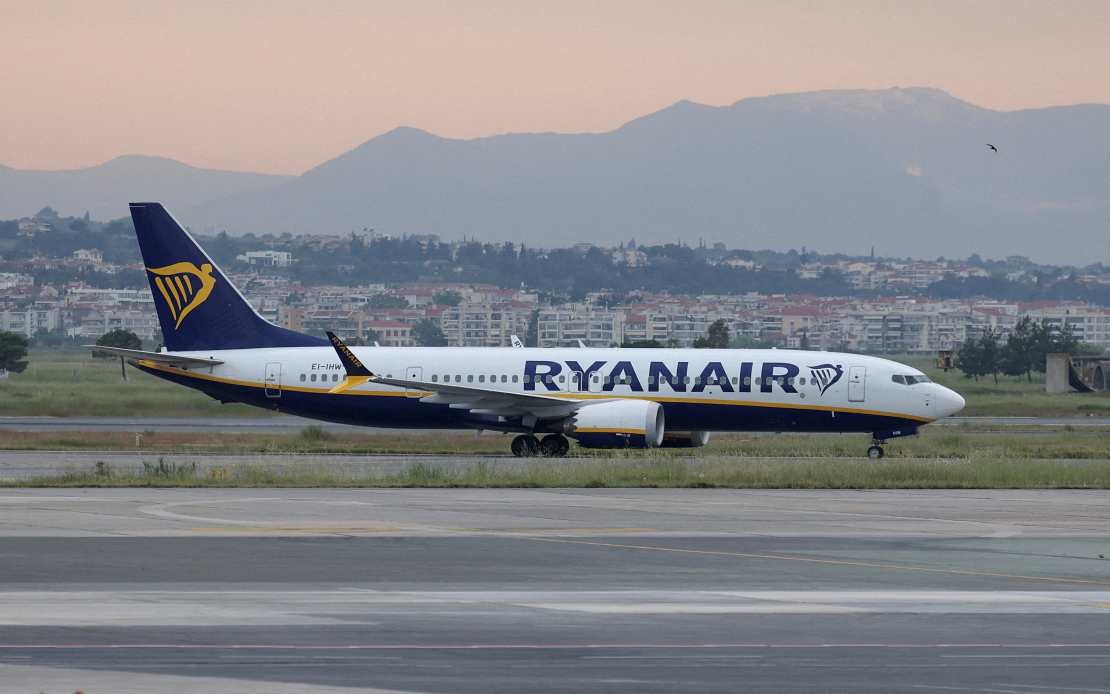
The US National Transportation Safety Board has released findings into a July incident involving a Ryanair flight operating as Malta Air that encountered catastrophic engine failure whilst departing from Thessaloniki International Airport in Greece. The investigation reveals how fragments from the aircraft's right engine compromised cabin integrity during the climb phase, creating a life-threatening situation for passengers aboard the service bound for Munich.
According to the NTSB report released on Thursday, the sequence of events began when the aircraft's right engine experienced a fan blade failure shortly after take-off from Thessaloniki. Rather than remaining contained within the engine housing, the separation of this critical component generated a series of high-velocity fragments that penetrated the aircraft's outer skin in multiple locations, fundamentally threatening the pressurisation system that maintains breathable cabin conditions at cruising altitude.
The investigation documents two distinct breaches in the fuselage's pressurised section. Most critically, engine debris smashed through the cabin window situated at row 11, destroying the window entirely. Additionally, fragments impacted the lower lobe of the fuselage skin positioned behind the right wing-to-body fairing, further compromising structural integrity. The window failure at row 11 proved particularly dangerous, as rapid decompression forces nearly claimed a passenger occupying seat 11F.
The passenger in row 11F became partially lodged in the damaged window opening as depressurisation effects created a powerful outward pull. In an act of swift collective action, fellow passengers recognised the emergency and managed to physically retrieve the passenger from the window and pull them back inside the cabin, preventing a tragedy at altitude. The passenger sustained injuries from this harrowing experience, though the exact nature and severity of injuries were not disclosed in the investigation findings.
Investigators examining the damaged engine made an unexpected discovery: bird remains, including feathers, were found distributed throughout various engine components. This finding suggests that the aircraft may have encountered a bird strike during the initial climb phase, which could have triggered or contributed to the fan blade failure that ultimately cascaded into the catastrophic structural damage documented during the flight. Bird strikes represent an ongoing aviation challenge, particularly during take-off and landing phases when aircraft operate at lower altitudes where bird populations congregate.
The crew's response to the emergency proved decisive. Rather than continuing toward their intended Munich destination, pilots immediately initiated procedures to reverse course and return to Thessaloniki International Airport. This decision prioritised passenger safety over schedule adherence, a critical judgment call that prevented the aircraft from climbing to higher altitudes where the compromised fuselage would have faced even greater aerodynamic stress. The aircraft landed safely back at its departure airport, allowing emergency medical services to attend to the injured passenger and engineers to assess the full extent of structural damage.
The Malta Air flight, whilst operated under the Ryanair brand, operates under separate certification requirements and maintenance protocols. This distinction becomes relevant when examining how such an incident could occur, as it raises questions about maintenance schedules, inspection procedures, and the protocols governing fan blade integrity inspections across the Ryanair network. The NTSB investigation does not explicitly address whether maintenance schedules met international standards, though the discovery of bird remains suggests the failure occurred during normal operations rather than through deferred maintenance.
For Malaysian and Southeast Asian aviation authorities, this incident underscores the persistent risks posed by bird strikes and the critical importance of comprehensive engine containment systems. Though modern turbofan engines incorporate substantial protective measures designed to contain blade failures within the engine cowling, this case demonstrates that under certain conditions, fragments can breach these defences and penetrate the fuselage. Regional airports, particularly those in tropical zones where bird populations remain active year-round, must maintain vigilant bird management programmes and ensure aircraft operators implement rigorous pre-flight inspections.
The structural vulnerability exposed through this incident—the window design and fuselage integrity standards—may prompt broader reviews across aircraft manufacturers and regulators regarding cabin window robustness and the spacing of critical structural elements relative to potential engine failure trajectories. Airlines across the region operating similar aircraft types may face pressure from passengers and regulators to demonstrate enhanced safety measures, particularly on routes where bird strike risks remain elevated.
This incident also highlights passenger safety awareness and collective responsibility in emergency situations. The swift actions of fellow passengers potentially saved a life, demonstrating that even in modern commercial aviation with sophisticated safety systems, human intervention during emergencies remains invaluable. Training programmes emphasising passenger awareness of emergency procedures and encouraging rapid response to fellow traveller distress may reduce fatalities and injuries in future incidents where equipment failures occur.
The investigation's conclusions will likely inform recommendations issued to Ryanair and potentially broader guidance from aviation regulators regarding engine maintenance intervals, blade inspection protocols, and possibly design modifications to engine containment systems across the industry. Such recommendations typically take months or years to implement across aircraft fleets, but represent incremental improvements in the overall safety architecture of commercial aviation operating throughout Southeast Asia and beyond.

