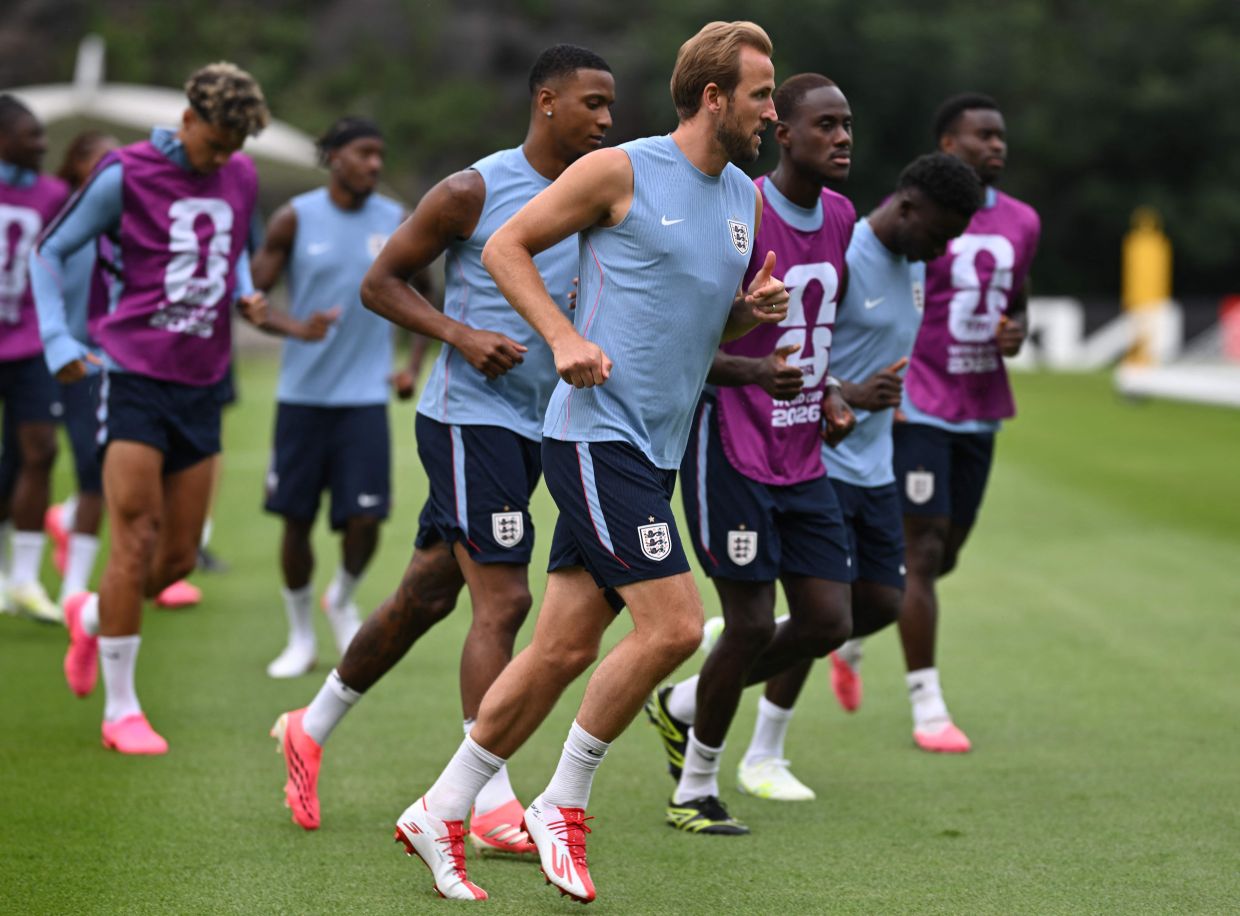
England will attempt to banish four decades of history and advance past Mexico in Sunday's World Cup round-of-16 encounter at the Estadio Azteca in Mexico City, marking the team's return to the iconic venue where they suffered one of football's most infamous moments. The fixture carries immense symbolic weight for English supporters, who remain haunted by the 1986 encounter with Argentina where Diego Maradona's controversial handball goal—the "Hand of God"—eliminated their side. Now, Thomas Tuchel's squad faces a Mexican team performing with remarkable consistency on home soil, setting up what promises to be an emotionally charged battle for a place in the quarter-finals.
Tuchel's side has had a difficult passage through the tournament thus far, struggling to demonstrate the attacking prowess expected of a team ranked fourth in the world. The English manager was forced to rely on a dramatic late surge from captain Harry Kane to secure a narrow 2-1 victory over the Democratic Republic of Congo, a result that barely met expectations for a squad that entered the competition harbouring genuine hopes of ending a 60-year drought without a major international trophy. Despite possessing world-class talent throughout their ranks, England has shown concerning vulnerabilities throughout the group stage, raising questions about whether Tuchel's tactical approach is sufficiently addressing the team's defensive fragility.
The defensive concerns centre predominantly on England's right flank, where opposing attackers have repeatedly found space to exploit. Tuchel has identified this structural weakness as a key priority ahead of the Mexico fixture, though correcting such issues with only four days of preparation presents a significant challenge. Mexican strikers will undoubtedly study footage of England's group-stage performances and target the same avenue of attack that has caused problems for the Three Lions throughout the tournament. The England manager faces the unenviable task of balancing attacking ambition with the need to provide greater protection to his back line, a dilemma that could ultimately determine the match's outcome.
Beyond tactical considerations, England must contend with one of football's great equalising factors: Mexico's altitude advantage. The Estadio Azteca sits 2,240 metres above sea level, a height that creates genuine physiological challenges for visiting teams unfamiliar with such conditions. Tuchel has been candid about the limitations facing his squad, explaining that physical adaptation to altitude cannot realistically occur within the timeframe available before kickoff. The England manager visited the stadium on Friday and emerged visibly impressed by the atmosphere, describing it as an "iconic place" where a "proper World Cup match" would unfold. Yet the coach's genuine respect for the occasion and venue does little to neutralise the oxygen deficit that will affect his players' fitness levels throughout the 90 minutes.
Mexico presents a formidable obstacle, having demonstrated remarkable consistency throughout their home campaign. Javier Aguirre's side has won all four matches played on Mexican soil without conceding a single goal, a defensive record that underlines their solidity and organisation. Their 2-0 victory over Ecuador in the previous round secured Mexico's first knockout-stage triumph at a World Cup in four decades, a breakthrough that carries immense historical significance for a nation that has never progressed beyond the quarter-finals despite multiple tournament appearances. Aguirre himself acknowledged the gulf in ranking between the teams—England sits tenth while Mexico occupies fourth position—but the Mexican coach insisted that the contest would ultimately be decided by basic fundamentals rather than statistics.
Aguirre's assessment of England contains implicit respect for the Three Lions' quality and athleticism, yet the Mexican coach has also recognised an opportunity that may never materialise again. Playing before a passionate home crowd at football's most passionate stadium, Mexico has the chance to create World Cup folklore by eliminating one of the tournament's traditional powerhouses. The psychological advantage of playing at altitude, combined with fervent supporter backing and genuine organisational structure, positions Aguirre's team as legitimate contenders despite their lower FIFA ranking. His assertion that Mexico must achieve a "near-perfect match" to overcome England reflects realistic assessment rather than pessimism, highlighting the considerable task his team faces.
Sunday's encounter is scheduled to commence at 6pm local time, equivalent to 4am Malaysian time on Monday, July 6th, requiring Malaysian supporters to either sacrifice sleep or rely on recorded highlights to follow proceedings. FIFA initially considered advancing the kickoff time to circumvent predicted thunderstorms, ultimately deciding to maintain the original fixture time. Weather forecasting agencies predict thunderstorms over Mexico City around the match's commencement, though temperatures are expected to peak at a moderate 21°C—considerably cooler than the near-record 38°C recorded during France's victory over Paraguay in Philadelphia on Saturday.
Simultaneously, another compelling narrative will unfold at MetLife Stadium in New Jersey, where Norway's Erling Haaland faces Brazil in a contest that carries different but equally significant implications. The Manchester City forward has emerged as the tournament's most lethal attacking weapon, accumulating five goals across three appearances—a record that has transformed him into the player Brazil's defenders most fear. Yet Haaland faces a paradoxical situation: his familiarity with his assigned markers. Gabriel Magalhaes, who will anchor Brazil's defence, faces Haaland regularly in Premier League encounters with Arsenal, whilst Marquinhos has confronted the Norwegian striker while representing Paris Saint-Germain. This prior exposure represents either a significant advantage or irrelevance, depending on whether tactical preparation can neutralise Haaland's explosive athleticism.
Brazil's coach Carlo Ancelotti has adopted a notably relaxed demeanor regarding the Haaland challenge, insisting his experienced defenders require no special instruction given their extensive exposure to the striker's methods. This apparent confidence contrasts sharply with Norway's position as underdogs against a five-time world champion, yet Stale Solbakken has attempted to re-calibrate expectations by suggesting Brazil may lack the overwhelming dominance that previously characterised their World Cup campaigns. The Norwegian coach has emphasised that his players must remain focused on match execution rather than the occasion's magnitude, a mental discipline that could provide psychological advantage if Norway enters the fixture without the crushing weight of historical expectation.
The winner of the Mexico-England encounter will progress to Miami for a quarter-final clash against the victor of the Brazil-Norway match, creating potential storylines of remarkable intrigue. An England victory would establish a repeat of their Euro 2020 final meeting with Italy, albeit in a different format. A Mexico triumph would represent a transformative moment for Central American football whilst simultaneously delivering the most prestigious scalp of their tournament. Similarly, a Haaland-led Norwegian upset would represent one of modern football's greatest shocks, whilst a Brazil victory would restore the expected hierarchy and position them as genuine tournament contenders. The coming 24 hours of football will substantially reshape the tournament's narrative and determine which teams have genuinely earned their place among football's elite.

