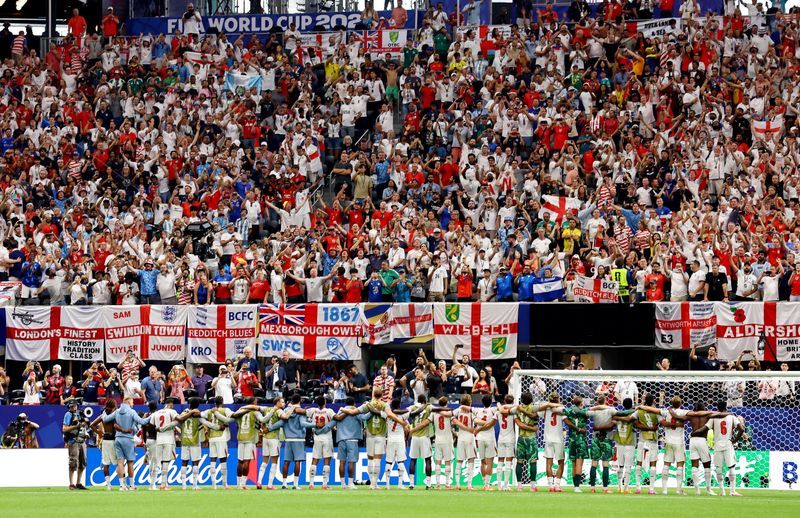
England's World Cup journey has become increasingly complicated as Thomas Tuchel's squad edged past a spirited DR Congo outfit 2-1 in Wednesday's round-of-32 encounter, securing a last-16 meeting with Mexico whilst laying bare the defensive fragility that has haunted their tournament run. The three-time European champions found themselves trailing for the first time in the competition when Brian Cipenga struck inside the opening ten minutes, forcing a remarkable second-half recovery that demonstrated both resilience and the troubling vulnerability that characterised their group-stage performances.
England's trajectory through the tournament has been inconsistent and unconvincing despite an initially promising 4-2 victory over Croatia. A scoreless stalemate with Ghana followed by a laboured 2-0 conquest of Panama revealed concerning defensive inadequacies that sceptics questioned whether Tuchel's tactical approach could adequately address. Against DR Congo, those reservations manifested into genuine peril when the African underdogs capitalised on England's disorganisation to take the lead through Cipenga's clinical finishing, igniting a cacophony of anxiety throughout Atlanta's stadium.
The psychological weight of the deficit proved immediately apparent. This represented England's first trailing position of the entire campaign, and historically they had never recovered to win a World Cup match after going behind at halftime. The Congolese defenders, marshalled with admirable discipline and determination, constructed an almost impenetrable defensive barrier that frustrated repeated English advances. The contrast was striking: DR Congo required merely a single accurate shot to maintain their advantage, whilst Tuchel's attackers laboured futilely against goalkeeper Lionel Mpasi's commanding presence and some desperately committed goal-line clearances.
The tension inside the stadium became almost suffocating as the first half progressed toward its conclusion. Yoane Wissa's effort struck the woodwork in a particularly dangerous moment shortly before the interval, and Harry Kane's vociferous penalty appeals were summarily dismissed by the referee. English supporters, their faces painted with St. George's crosses, shuffled anxiously in their seats, uncertain whether their team possessed the composure to escape this test of character. The weight of tournament expectations, combined with the ignominy of potentially exiting against an unfancied opponent, hung heavily over the proceedings.
Tuchel's tactical adjustments during the second half proved instrumental in wrestling back control. Moving Declan Rice to right back and introducing Eberechi Eze's fresh energy into midfield provided the structural reinforcement necessary to shift momentum. Jude Bellingham's tireless runs from deep positions, combined with Rashford's purposeful attacking movements, gradually overwhelmed DR Congo's increasingly fatigued resistance. The persistent pressure finally yielded dividends when Kane's 75th-minute header glanced past Mpasi's outstretched fingers, releasing a cathartic wave of relief throughout the stadium and providing the psychological springboard for victory.
Kane's second goal four minutes later secured England's passage into the knockout stages, though the manner of this victory—grinding rather than glittering—encapsulated the uncomfortable reality of their campaign trajectory. This represented their first World Cup comeback victory since defeating Cameroon in the 1990 quarter-finals, precisely thirty-six years earlier to the day, suggesting how rarely such scenarios prove successful at this level of competition. The win came at considerable psychological cost, having tested not merely their tactical discipline but their mental fortitude when circumstances turned decisively against them.
Tuchel's post-match reflections highlighted the imperative to maintain belief during adversity, emphasizing that tournament football demands precisely this mentality when circumstances prove unfavourable. "The energy and the team spirit is on the highest level," the German manager declared, acknowledging that whilst the performance satisfied immediate requirements, the defensive vulnerabilities exposed throughout the competition remained unresolved. Kane similarly recognised the distinct challenges posed by knockout football, where marginal errors prove increasingly costly and the psychological demands escalate considerably.
The forthcoming clash against Mexico presents an entirely different examination. Whereas DR Congo's defensive organisation tested England's capacity to break down a compact shape, Mexico's attacking methodology will interrogate whether England's rearguard possesses sufficient resilience to withstand sustained pressure. The psychological momentum derived from such a dramatic comeback could prove beneficial, yet the physical and mental exhaustion accumulated across these ninety minutes cannot be dismissed. Tuchel's squad must now rapidly recover and recalibrate tactical preparations for an opponent who approaches knockout football with proven experience and considerable technical prowess.
Complicating preparations further, Mexico City's Azteca Stadium sits more than 2,200 metres above sea level, presenting physiological challenges that compounds the tactical dimensions. The altitude significantly reduces oxygen availability whilst increasing ball velocity, creating conditions markedly different from Atlanta's sea-level environment. For players already mentally and physically drained from Wednesday's draining encounter, these environmental factors represent additional obstacles that could prove decisive during a knockout fixture where fatigue often determines outcomes. England must therefore balance immediate recovery protocols with tactical preparation for an opponent likely to exploit any defensive hesitancy.
The broader narrative surrounding England's campaign has shifted noticeably. They arrived as tournament favourites possessing arguably the most talented squad competing in the competition, yet their performances have repeatedly fallen short of expectations. The victory over DR Congo, whilst progressing them further, has simultaneously reinforced questions about whether Tuchel's defensive organisation can withstand sustained examination from genuinely world-class attacking units. As knockout football intensifies and margins between success and elimination narrow dramatically, England must urgently address these structural vulnerabilities or risk experiencing another disappointing tournament conclusion.

