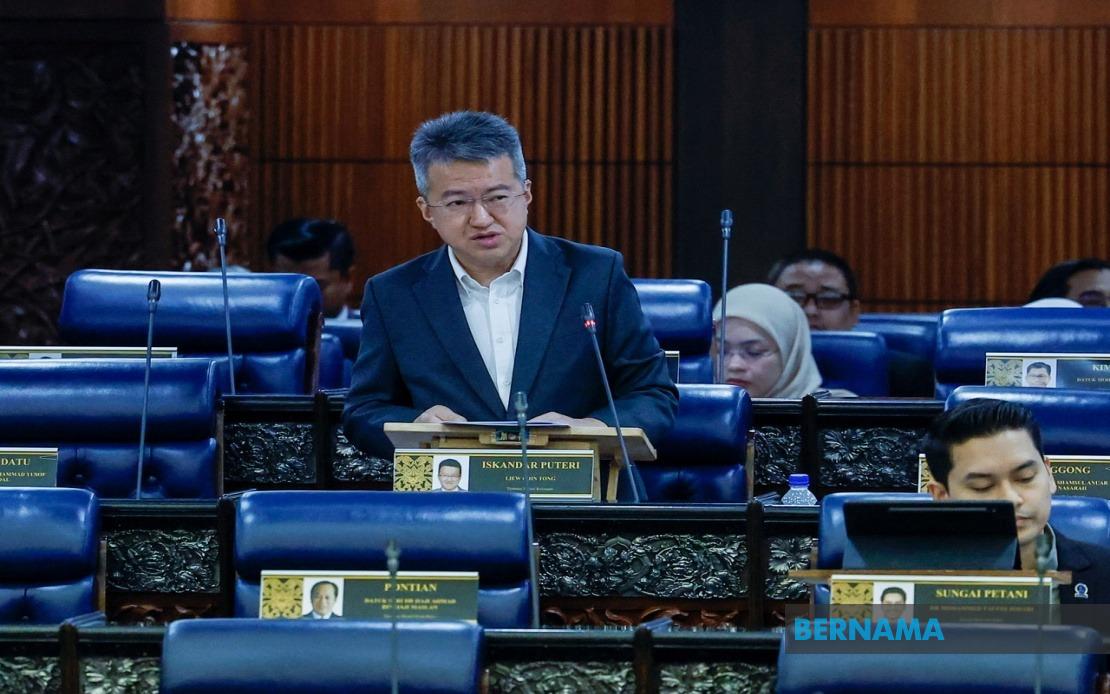
Malaysia's Employees Provident Fund has made notable progress in its recently launched wealth-transfer initiative, with Deputy Finance Minister Liew Chin Tong reporting that 63 applications under the i-Legasi scheme have secured approval in its first five months of operation. The approvals have facilitated the movement of RM46.3 million from surplus retirement accounts into the hands of 86 designated beneficiaries, marking a significant uptake of the programme since its introduction on February 1 this year.
The i-Legasi initiative represents a policy response to Malaysia's demographic shift toward an ageing society and the persistent challenge of inadequate retirement savings among the workforce. Under the scheme's parameters, EPF members who have reached 55 years of age and accumulated retirement savings beyond the Adequate Savings benchmark of RM650,000 may voluntarily transfer portions of their excess funds to the EPF accounts of qualifying immediate family members. This mechanism serves a dual purpose: it enables older savers to optimize their capital allocation while providing younger relatives with a financial boost during their own accumulation years.
Liew's statement in Parliament came during a parliamentary question-and-answer session addressing broader concerns about retirement security raised by Datuk Seri Aminuddin Harun, the Port Dickson MP representing Pakatan Harapan. Aminuddin's query reflected growing anxiety within the public about the adequacy of retirement income streams against a backdrop of rising living expenses and structural economic changes that will reshape Malaysia's population pyramid. The government's legislative response through i-Legasi and related initiatives sits within a larger strategic framework aimed at bolstering retirement resilience across the membership base.
Progress on the government's broader savings adequacy targets offers mixed signals about the retirement readiness of Malaysia's workforce. As of May 31, approximately 3.04 million active EPF members aged between 18 and 60—representing 38.3 per cent of the 7.94 million individuals in that demographic cohort—had successfully achieved the Basic Savings target corresponding to their age group. For members approaching the retirement threshold at age 60, this target stands at RM390,000, a threshold designed to ensure access to pension benefits sufficient for modest living standards in early retirement years.
The year-over-year expansion in membership meeting savings targets demonstrates incremental but meaningful progress in addressing the national retirement gap. In May of the previous year, only 35 per cent of working-age members, or approximately 2.71 million individuals, had reached their respective Basic Savings milestones. The three-percentage-point increase translating to roughly 330,000 additional members joining the adequately-saved cohort suggests that policy interventions and increased financial awareness are gradually shifting behavioural patterns around savings discipline. However, the fact that nearly two-thirds of the workforce remains below their age-appropriate savings benchmarks underscores the scale of the challenge facing retirement policy-makers.
The mechanics of i-Legasi address a specific tension within Malaysia's retirement ecosystem: how to allow individuals who have achieved or exceeded their savings targets to benefit from their fiscal discipline without simultaneously weakening the nation's overall retirement security framework. By channeling surplus capital from older, better-positioned savers to younger family members—who typically face competing financial demands including housing, education, and early-career investment—the scheme encourages intergenerational wealth optimization while respecting the fundamental purpose of the EPF as a social security institution designed to ensure dignity in old age.
Liew's comments reflect a government commitment to deepening the nexus between direct contribution incentives and broader social protection mechanisms. Officials have signaled intentions to expand the policy toolkit beyond simple wage deductions, exploring ways to make retirement savings more attractive through tax incentives, matching contributions, or targeted subsidies for lower-income members who face structural barriers to accumulation. Such an approach acknowledges that retirement security cannot rest solely on individual responsibility when income volatility, wage stagnation, and informal employment remain prevalent across significant segments of the labour market.
The policy environment surrounding retirement adequacy has become increasingly urgent as Malaysia tracks toward demographic transitions that will reshape the national dependency ratio. Current projections indicate that Malaysia will attain aged-nation status by 2030, defined internationally as a society where one-seventh of the population exceeds 65 years of age. This transition, occurring more rapidly than in many comparable economies, will compress the period during which a shrinking proportion of working-age citizens must support a burgeoning retiree population. The fiscal and social implications of inadequate individual savings in this context extend beyond personal hardship to encompass potential increased burdens on public welfare systems and intergenerational tensions.
The uptake of i-Legasi, while encouraging in demonstrating member familiarity with available schemes, remains modest relative to the potential eligible population. Approximately 1.5 million EPF members aged 55 and above exceed the RM650,000 threshold, meaning that fewer than 5 per cent of potentially eligible persons have participated in transfer applications to date. This pattern mirrors broader observations about retirement-planning behaviour, whereby many Malaysians defer engagement with long-term financial decisions until circumstances force action. Policy designers must contend with the recognition that even well-designed schemes achieve limited real-world impact when awareness, accessibility, or perceived relevance remain constrained.
The government's emphasis on collaboration between the Ministry of Finance and the EPF Board signals recognition that no single institutional lever will move retirement security metrics significantly. Holistic strategies must integrate contribution architecture, benefit design, social safety nets, healthcare provision for elderly citizens, and employment policies that facilitate extended working lives where desirable. Malaysia's experience with i-Legasi and related initiatives will likely inform the direction of retirement policy across Southeast Asia more broadly, where similar demographic and economic pressures are generating comparable policy innovation.
Looking forward, the challenge facing Malaysian policymakers extends beyond approving individual transfer applications. The deeper imperative involves engineering structural changes in savings behaviour, wage growth, and investment returns that enable the majority of working Malaysians to achieve retirement security organically rather than through sporadic policy interventions. The i-Legasi scheme represents a valuable but ultimately supplementary tool within a portfolio of measures that must address fundamental questions about income adequacy, cost containment in healthcare and housing, and the national commitment to dignified retirement.

