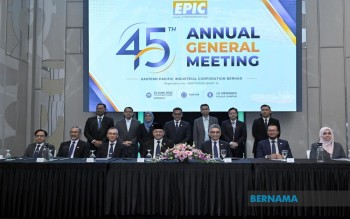
Eastern Pacific Industrial Corp Bhd (EPIC) has laid out an ambitious roadmap for the remainder of the decade, announcing plans to raise annual revenue to RM700 million while growing its net asset value to RM1 billion by 2030. The integrated oil and gas solutions provider unveiled the targets through its newly announced EPIC Strategic Business Plan 2025-2030 following its 45th annual general meeting held in Kuala Lumpur. The growth strategy encompasses expansion across three core business pillars: oil and gas operations, port management services, and renewable energy ventures, positioning the company to capitalise on both domestic opportunities and regional expansion prospects.
The company's ambitions rest on solid financial foundations. EPIC delivered record results for the financial year ended December 31, 2025, posting a net profit of RM20.6 million, up from RM16.6 million the previous year. Revenue surged to an all-time high of RM411.9 million from RM403.8 million previously, reflecting the company's sustained growth trajectory since 2022. This performance represents a near 25 per cent leap towards the RM700 million revenue target by the end of the decade, demonstrating the company's capacity to execute on its expansion strategy. The incremental growth pathway appears realistic given current market dynamics and the company's expanding contract portfolio.
Group Chief Executive Officer Dr Ts Muhtar Suhaili attributed the strong 2025 performance to multiple contributing factors that showcase the company's diversifying revenue streams. The acquisition of Rahar Niaga Sdn Bhd expanded EPIC's operational capabilities, while newly secured contracts from Petronas—including the Pan Malaysia Maintenance, Commissioning and Modification contract and the Hook-Up and Commissioning assignment—bolstered the service offering. Additionally, higher offshore rig arrivals and increased cargo volumes at the company's port operations contributed to the record results. This diversification strategy reduces dependency on any single revenue source and creates resilience against sector-specific downturns, a critical consideration for companies operating in cyclical industries.
Looking ahead to 2026, Suhaili expressed confidence that the company would sustain its growth momentum. The group's current contract backlog provides substantial visibility into near-term revenue generation. EPIC's approved contract value for its oil and gas business stands between RM1.3 billion and RM1.5 billion—nearly triple its current annual revenue—indicating a robust pipeline of work spanning multiple years. However, the company acknowledges that actual earnings will fluctuate based on the timing of work orders and purchase orders issued by clients, primarily Petronas. The geographic diversification of these contracts is particularly noteworthy, extending beyond the company's traditional base in Terengganu to encompass operations in southern Peninsular Malaysia including Pengerang and Melaka, as well as recent penetration into Sabah.
The renewable energy sector represents a critical growth vector within EPIC's 2030 strategy. The company is actively participating in bidding processes for high-value clean energy projects, notably a hybrid hydro-solar development in Kenyir being pursued jointly with its parent company, Terengganu Inc. Such renewable ventures align with Malaysia's broader commitment to expanding clean energy capacity and meeting carbon reduction targets. Success in this sector could provide EPIC with exposure to long-duration, stable revenue streams characteristic of renewable energy contracts, which often feature extended operational periods and predictable cash flows that could significantly enhance NAV growth.
Regional expansion constitutes another pillar of EPIC's growth architecture. The board has mandated management to pursue opportunities across neighbouring Asian markets as part of the overarching 2030 strategy. This represents a deliberate internationalisation effort to reduce geographic concentration risk and access higher-growth markets beyond Malaysia's borders. Simultaneously, EPIC is assessing prospects in West Asia, though leadership acknowledges that prevailing geopolitical uncertainties in that region necessitate cautious evaluation. This balanced approach—pursuing growth while managing risk—reflects mature strategic thinking about market entry and capital deployment.
The Sabah and Sarawak markets hold particular strategic importance for EPIC. In February 2025, the company's subsidiary EPIC OG Sdn Bhd formalised a collaboration agreement with Begas Energy Sdn Bhd to deliver project management services for a Terminal Turnaround, Maintenance and Modification contract in Sabah. This partnership strengthens EPIC's footprint across East Malaysia, a region with substantial oil and gas infrastructure requiring ongoing maintenance and upgrade services. The availability of skilled local contractors in partnership arrangements also mitigates execution risks and facilitates knowledge transfer, enhancing long-term operational sustainability in these markets.
The strategic pivot towards renewable energy and geographic diversification reflects EPIC's recognition that the traditional downstream oil and gas sector faces structural headwinds from energy transition pressures. By deliberately expanding into renewables and regional markets, the company is positioning itself to benefit from multiple growth drivers rather than relying solely on mature Malaysia oil and gas operations. This diversification strategy should appeal to investors concerned about fossil fuel sector sustainability, while maintaining exposure to the substantial near-term cash flows generated by existing O&G operations during the transition period.
From a Malaysian and Southeast Asian perspective, EPIC's growth trajectory carries broader implications. The company represents one of the country's significant integrated solutions providers in the energy sector, employing considerable domestic talent and generating substantial local economic activity. Successful expansion into neighbouring markets could establish EPIC as a regional champion capable of competing for contracts across multiple jurisdictions. Additionally, the company's involvement in renewable energy development supports Malaysia's aspirations to establish itself as a clean energy hub within Southeast Asia, contributing to the region's energy security while supporting climate objectives.
The achievement of these ambitious targets will require flawless execution across multiple fronts. Management must successfully land major renewable energy bids, continue securing work orders under existing Petronas contracts, establish profitable operations in new geographic markets, and maintain operational excellence to support margin expansion as volumes grow. Given the cyclical nature of energy sector demand and the competitive landscape for major contracts, the path to RM700 million revenue and RM1 billion NAV by 2030 presents both significant opportunity and material execution risk.

