Malaysia's automotive component sector has reached a significant milestone with EPMB's new manufacturing facility in Tanjong Malim beginning full-scale operations this October. The facility, operated through Peps Sanly JV Sdn Bhd—a partnership between EPMB and China-based Sanly Auto Parts Co Ltd—represents an important step in deepening local content for Proton's vehicle production. Situated within the Automotive High Technology Valley, the plant signals growing confidence in Malaysia's ability to support the national carmaker's expansion ambitions through enhanced domestic supply capabilities.
The sprawling 9,909 square-metre facility possesses considerable production firepower, with an established monthly output capacity of 40,000 complete car sets, translating to 480,000 units annually when operating at full throttle. This scale positions the operation as a substantive contributor to Proton's component requirements rather than a niche supplier. The facility's design reflects modern automotive manufacturing standards, enabling it to serve multiple Proton model lines simultaneously, which underscores the partnership's commitment to meeting the national carmaker's diverse production portfolio.
The plant will produce three critical chassis assemblies essential to vehicle structure and performance: front corner modules, subframe modules, and rear axle assemblies. These components will equip Proton's current lineup, including the AMA01 Saga, Persona and Iriz models, as well as two forthcoming platforms designated AMA02 and AMA05. By securing production of these fundamental structural elements locally, Proton reduces supply chain complexity and transportation costs while strengthening its ability to maintain consistent quality standards across its manufacturing operations. The decision to localise these particular components reflects their strategic importance to vehicle architecture and cost structure.
The joint venture itself was formalised in February 2025, emerging from EPMB's strategic decision to consolidate chassis component manufacturing within Malaysia rather than depending on imports. The partnership with Sanly Auto Parts represents EPMB's recognition that Chinese automotive suppliers have developed world-class expertise in metalworking, assembly techniques and chassis systems engineering. Sanly's established relationships with Geely, Volvo and other major Chinese automakers provided EPMB with a credible partner possessing the technical knowledge and operational discipline required for high-volume production.
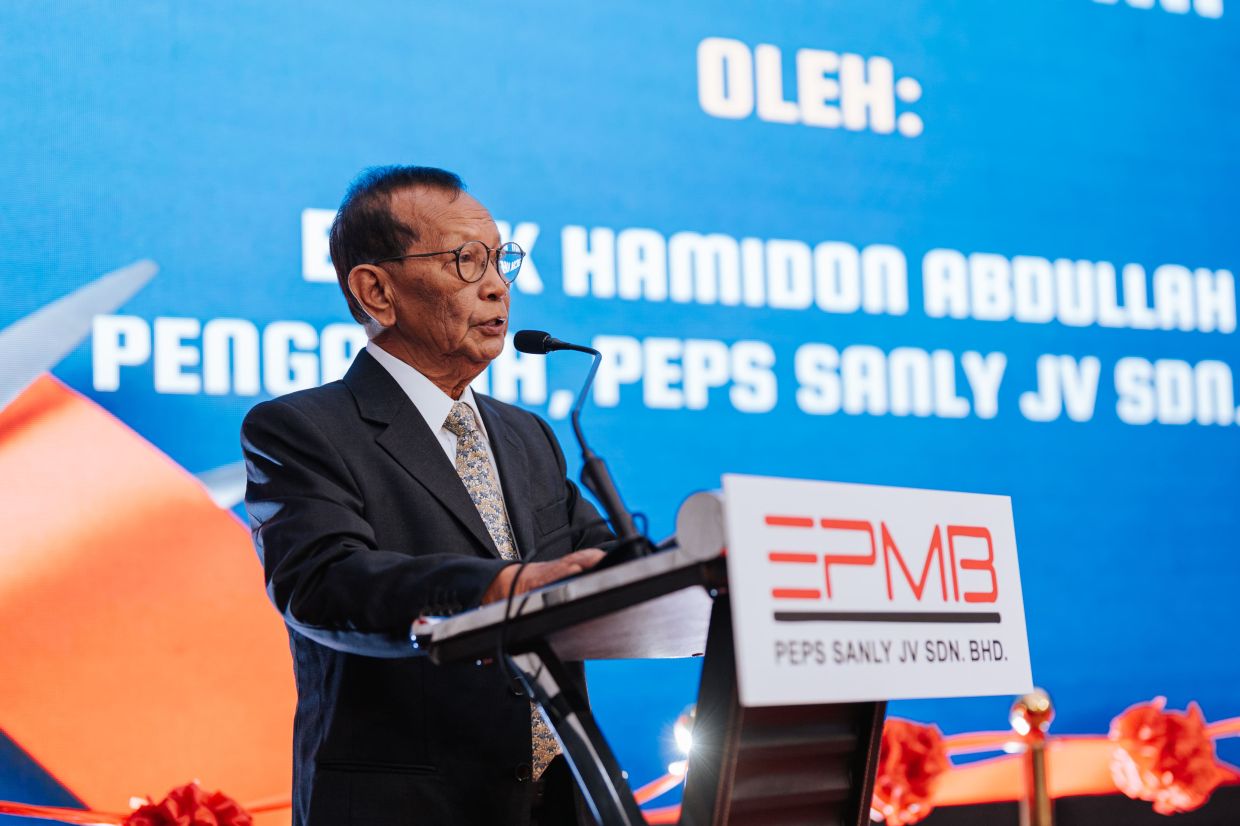
According to EPMB Executive Chairman Hamidon Abdullah, the collaboration unlocks advantages beyond simple manufacturing capacity. The partnership grants EPMB's engineers and quality teams direct exposure to advanced manufacturing practices prevalent throughout China's competitive automotive ecosystem, while simultaneously accessing cost structures that Chinese suppliers have perfected through massive scale and labour efficiency. Rather than viewing Chinese involvement as replacement for Malaysian capability, EPMB frames the arrangement as knowledge transfer and capability building that strengthens the entire domestic supply chain.
The facility's emergence carries implications for Malaysia's broader automotive strategy. National carmakers operating within competitive global markets must continually seek cost reduction and efficiency improvements to maintain profitability. By supporting Proton's pursuit of lower component costs through localised production, EPMB enables the national carmaker to offer more competitive pricing while maintaining domestic employment and industrial activity. This dynamic proves particularly relevant as Proton advances its regional growth strategy, requiring sustained investment in manufacturing capacity and supply chain resilience.
Proton's vehicle roadmap encompasses significant electric vehicle development, and component suppliers must adapt their manufacturing capabilities to support this transition. While the newly opened facility focuses on conventional chassis systems for existing petrol-powered models, the scalability and technical sophistication of the Tanjong Malim operation positions it to evolve as Proton introduces EV platforms. The partnership's access to Chinese manufacturing expertise becomes especially valuable in this context, as Chinese suppliers have led global development of EV-compatible chassis and structural systems.
EPMB's four-decade relationship with Proton provides historical context for this collaboration. The supplier has navigated multiple industry cycles, technological transitions and market disruptions while maintaining its role as a critical component provider to the national carmaker. The decision to deepen this relationship through a new Chinese partnership demonstrates EPMB's confidence in Proton's future trajectory and commitment to supporting the company's competitive positioning. Such long-term supplier relationships create institutional stability within Malaysia's automotive sector, enabling sustained investment in workforce development and manufacturing infrastructure.
The facility also reflects broader trends in Southeast Asian automotive manufacturing, where suppliers increasingly forge international partnerships to access technology and cost efficiencies. Rather than viewing globalisation as purely disruptive, suppliers like EPMB demonstrate how strategic partnerships can strengthen domestic operations by combining local market knowledge and regulatory expertise with international best practices. This model proves particularly relevant for Malaysia, a country with established automotive manufacturing credentials seeking to maintain competitiveness in an increasingly consolidated global market.
Looking forward, the Tanjong Malim facility's success will likely influence EPMB's expansion planning and encourage other Malaysian suppliers to explore similar joint venture arrangements. The plant's capacity to serve multiple Proton models and upcoming platforms suggests management's anticipation of growing demand, presumably connected to Proton's regional sales expansion and new model launches. For Malaysian automotive stakeholders, the facility represents tangible progress toward building deeper local content and supply chain resilience—objectives central to the country's long-term automotive competitiveness.

