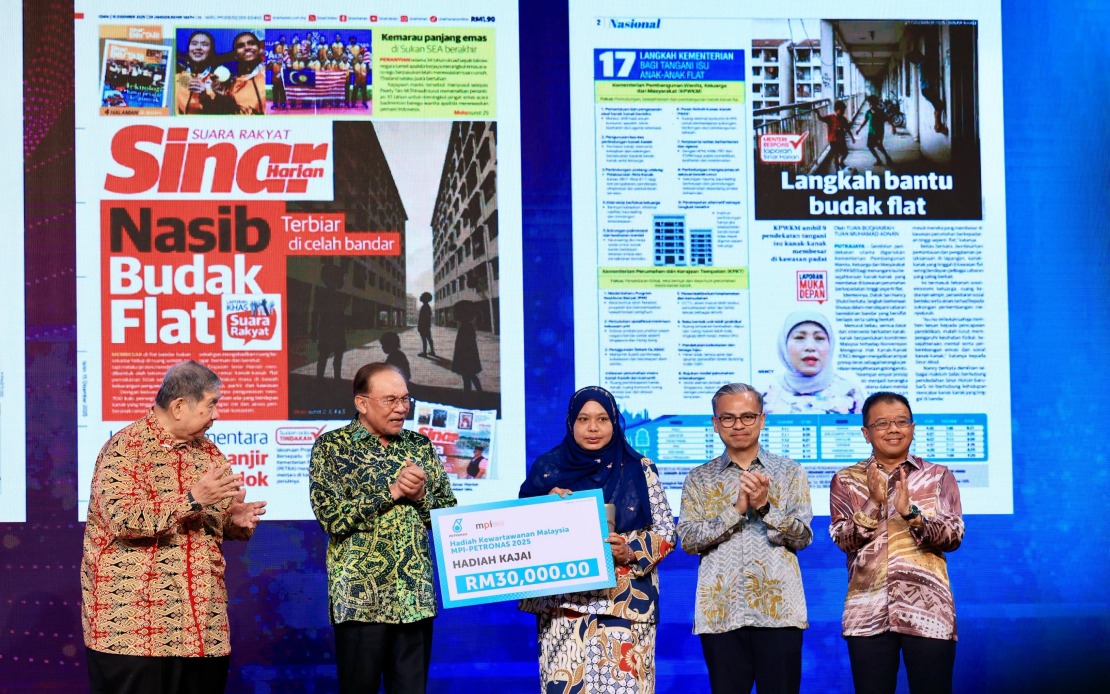
Communications Minister Datuk Seri Fahmi Fadzil has stressed that ethical, independent and responsible media operations form the bedrock of a functioning democracy and a well-informed society. Speaking at a high-profile industry gathering, Fahmi acknowledged the increasingly vital position the media occupies in Malaysia's political and social landscape, particularly as information flows continue to accelerate across traditional and digital platforms.
The minister's remarks came during the Malaysian Journalists' Night 2026, a marquee event that brought together approximately 1,000 participants representing the full spectrum of Malaysia's media ecosystem. The gathering included editors, journalists, government representatives, corporate leaders and academics, reflecting the broad stakeholder engagement that such occasions typically generate. The event also served as the platform for announcing the MPI-PETRONAS Malaysian Journalism Awards 2025, which recognises outstanding professional achievement and contributions to the field.
Fahmi attended alongside Prime Minister Datuk Seri Anwar Ibrahim, underscoring the government's commitment to acknowledging the journalism profession's significance. In his remarks, the minister expressed gratitude to media practitioners for their commitment to their craft, urging them to maintain the highest standards of integrity and factual reporting in service of the public interest and national wellbeing.
The context surrounding Fahmi's statement reflects mounting global and regional concerns about information integrity. Across Southeast Asia, including Malaysia, the proliferation of digital platforms has created unprecedented opportunities for misinformation and deliberately false narratives to circulate rapidly, often outpacing fact-checking mechanisms. This phenomenon presents genuine challenges to democratic discourse, as citizens struggle to distinguish reliable information from fabricated or misleading content designed to manipulate opinion or undermine institutions.
The Malaysian Press Institute, which organises the annual Journalists' Night event, positions the occasion as a cornerstone gathering for the profession. Beyond honouring individual and organisational excellence through awards, the event functions as a nexus point where media practitioners, government officials and corporate sector representatives can strengthen relationships and establish common ground on critical issues affecting journalism and public communication.
The emphasis on independence carries particular weight in Malaysia's current political environment. Independent media operations capable of scrutinising government actions, investigating corporate wrongdoing and amplifying citizen voices form essential counterbalances to concentrations of power. When media outlets maintain editorial autonomy free from undue political or commercial pressure, they can fulfil their democratic function more effectively, exposing matters of public concern and holding influential actors accountable to established standards.
Responsibility in journalism extends beyond factual accuracy to encompass ethical considerations around sourcing, verification and the impact of reporting on vulnerable communities. Professional standards require journalists to balance the public's right to information with obligations to protect sources, respect privacy and avoid amplifying harmful falsehoods even while reporting on their existence. Such standards distinguish quality journalism from mere information dissemination.
For Malaysian readers and the broader Southeast Asian context, the minister's intervention signals official recognition that media health constitutes a public good requiring active protection. As digital platforms continue reshaping how information circulates, and as economic pressures on traditional newsrooms intensify, the government's public support for journalistic integrity carries symbolic importance. However, observers note that such statements gain credibility primarily through concrete actions: protecting press freedom, supporting institutional independence and ensuring that journalists can operate without harassment or intimidation.
The awards programme associated with the Journalists' Night event acknowledges that excellence in journalism requires sustained effort, professional development and often personal sacrifice. Recognising outstanding work through such honours encourages standards-setting within the profession and identifies exemplary practitioners whose work demonstrates how rigorous reporting serves democratic purposes. This recognition mechanism helps sustain professional morale and commitment during periods when economic challenges and technological disruption create uncertainty about journalism's future viability.
The scale of participation at the event—drawing government, corporate and academic stakeholders alongside media professionals—reflects an understanding that information quality constitutes a shared concern transcending sectional interests. Corporate organisations increasingly recognise that their long-term interests align with media credibility, since misinformation and institutional distrust ultimately harm business confidence and market stability. Government bodies, meanwhile, depend on functioning communication systems for policy implementation and public understanding of official positions.
Looking forward, the sustainability of Malaysia's media landscape will depend partly on whether statements emphasising journalistic integrity translate into practical support. This includes protecting journalists from legal harassment, ensuring economic viability for newsrooms serving public interest journalism, and maintaining regulatory frameworks that encourage rather than constrain responsible reporting. The challenges of the information age require continued dialogue between media professionals and other stakeholders to establish common standards and shared commitment to factual communication.

