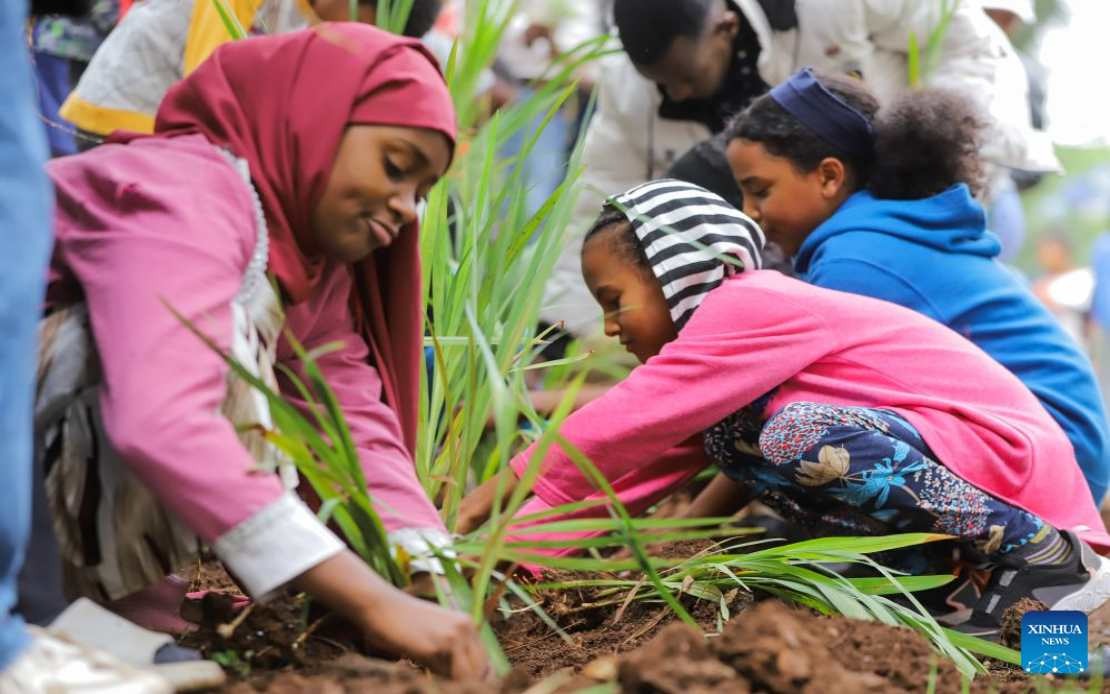
Ethiopia executed an extraordinary environmental undertaking on Monday when millions of its citizens and foreign residents participated in a coordinated nationwide tree-planting campaign designed to establish 800 million seedlings within a single 24-hour period. The coordinated effort represents a significant milestone in environmental restoration and demonstrates the East African nation's commitment to reversing decades of forest degradation and advancing climate adaptation strategies. Participants ranged from schoolchildren to healthcare workers, each contributing to what officials describe as a transformative moment in the country's ecological recovery.
The operation forms the centrepiece of the Green Legacy Initiative, a comprehensive environmental programme inaugurated by Prime Minister Abiy Ahmed in 2019. This year's edition extends the initiative's ambitions substantially, with Ethiopia targeting the planting of more than 8 billion seedlings throughout the rainy season. The long-term vision proves even more ambitious: since the initiative's inception five years ago, the nation has worked systematically toward planting 50 billion trees, a figure that the latest plantation drive positions it closer to achieving. This represents a fundamental shift in how Ethiopia approaches land management and environmental governance at the national level.
The campaign drew participants from diverse segments of Ethiopian society, illustrating how environmental action has become woven into national consciousness. Edilawit Legesse, a thirteen-year-old student, marked her third consecutive year participating in the annual event, planting seedlings in the Alembank neighbourhood on Addis Ababa's periphery alongside her family. Her participation underscores how the initiative has cultivated environmental stewardship among younger generations, creating a lasting cultural shift toward conservation. Similarly, healthcare professionals organised their own planting contingents, with one nursing team from a local hospital mobilising 35 colleagues to contribute 10 trees per person, demonstrating how the programme extends beyond agricultural communities to engage urban professional workers.
The strategic importance of this initiative extends far beyond symbolic environmental action. Ethiopia faces severe environmental challenges stemming from historical deforestation, land degradation, and the pressures of supporting a rapidly growing population exceeding 120 million people. Forest cover has declined precipitously over recent decades, contributing to soil erosion, reduced water availability, and increased vulnerability to climate variability. The Green Legacy Initiative directly addresses these interconnected challenges by systematically restoring degraded landscapes and expanding forest cover across multiple ecological zones.
Prime Minister Abiy has positioned the initiative as a defining national project that transcends ordinary environmental programming. His framing emphasises that the annual one-day planting effort represents a moment when Ethiopians across all social strata gather around a shared purpose of creating tangible legacies for future generations. In social media communications, Abiy highlighted that eight consecutive years of sustained effort have strengthened the initiative through genuine public engagement and the collective conviction that coordinated action can deliver meaningful environmental transformation. This narrative approach transforms tree-planting from a technical forestry exercise into a statement about national identity and intergenerational responsibility.
The initiative's objectives extend beyond simple afforestation targets. Officials articulate multiple environmental and economic benefits, including restoration of degraded lands, expansion of lost forest ecosystems, building climate resilience through combating deforestation, conservation of biodiversity, and fostering sustainable development pathways. These interconnected goals reflect sophisticated understanding of how environmental restoration connects to broader development aspirations. Ethiopia explicitly links environmental recovery to its aspiration of achieving green, lower-middle-income economic status, signalling that environmental stewardship and economic progress need not represent competing priorities.
For regional observers, Ethiopia's approach carries important implications. Southeast Asian nations including Malaysia face comparable pressures of deforestation driven by agricultural expansion, infrastructure development, and competing land use demands. Ethiopia's experience demonstrates how large-scale, government-directed environmental campaigns can mobilise societal participation and generate measurable environmental outcomes when backed by sustained political commitment over multiple years. The initiative's emphasis on popular participation rather than purely technical or top-down approaches offers a model worthy of consideration for policymakers across the region grappling with similar forest loss and degradation challenges.
The practical implementation mechanisms underpinning such a massive effort merit attention. Coordinating the simultaneous planting of 800 million seedlings across an entire nation requires sophisticated logistical planning, including nursery capacity development, distribution networks, training for participants, and site selection across diverse ecological zones. Ethiopia's success in executing this feat annually suggests institutional capacity has developed substantially since 2019, with government agencies, community organisations, and civil society groups operating in coordinated fashion. This institutional dimension often receives less attention than the headline figures but represents perhaps the most crucial element determining whether ambitious environmental goals translate into sustained reality.
The campaign's timing within the rainy season reflects ecological knowledge about optimal planting conditions, ensuring seedlings establish successfully rather than merely being planted symbolically. This attention to technical detail distinguishes genuine reforestation efforts from purely performative exercises. The focus on achieving 8 billion additional seedlings this year, rather than simply celebrating the single-day record, indicates Ethiopia maintains its attention on cumulative progress toward the 50 billion target. Such discipline in tracking and reporting environmental outcomes contributes to international credibility regarding climate mitigation claims.
Looking forward, the sustainability of this initiative over coming decades will determine whether Ethiopia's investments in tree-planting translate into lasting environmental and economic benefits. Early research from comparable large-scale afforestation programmes suggests that survival rates for planted seedlings frequently fall short of optimistic targets, particularly in more marginal environments. Ethiopia's continuing commitment through 2019's launch to current efforts indicates awareness that environmental restoration requires persistent engagement rather than isolated campaigns. The challenge ahead involves ensuring planted seedlings survive to maturity, establish self-sustaining ecosystems, and deliver the carbon storage, watershed protection, and biodiversity benefits that justify the substantial investment of national resources and citizen participation.

