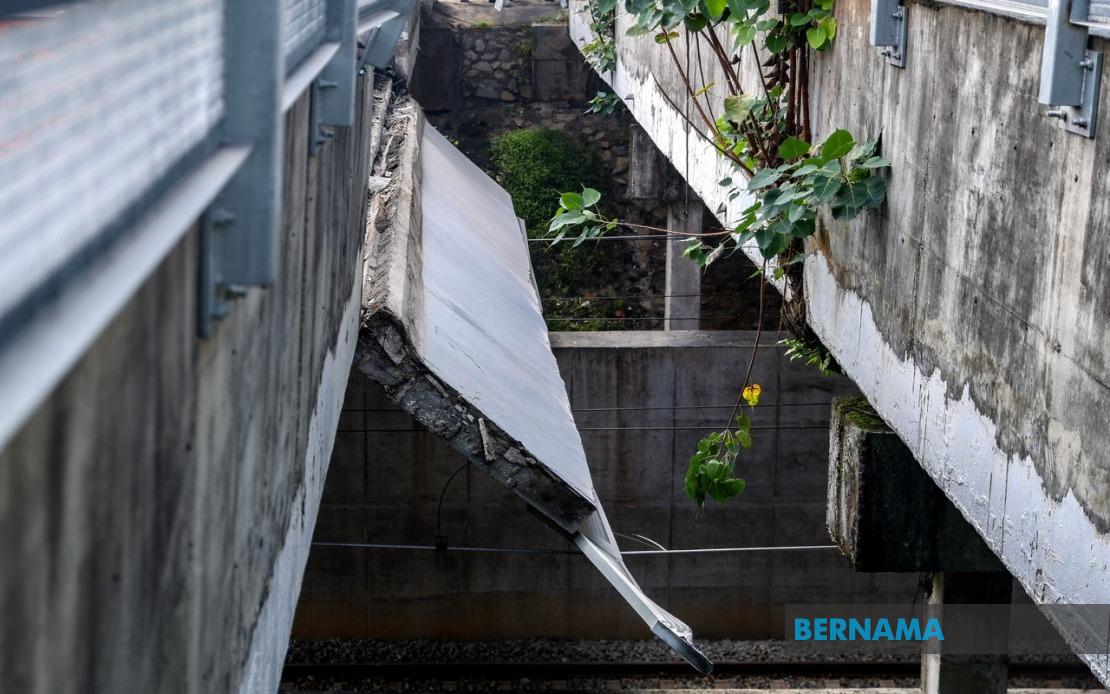
A lorry collision with railway infrastructure in Johor has forced Keretapi Tanah Melayu Berhad (KTMB) to implement alternative transport arrangements for thousands of passengers using the Electric Train Service (ETS) corridor. The incident, which occurred near Kulai-Kempas Baru, has left commuters scrambling for information and making new travel plans as engineers work to restore normal rail operations along one of Malaysia's busiest intercity routes.
KTMB activated a shuttle bus system to help passengers bridge the gap created by the rail closure. Buses operating between JB Sentral Station, Kempas Baru Station, and Kulai Station are ferrying affected travellers to maintain some semblance of connectivity across the disrupted section. This interim solution, whilst cumbersome for commuters, reflects the state operator's commitment to minimizing travel delays in the broader network.
Three key ETS services departing from JB Sentral bore the brunt of the disruption. The morning schedules for ETS 9442 heading to Padang Besar, ETS 9524 bound for Kuala Lumpur Sentral, and ETS 9326 travelling to Butterworth were all impacted, affecting hundreds of passengers with connections throughout Peninsular Malaysia. The geographic spread of these routes underscores the incident's ripple effect across regional transport networks.
The incident resulted from a lorry carrying flammable liquid that skidded near the rail line, triggering a power supply disruption to the overhead line (OHL) system. More critically, a concrete structure parapet came into contact with the electrical infrastructure, causing widespread damage that necessitated complete line closure for safety reasons. The involvement of hazardous materials added another layer of complexity to recovery operations, requiring coordination between transport authorities, chemical handlers, and emergency services.
Recovery efforts have been significantly hampered by equipment availability. Transmare-Chemie (M) Sdn Bhd, the lorry company involved, informed KTMB at 3 am that a 120-tonne crane required to lift and remove the fallen concrete structure had not yet been secured. This delay meant that even as engineers assessed damage throughout the morning, physical removal work could not commence immediately, extending the timeline for full restoration.
Once the heavy-lift equipment became available, KTMB anticipated beginning removal operations around 10 am. However, the operator cautioned that the actual reopening date remained uncertain, dependent on multiple factors including the pace of lifting operations, comprehensive technical inspections of both track and electrical systems, and formal safety clearance from competent authorities. This cautious approach reflects lessons learned from previous rail incidents across Southeast Asia, where premature reopening has occasionally led to secondary failures.
The Shuttle Selatan service, operating smaller regional routes, maintained partial functionality. The Pasir Gudang to JB Sentral route and its return service continued operating normally, providing an alternative for some travellers. However, the Kulai to Kempas Baru shuttle route suspension created a significant gap for commuters dependent on that corridor, as this service typically handles substantial daily passenger volumes between those municipalities.
Passengers faced genuine choices regarding how to proceed. Those opting to abandon their journeys entirely were eligible for full refunds, a passenger protection measure standard across regional rail operators. KTMB staff stationed at affected stations provided information and assistance, though the sudden nature of the disruption meant that many travellers faced challenges in making alternative arrangements on short notice, particularly those with tight schedules or connections at downstream stations.
The electrical system represented a critical concern throughout restoration efforts. The overhead line infrastructure carries high-voltage current essential for train propulsion, making any damage potentially hazardous to both equipment and personnel. Engineers needed to conduct meticulous inspections and testing before certifying the system safe for resumed operations, a process that cannot be rushed without risking future incidents.
KTMB emphasized its collaborative approach to restoring service. Coordination with relevant government agencies, the logistics company, crane operators, and safety inspection bodies had to proceed in orchestrated fashion to minimize both recovery time and risks to workers and future passengers. This multi-stakeholder coordination underscores how railway incidents in Malaysia intersect transport, occupational safety, and hazardous materials management domains.
For the broader Malaysian transport ecosystem, this incident highlighted vulnerabilities in critical infrastructure adjacent to busy rail corridors. Johor's position as a major logistics hub means that road and rail traffic volumes remain exceptionally high, increasing the probability of vehicle incidents affecting rail operations. The incident also demonstrated KTMB's operational flexibility in deploying substitute services, though shuttle bus arrangements inevitably prove less efficient than direct rail service.
Commuters across the KL-Johor Bahru corridor faced cascading impacts on their daily schedules. Business travellers missed appointments, students arrived late for classes, and workers scrambled to explain delays to employers. The ripple effects extended beyond immediate passengers to freight operators and regional employers dependent on reliable ETS scheduling. Such incidents underscore why maintaining Malaysia's rail infrastructure remains not merely an operational concern but an economic imperative for a nation increasingly reliant on integrated transport networks for regional competitiveness.

