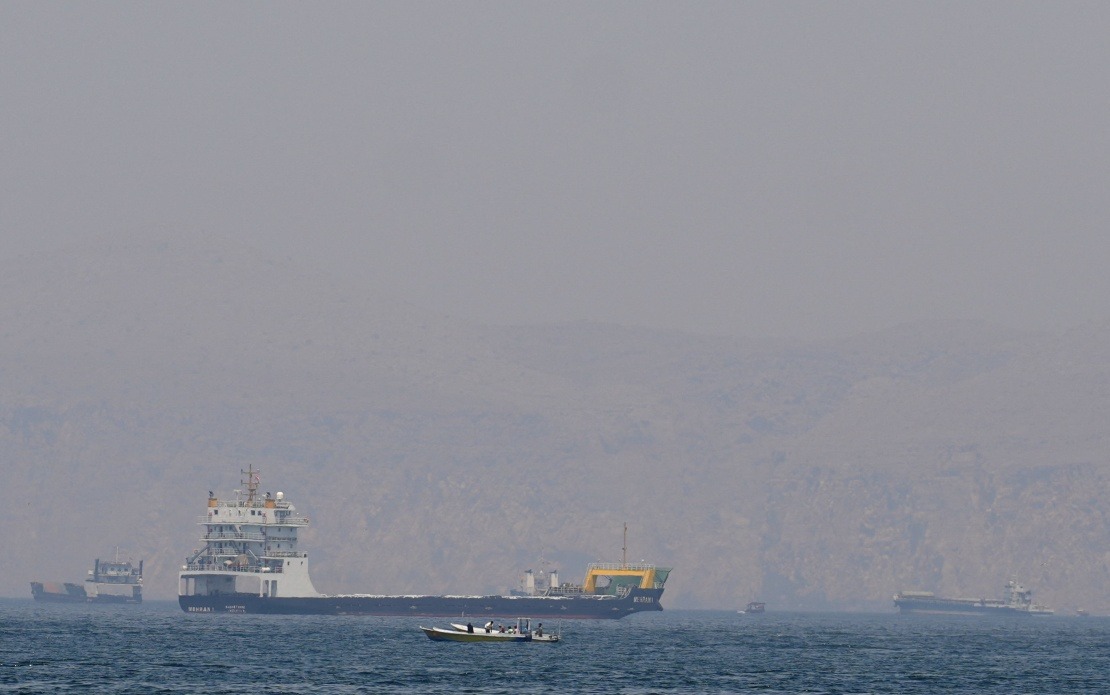
The European Union and the Gulf Cooperation Council have issued a forceful joint declaration rejecting any claim by individual states to exercise sovereignty or control over the strategically vital Strait of Hormuz, emphasizing that such assertions contradict established international maritime law. The statement, released following a high-level security forum held in Brussels, represents a coordinated diplomatic stance designed to reinforce the principle of unfettered passage through one of the world's most critical shipping lanes.
The unified position underscores a fundamental principle enshrined in international maritime law: no bilateral arrangement or understanding between nations can lawfully restrict the right of passage through international straits. This assertion carries particular weight given the Strait of Hormuz's centrality to global energy security, with millions of barrels of crude oil transiting daily through its narrow waters. The EU's chief diplomat Kaja Kallas and Bahraini Foreign Minister Abdullatif bin Rashid Al-Zayani, speaking in his capacity as chair of the GCC Ministerial Council, jointly anchored this position in the UN Convention on the Law of the Sea, the bedrock of contemporary maritime governance.
The declaration explicitly guarantees that vessels from all nations possess equal rights of passage, and crucially, that no individual state may suspend, obstruct, or impose conditions on these rights. This language carries implicit significance for the region, as it stands against any unilateral assertion of control that might be used to justify imposing permits, fees, or service charges on international shipping. For Southeast Asian nations like Malaysia, Singapore, and Indonesia that depend on regional shipping routes and have their own strategic waterways, this affirmation of international maritime principles provides important precedent and political backing.
The EU-GCC statement also condemns with particular vehemence Iranian attacks on commercial vessels navigating the strait and strikes against the sovereign territories of regional states. The two blocs characterize these incidents as not merely tactically destabilizing but as systematic violations of international law and UN Security Council Resolution 2817. This framing transforms the issue from a regional dispute into a matter of global maritime security and international legal order, positioning attacks on shipping as threats to the collective interests of all nations dependent on the waterway.
Beyond condemnation, the EU and GCC have called upon Iran to cease all attacks immediately and without conditions, and to maintain the Strait of Hormuz as an open passage free from fees, charges, or service levies. The statement's language reflects frustration with attempts to use control of the strait as leverage in broader regional disputes. By framing the issue in terms of universal maritime rights rather than particular grievances, the EU and GCC attempt to deprive any single actor of justification for restricting passage.
The declaration extends full solidarity to nations affected by maritime incidents and to seafarers of all nationalities placed at risk by instability in the region. This inclusive language acknowledges that the security concerns extend far beyond the immediate Middle Eastern actors, affecting global supply chains and economic stability. For Malaysian readers, this resonates given the country's own maritime interests and the presence of Malaysian seafarers operating throughout international waters.
Both blocs have committed to sustained coordination aimed at safeguarding freedom of navigation and protecting international shipping infrastructure and personnel. This pledge suggests an intention to move beyond rhetorical positioning toward concrete cooperative mechanisms that might include enhanced maritime surveillance, coordinated escort operations, or diplomatic initiatives to reduce tensions. The emphasis on coordination reflects recognition that unilateral action by any single state would likely prove insufficient to address the multifaceted security challenges affecting the strait.
The statement's call for restraint and renewed commitment to dialogue and diplomacy indicates that despite the forceful language, both the EU and GCC remain open to negotiated resolution of underlying tensions. This diplomatic formulation seeks to balance firm defense of international maritime principles with acknowledgment that lasting stability requires addressing the root causes of conflict through sustained engagement. The balancing act reflects understanding that military escalation, while sometimes necessary for immediate security, cannot provide enduring solutions to deeply rooted regional disputes.
The context of this declaration involves significant geopolitical turbulence, with the United States and Iran engaged in tit-for-tat military exchanges that have raised concerns about further escalation. The military tensions persist notwithstanding efforts at de-escalation, including a Pakistan-brokered memorandum of understanding signed in June aimed at concluding ongoing conflict and establishing a durable peace framework. This disconnect between diplomatic initiatives and continued military activity underscores the fragility of current arrangements and the challenges facing international efforts to stabilize the region.
The Strait of Hormuz represents a critical chokepoint in global maritime commerce, with approximately one-third of seaborne traded petroleum passing through its waters annually. Any sustained disruption would send shockwaves through global energy markets and supply chains, affecting economies far removed from the Middle East. For Malaysia and other Southeast Asian economies heavily dependent on stable energy supplies and unimpeded maritime trade, maintaining freedom of navigation through the Strait of Hormuz remains a matter of direct national interest, making the EU-GCC declaration relevant far beyond the immediate region.
The joint statement also carries implications for the broader architecture of international maritime law and the precedents being established regarding state conduct in strategically important waterways. By explicitly grounding their position in the UN Convention on the Law of the Sea rather than particular geopolitical alignments, the EU and GCC attempt to invoke universal principles that apply equally to all states. This approach potentially strengthens protections for other contested maritime passages worldwide, including those in Southeast Asia that similarly balance competing claims with principles of international navigation.
Looking forward, the effectiveness of the EU-GCC declaration will depend on the extent to which these principles can be translated into concrete security arrangements and whether sustained diplomatic engagement can address the underlying political disputes driving maritime tensions. The statement represents a necessary clarification of international legal norms, but lasting stability in the Strait of Hormuz will require not just reaffirmation of existing principles but genuine resolution of the geopolitical rivalries and security concerns that continue to generate instability.

