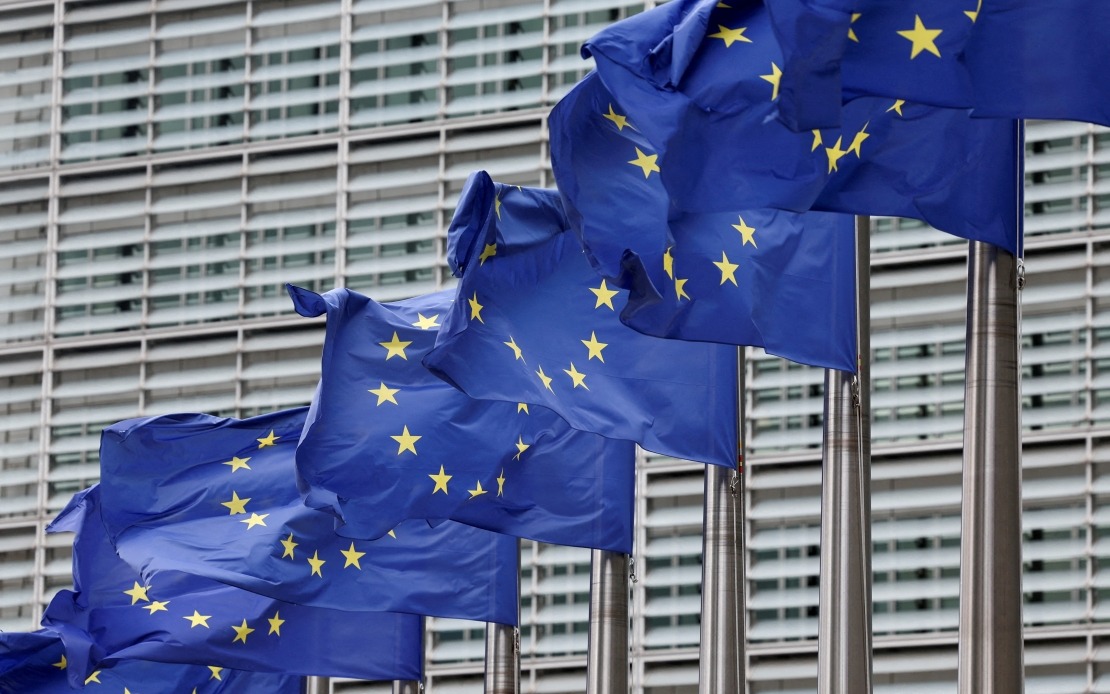
The European Union's top diplomats convened in Brussels on Monday to assess the escalating situation across West Asia, with a particularly contentious item on their agenda: whether to escalate economic pressure on Israel through targeted trade sanctions linked to its ongoing settlement expansion in the occupied West Bank. The gathering underscored deepening fractures within the 27-member bloc over how aggressively to respond to Israeli settlement policy, a dispute that has repeatedly stalled collective EU action on Middle Eastern matters.
The European Commission had prepared a substantive menu of potential measures for the ministers' consideration, spanning from import restrictions to outright bans on goods originating from Israeli settlements. These options represented months of preparatory work aimed at giving member states concrete alternatives rather than abstract proposals. The technical groundwork suggested the Commission was attempting to break the customary logjam on West Asia policy by offering actionable pathways rather than leaving negotiations adrift.
Despite this preparation, achieving unanimity remained highly doubtful. Spain, Ireland, and Belgium have emerged as vocal advocates for imposing stringent sanctions, viewing Israel's settlement activity as incompatible with international law and the principles underpinning the two-state solution. These nations have argued that the EU's credibility on Palestinian rights depends on translating rhetoric into tangible economic consequences. Germany, by contrast, has maintained a more circumspect position, declining to support severe measures and reflecting the complex historical and strategic calculations that shape Berlin's Middle Eastern diplomacy.
The procedural mechanics of EU decision-making compound the political divisions. Should member states frame trade restrictions as foreign policy sanctions, the threshold becomes unanimous agreement—a single dissenting voice would suffice to block implementation. This high bar has historically proven insurmountable on Israel-related matters, given the diverse positions among member states reflecting varied diplomatic relationships, historical sensitivities, and domestic political pressures. Alternatively, if restrictions were classified differently, they would only require qualified majority voting, necessitating support from at least 15 of 27 member states representing a cumulative 65 percent of the EU's total population—a considerably lower hurdle but still demanding broad coalition-building.
For Malaysian and Southeast Asian observers, the EU's internal struggles carry important implications. The inability of the world's largest trading bloc to coordinate coherent positions on contested geopolitical matters suggests that multilateral mechanisms—whether regional or global—increasingly struggle to manage great power disagreements and complex regional conflicts. Malaysia, as a Muslim-majority nation with historical sympathy for Palestinian causes and an interest in upholding international law, has watched these EU deliberations closely. The bloc's divisions signal that external pressure on Israeli policy will likely remain fragmented and insufficient to materially alter settlement dynamics.
Beyond the Israeli settlements controversy, the Brussels gathering tackled other significant international challenges. Ministers turned their attention to unfolding developments in Iran, where regional tensions have periodically threatened to destabilize the broader West Asian environment. The situation required constant EU monitoring given the bloc's historical role in nuclear diplomacy and its substantial economic interests in regional stability.
Russia's ongoing invasion of Ukraine dominated discussions as the ministers contemplated additional punitive measures against Russian individuals, entities, and organizations. The consensus here appeared somewhat firmer than on Middle Eastern issues, though negotiations continued regarding whether a comprehensive new sanctions package incorporating substantial trade restrictions could gain sufficient backing for swift implementation. The divergence in EU resolve between the Ukraine and Israeli settlements dossiers reflects both the clarity of Russian aggression and the contested nature of Israeli settlement expansion under international law.
Ukrainian Foreign Minister Andrii Sybiha attended the session for informal consultations with his EU counterparts, reinforcing Kyiv's integral role in European security discussions and ensuring that the war's strategic dimensions received adequate attention from the bloc's diplomatic leadership. His presence underscored how the Ukraine conflict has fundamentally reshaped EU foreign policy priorities and resource allocation.
The fundamental challenge facing EU foreign ministers extends beyond procedural questions or individual policy disputes. The bloc confronts a structural problem: its expanding scope of global engagement increasingly exceeds its capacity for unified action. From Israeli settlements to Iran to Russia, the EU simultaneously attempts to uphold international law, balance strategic interests, manage economic considerations, and accommodate diverse member state constituencies. Achieving consensus across such terrain proves ever more elusive.
For Southeast Asian governments and analysts assessing the multilateral landscape, the EU's difficulties offer cautionary lessons. Regional organizations like ASEAN have historically prioritized consensus and non-interference precisely because coercing agreement on contentious matters proves counterproductive. The EU's visible struggles to coordinate positions on Middle Eastern issues, despite institutional mechanisms and shared democratic values, suggest that consensus-based diplomacy may represent the more pragmatic approach to maintaining organizational coherence, even if it occasionally produces lowest-common-denominator outcomes.
The Monday meeting illustrated how contemporary geopolitical divisions transcend traditional Cold War fault lines. The EU cannot operate as a unified strategic actor if member states fundamentally disagree on core foreign policy matters. These internal fractures inevitably reduce the bloc's leverage in global negotiations and complicate its ability to pursue comprehensive strategies addressing multiple regional crises simultaneously.

